5 Ways to Forgive Someone Who Wronged You
Based on Einzelgänger's video on YouTube. If you like this content, support the original creators by watching, liking and subscribing to their content.
Forgiveness is framed as a mental health strategy that reduces the ongoing harm of resentment when retaliation or apology never arrives.
Briefing
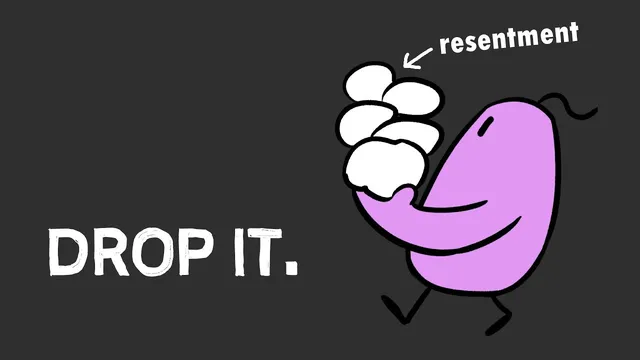
Bitterness and revenge can become a self-inflicted burden that grows heavier over time—especially when retaliation never arrives. The core claim is that resentment harms mental well-being regardless of whether an apology or punishment ever comes. Since the past can’t be changed and other people can’t be controlled, the practical focus shifts to how pain is processed: forgiveness becomes the “antidote” that allows people to stop carrying the weight.
The first step is redefining forgiveness. Forgiveness isn’t the same as forgetting, and it doesn’t require pretending the harm didn’t happen. If remembering the reality of what someone did keeps the person safe, distance can be part of forgiveness too—sometimes the healthiest boundary is forgiving while refusing further association. That framing sets up a broader psychological point: resentment often persists because people cling to expectations that were never realistic in the first place.
A major driver of anger is “premeditated resentment,” a phrase attributed to Allen Berger. Disappointment follows when expectations aren’t met—particularly when people assume others won’t make mistakes. The transcript argues that resentment grows when individuals are placed on pedestals and treated like fantasies rather than imperfect humans. Stoic Epictetus is used to underline the mismatch: a person is entitled only to a father, not to a guaranteed “good” one. From this angle, resentment isn’t caused by other people’s behavior alone; it’s fueled by the gap between what was expected and what actually occurred.
The second cluster of guidance centers on the internal consequences of hatred. Drawing on Buddhist teachings, anger is described as destructive both outwardly and inwardly—linked to greed, ignorance, and hatred, and compared to holding hot coals while waiting for someone else to burn. Revenge fantasies may never be acted on, yet grudges still consume the person holding them. Contemplation becomes a corrective: by repeatedly recognizing how anger poisons judgment and life, people can stop “watering the seeds” of destructiveness.
Because resentment can return even after a decision to forgive, the transcript emphasizes mindfulness and mental hygiene. Seneca’s observations about how people manufacture grievances—through unfounded suspicions or exaggerating trifles—support the idea that anger often arises from how thoughts are handled, not only from events. Buddhist practice is presented as training to notice and remove harmful narratives, fears, and memory loops before they spread.
Another obstacle is the brain’s negativity bias: humans weigh negative information more heavily for survival. That bias can make a wrongdoer seem purely evil, making forgiveness feel impossible. The proposed counter is to look for the positive alongside the negative—recognizing that people contain both harm and good, and that suffering can sometimes build resilience and compassion.
The final prescription is choosing love over hate, not necessarily by reconciling with the offender, but by refusing to let hatred govern one’s own mind. Martin Luther King Jr.’s argument against violence is used to show how hate escalates harm rather than erasing it. Love can be practiced as compassion from a safe distance, aiming to remove hate from oneself—even if it never disappears from others. In that sense, forgiveness is portrayed less as a favor to the wrongdoer and more as a way to reclaim mental freedom.
Cornell Notes
Forgiveness is presented as an antidote to resentment that protects mental well-being when retaliation or apology never comes. It is explicitly separated from forgetting: people can forgive while still acknowledging what happened and, when necessary, maintaining distance for self-protection. Resentment is traced to unrealistic expectations and to destructive thought patterns—especially negativity bias and the tendency to “manufacture grievances.” Mindfulness and mental discipline are offered as tools to prevent anger from returning after an initial decision to forgive. The approach culminates in choosing love over hate, including compassion from a safe distance, so hate is driven out of the self rather than escalated through conflict.
Why does resentment persist even when revenge doesn’t happen?
How can forgiveness coexist with boundaries or distance?
What role do expectations play in anger and disappointment?
Why does anger often return after a decision to forgive?
How does negativity bias make forgiveness harder?
What does “choosing love” mean in practice?
Review Questions
- What is the difference between forgiveness and forgetting, and why does that distinction matter for safety?
- How do unrealistic expectations and negativity bias each contribute to resentment?
- What mindfulness practices or mental strategies are suggested to keep anger from returning after forgiveness?
Key Points
- 1
Forgiveness is framed as a mental health strategy that reduces the ongoing harm of resentment when retaliation or apology never arrives.
- 2
Forgiveness does not require forgetting; acknowledging what happened can coexist with letting go of the emotional grip.
- 3
Maintaining distance can be part of forgiveness when continued association would endanger well-being.
- 4
Resentment often grows from unrealistic expectations that treat people as fantasies rather than flawed humans.
- 5
Anger can be sustained by destructive thinking loops; mindfulness helps prevent harmful narratives from spreading.
- 6
Negativity bias makes it easier to see only the worst in others, so forgiveness may require deliberately looking for positive traits too.
- 7
Choosing love over hate is presented as compassion for oneself and others, without necessarily engaging with the offender.