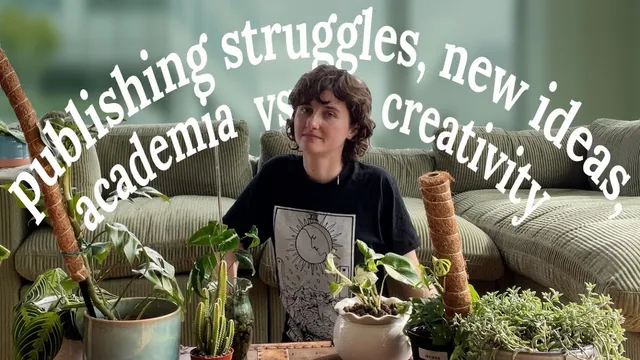
a casual chat about writing, publishing, & grad school 🌱 (while I repot my plants)
Based on ShaelinWrites's video on YouTube. If you like this content, support the original creators by watching, liking and subscribing to their content.
Two manuscripts—Honey Vinegar and Holding a Ghost—both failed to sell after going on submission, despite editor enthusiasm in some cases.
Briefing
A long stretch of publishing setbacks has left ShaelinWrites stuck between hope and dread—yet still chasing the next submission, while also wrestling with a new burst of creative momentum during an MFA. After signing with an agent in 2022, she expected her debut to sell quickly; instead, two manuscripts—Honey Vinegar and Holding a Ghost—both died on submission. The emotional cost has been severe: she describes feeling like a failure more intensely than ever, deleting a two-year submission vlog after the second rejection, and struggling to reconcile “detachment” advice with the reality that the outcome still matters deeply.
The publishing timeline is shaped by both industry forces and manuscript-market mismatch. Two weeks after her first submission, Harper Collins went on strike, which she supports as a fairness issue for publishing workers. But even when editors responded with enthusiasm, acquisitions didn’t happen. Honey Vinegar produced rejection emails where editors sounded convinced it could sell—“I love it… but it’s not for me”—leaving her with a painful kind of rejection: no clear reason, just a market that wasn’t right “at the moment.” Holding a Ghost was more divisive. Some editors loved its experimental, fresh approach, while others couldn’t place it in a normal category or figure out how to market it. ShaelinWrites says a pattern emerged: more senior editors tended to block the book, while junior editors—often closer to her age—were more likely to champion it but lacked the power to get it through acquisitions.
Beyond manuscript fit, she also describes agency logistics slowing her next attempt. Her agent switched agencies, forcing a pause while contracts ended, termination periods passed, and she was re-onboarded. That delay feeds a cycle of jaded disbelief (“selling a book feels like an impossibility”) alongside stubborn visualization of success.
While the publishing story weighs on her, plant care becomes a parallel outlet—repotting, rooting cuttings in LEA, and troubleshooting sick plants—mirroring her broader theme: control is limited, but effort continues. She also turns to a second major thread: “shiny new idea syndrome.” In early May, while halfway through a two-year MFA, she suddenly developed a novella concept (a nolla) that arrived fast and felt unusually effortless—complete with themes, characters, and an ending within hours. She’s written about 7,000 words and calls them the best she’s ever written, but the timing creates a crossroads. Her thesis novel is harder to write and may be a “five-year book,” while the novella feels like a two-year project.
Her agent urges her not to force the work into a publishing-ready shape—write what it is, then figure out publishing later. Still, past submission failures have made her feel pressure to write something publishable, which she believes is contributing to thesis burnout. The result is a practical, emotionally honest plan: she’s considering taking a break from the thesis to prioritize the novella for her creative health, while still planning to make thesis progress over the summer. The central tension remains unresolved—she’s excited to go on submission again, but fear has intensified because she now knows how devastating “another no” can be.
Cornell Notes
ShaelinWrites describes two manuscripts dying on submission after signing with an agent in 2022, leaving her caught between hope and deep fear. Honey Vinegar was rejected despite editors sounding enthusiastic, while Holding a Ghost split editors by taste and marketability—often blocked by senior acquisitions even when junior editors championed it. The emotional fallout has been intense enough to delete a two-year submission vlog after the second rejection. While navigating this publishing uncertainty, she also faces an MFA dilemma: a sudden novella idea (“nolla”) is clicking with her in a way her thesis novel doesn’t, forcing a choice between sticking to her thesis or following the new creative momentum.
What happened after signing with an agent in 2022, and why did it take so long to reach “no sales”?
Why was Honey Vinegar especially hard to process when it didn’t sell?
How did Holding a Ghost’s reception differ from Honey Vinegar’s?
What role did agency logistics play in her next submission attempt?
What is “shiny new idea syndrome” in her situation, and what decision does it force during her MFA?
How does she reconcile advice like “don’t attach to outcomes” with her lived experience?
Review Questions
- Which manuscript had rejection emails that sounded enthusiastic, and what did that ambiguity do to her mindset?
- What pattern does she describe between senior and junior editors in the acquisitions process for Holding a Ghost?
- During her MFA, what triggers the novella idea, and what are her three main options for handling it alongside her thesis?
Key Points
- 1
Two manuscripts—Honey Vinegar and Holding a Ghost—both failed to sell after going on submission, despite editor enthusiasm in some cases.
- 2
A Harper Collins strike began about two weeks after her first submission, adding industry delay to an already uncertain timeline.
- 3
Honey Vinegar’s rejections were confusing because editors expressed strong admiration while still declining acquisition.
- 4
Holding a Ghost split editors by taste and marketability, with ShaelinWrites describing senior editors blocking it more often than junior editors could support it.
- 5
Agency transitions (her agent switching agencies) created a procedural pause before she could submit again.
- 6
Past submission failures intensified her fear of “another no,” making “don’t attach to outcomes” advice feel emotionally unrealistic.
- 7
A sudden novella idea (“nolla”) is pulling her attention during her MFA, forcing a choice between thesis commitments and creative momentum.