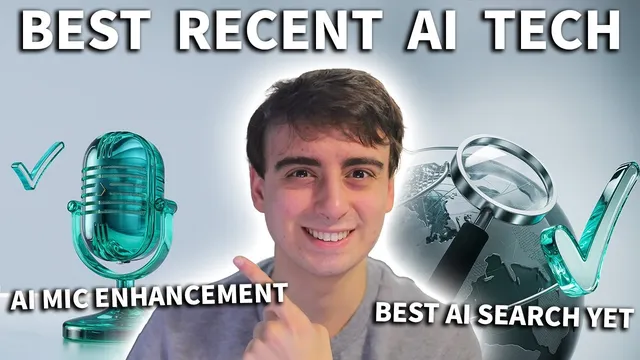
AI RECAP: Meta 3D, Perplexity AI, Krea Style Transfer, & More
Based on MattVidPro's video on YouTube. If you like this content, support the original creators by watching, liking and subscribing to their content.
Runway’s Gen 3 video generator is being treated as an accessible alternative to Sora, with community feedback suggesting it’s often “good enough” for creative iteration.
Briefing
Runway’s newly released Gen 3 AI video generator is drawing immediate comparisons to OpenAI’s Sora, with many community reactions framing it as “good enough” to scratch the same creative itch—especially for people who want to iterate quickly on short, imaginative scenes. Side-by-side examples suggest Sora still produces more polished results in the specific demos shown, but Gen 3’s practical value is that it’s usable now, and it can generate coherent video concepts that creators can start refining without waiting for access to Sora.
The broader takeaway is less about crowning a single winner and more about matching tools to tasks. The transcript repeatedly stresses that AI video and image models behave differently depending on constraints—so Gen 3 may outperform Sora in some edge cases, while other systems (including Luma Labs and Kling) can be better for particular styles or production needs. The advice is to test multiple models and decide based on the output quality that matters for a given workflow, since these systems are improving in leaps but still inconsistent.
Perplexity’s upgraded Pro search is positioned as a research upgrade aimed at more advanced problem solving. A featured example plans a one-hour visit to London’s National Gallery, including special exhibits, by pulling information from multiple web sources and then using large language model reasoning to turn that research into a structured itinerary. Another example tackles a technical question—dimensions needed for a solar panel array to power all of the US—where the value is framed as combining live search with calculation rather than returning only links. A third example analyzes Meta’s stock price from the start of the year, identifies growth drivers, and generates a dynamic chart with sources embedded.
Meta’s 3D generation capabilities are also a major focus, extending beyond creating 3D objects to texturing and retexturing existing assets. The system highlights PBR-style material map generation for realistic reflections, then demonstrates re-skinning the same object in multiple aesthetics—pixel art, crochet/fabric-like textures, horror-themed looks, and even stylized variants like a “magical” butterfly—while keeping the underlying mesh details intact. The workflow is pitched as especially useful for creators who want to iterate in tools like Blender and quickly explore visual themes.
Other notable releases include Korea AI’s “scene transfer,” which aims to preserve a specific material texture (like marble on a Porsche) while changing the environment and lighting—such as making the car appear underwater—without “mushing” fine details. 11 Labs introduces a “voice isolator” model designed to clean noisy microphone input into usable audio, tested by blasting the mic and speaker with a leaf blower, with the promise that street-level recording problems can be handled digitally.
On the open-source front, Stability AI’s Stable Diffusion 3 Medium gets a license clarification that removes earlier ambiguity around commercial use. The transcript notes that small businesses under $1M revenue can use it commercially for free, and that model quality concerns remain because it’s described as a base model that hasn’t been fully fine-tuned.
Finally, the roundup points to emerging areas: video outpainting that extends cropped video frames, scalable Transformer-based audio generation for ambient sound effects (still rough), and a broader sense that AI tooling is rapidly expanding across video, 3D, audio, and research—often with the biggest practical gains coming from better workflows, not just higher benchmark scores.
Cornell Notes
Runway’s Gen 3 video generator is being compared to OpenAI’s Sora, and many reactions suggest it’s close enough for creators to start generating usable ideas now—though Sora still looks stronger in the shown examples. The roundup argues that no single model dominates across all scenarios, so creators should test multiple systems (including Luma Labs and Kling) for the best fit.
Perplexity’s upgraded Pro search adds more advanced, research-driven problem solving by combining web research with LLM reasoning—turning sources into plans, calculations, and even charts with embedded references. Meta’s 3D generation expands into high-fidelity texturing and retexturing, including PBR-style material maps and style swaps that preserve details.
Other highlights include Korea AI’s scene transfer (material-preserving environment changes), 11 Labs’ voice isolator for cleaning noisy audio, and Stability AI’s clarified Stable Diffusion 3 Medium license for commercial use. The rest of the list signals fast-moving progress in video outpainting and AI sound effect generation, though quality is still uneven.
Why are Gen 3 and Sora being compared, and what practical difference does that create for creators right now?
How does Perplexity Pro search turn web research into something more than a list of links?
What does Meta’s “3D gen” add beyond generating 3D objects?
What is the key promise behind Korea AI’s scene transfer?
How does 11 Labs’ voice isolator differ from typical “noise reduction” expectations?
What changed with Stable Diffusion 3 Medium, and why does licensing matter for adoption?
Review Questions
- Which parts of Perplexity Pro search rely on web research versus LLM reasoning, and how do those steps show up in the National Gallery and solar-panel examples?
- What specific technical capability (e.g., PBR material maps, material preservation) is most important for Meta’s 3D retexturing and Korea AI’s scene transfer to look convincing?
- Why does the transcript repeatedly recommend testing multiple AI models instead of picking a single “best” video generator?
Key Points
- 1
Runway’s Gen 3 video generator is being treated as an accessible alternative to Sora, with community feedback suggesting it’s often “good enough” for creative iteration.
- 2
Side-by-side demos favor Sora in some cases, but output quality varies by scenario, so creators are encouraged to test multiple video models for their specific needs.
- 3
Perplexity Pro search upgrades research workflows by combining multi-source web gathering with LLM reasoning to produce plans, calculations, and charts with embedded sources.
- 4
Meta’s 3D generation extends into high-fidelity texturing and retexturing, including PBR-style material map generation for realistic reflections.
- 5
Korea AI’s scene transfer focuses on preserving the original material texture while changing environments and lighting, demonstrated with marble textures under underwater and cyberpunk conditions.
- 6
11 Labs’ voice isolator targets noisy real-world audio by cleaning microphone input into clearer output, reducing reliance on specialized recording setups.
- 7
Stability AI’s Stable Diffusion 3 Medium license clarification removes earlier commercial ambiguity, enabling broader distribution and use—while quality concerns remain due to base-model limitations.