Are We Living in Other Dimensions Without Knowing?
Based on Pursuit of Wonder's video on YouTube. If you like this content, support the original creators by watching, liking and subscribing to their content.
Rebecca’s childhood bond with her fish, Shiny, functions as a model for how intelligent communication can fail when one side can’t interpret the other’s signals.
Briefing
A lonely human linguist’s search for extraterrestrial intelligence ends up mirroring a deeper, stranger possibility: other minds may be present in the universe, but their signals and forms don’t translate into anything recognizable to us. The story begins with Rebecca, a socially isolated child whose best “conversation partner” is her fish, Shiny. Rebecca projects meaning into the fish’s repeated attention and pauses—yet Shiny can only register patterns of movement and stimulus, not the human intentions behind them. That mismatch becomes the template for what follows: two beings can interact across a boundary while each side remains unable to interpret what the other is actually doing.
As Rebecca grows, her loneliness steers her toward linguistics and psycholinguistics. She builds a linguistics club in high school, takes university courses, and later works with research groups and an anthropological linguistics professor. By her early 20s, she earns a PhD and becomes a leading academic at UC Berkeley, publishing widely on language acquisition. Then, in 1977, a narrow-band radio signal from deep space—strong enough and structured enough to suggest artificial origin—sparks a major search for extraterrestrial intelligence. Rebecca is recruited by the International Contact Group for Extraterrestrial Intelligence to help interpret and broadcast messages, using her expertise in language types and acquisition.
The effort expands: teams analyze the signal, send targeted transmissions, and launch probes carrying plaques, audio/video recordings, music, mathematics, and other information meant to be legible to another species. Yet the original signal never repeats, and no conclusive explanation emerges. Rebecca’s frustration turns into a cosmic paradox. With billions of potentially habitable planets in the Milky Way alone—and the universe’s age suggesting life should have had time to spread—why does the sky look so empty?
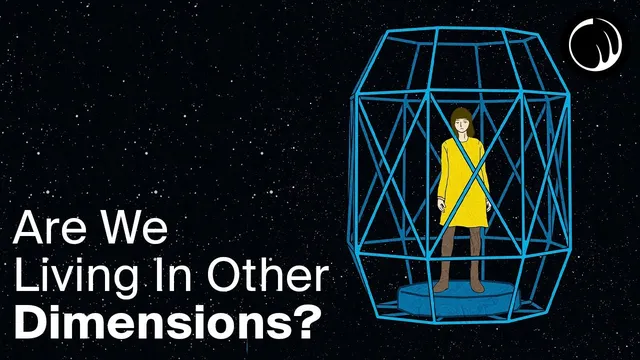
The narrative’s answer arrives by flipping the perspective. A super-intelligent being called 011l—described as evolved from early life, technologically advanced, and progressively “smaller” in physical terms until it appears immaterial—exists across multiple dimensions and can access Rebecca’s reality like a computer reading data from a drive. 011l’s information is stored as bits on the outer edge of the universe’s geometric surface, projected into perceivable phenomena. But Rebecca and humanity cannot decode those phenomena as communication; to them, the physical effects resemble random quantum behavior, and the radio broadcasts resemble meaningless noise.
In this framing, both sides are right and wrong. There is indeed a galaxy full of technology and other life—but recognition fails because each species lacks the cognitive and perceptual machinery to interpret the other’s “language.” Rebecca’s fish, Shiny, is the human-scale analogy: it is present, responsive, and part of a relationship, yet it cannot understand the person behind the signals. Likewise, 011l and its kind never truly know that humans are trying to reach them. The result is a “great silence” built not on absence, but on translation failure across dimensional and informational boundaries.
Cornell Notes
Rebecca, a socially anxious linguistics prodigy, becomes central to humanity’s attempt to contact extraterrestrial intelligence after a 1977 deep-space radio signal suggests artificial origin. Despite years of decoding, broadcasting, and sending probes with structured information, no further signals appear and no explanation is found. The story reframes the silence as a mismatch problem: a super-intelligent, multi-dimensional being named 011l exists and can access human reality, but humans can’t interpret its signals as meaningful communication. In parallel, Rebecca’s fish, Shiny, “responds” to her presence yet lacks the perceptual and cognitive capacity to understand her intentions. The implication is that other minds may be nearby, but their forms and messages may be unintelligible across dimensional boundaries.
Why does Rebecca’s relationship with her fish, Shiny, matter to the later contact story?
What triggers humanity’s search for extraterrestrial intelligence, and what role does Rebecca play?
What happens to the original signal, and how does that shape Rebecca’s worldview?
How does 011l’s description explain why humans miss the contact?
How does the story resolve the apparent contradiction that life is likely abundant but contact seems absent?
Review Questions
- What specific kind of “signal mismatch” does the story use—between Rebecca and Shiny, and between humans and 011l—and how does that mismatch produce the appearance of silence?
- How do Rebecca’s training and career choices (linguistics, psycholinguistics, language types) connect to the design goals of the deep-space contact efforts?
- Why does the narrative insist that other life could be present yet still unrecognizable, and what does it claim about the limits of perception and cognition across different “levels” of reality?
Key Points
- 1
Rebecca’s childhood bond with her fish, Shiny, functions as a model for how intelligent communication can fail when one side can’t interpret the other’s signals.
- 2
A 1977 narrow-band deep-space radio signal triggers a major extraterrestrial intelligence effort, with Rebecca recruited for her language acquisition expertise.
- 3
Human contact attempts expand to decoding work, targeted transmissions, and probes carrying structured information such as plaques, audio/video, music, and mathematics.
- 4
The original signal never repeats, deepening a paradox: the universe seems old and planet-rich enough that intelligent life should be detectable.
- 5
The story’s core claim is that other minds may exist but remain invisible to us because their signals and forms don’t translate into human-recognizable patterns.
- 6
011l is presented as a multi-dimensional, super-intelligent being whose projected effects resemble quantum randomness and whose broadcasts resemble noise to human receivers.
- 7
Both sides are portrayed as lonely and socially limited, reinforcing the idea that “silence” can come from mutual unintelligibility rather than absence.