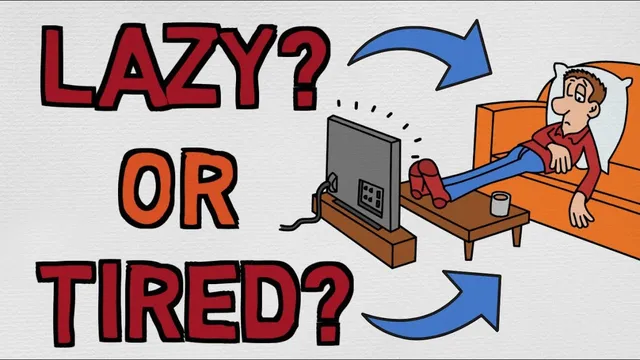
Are You Lazy? Or Are You Just Tired? - Know The Difference
Based on Better Than Yesterday's video on YouTube. If you like this content, support the original creators by watching, liking and subscribing to their content.
Laziness and exhaustion can look identical externally, but they require opposite solutions.
Briefing
Feeling “lazy” can mean two very different things: a lack of willingness to work, or a depleted system that can’t keep performing. The core distinction matters because the fixes are opposite—action for laziness, rest for exhaustion—and mixing them up can trap people in a cycle of worsening productivity.
The transcript contrasts two college students, John and Mike, to show how the same outward behavior can come from different inner causes. Both spend a free day playing video games and watching TV instead of studying or exercising, then both conclude, “God, I’m so lazy.” John’s pattern, however, is consistent: he has been earning poor grades all semester because he never studies, never exercises, and has no goals or hobbies to pursue. His “lazy day” is simply an extension of long-term avoidance.
Mike’s situation looks similar on the surface but is fundamentally different. On a normal day he exercises first thing, studies for hours, and works toward a passion—becoming a DJ—while also holding a part-time job. On his day off, he isn’t avoiding effort out of unwillingness; he’s burned out and exhausted from constant activity. Even so, he still labels himself a “lazy failure” because he expects himself to be productive.
That mislabeling is where the harm starts. The transcript argues that people judge laziness quickly because it resembles exhaustion: both involve low drive and reduced activity. Yet illness is offered as an analogy—rest is appropriate when the body needs recovery, not a moral failure. Exhaustion also requires breaks to sustain high performance, and even in productive lives, regular recovery matters.
The key behavioral definitions sharpen the difference. Laziness is characterized by unwillingness to do work despite having the energy to act; the barrier is self-discipline, so effort is avoided. Exhaustion, by contrast, comes with discipline and motivation to work, but with insufficient energy because breaks have been neglected. The transcript then warns about the common mistake of applying the wrong solution: lazy people may “take a break” that merely prolongs avoidance, while exhausted people may push harder because they believe action is the cure—only to become even more tired.
Practical guidance follows. Habit strategies won’t work when someone is stressed, overwhelmed, or too tired to function. If laziness is present, rest won’t produce results; the person must begin even small steps toward goals. If exhaustion is present, the person should rest strategically—suggesting a 5–10 minute break for every 45 minutes of activity when stressed, and conversely 5–10 minutes of goal work for every 45 minutes of rest when slacking.
The closing message shifts from self-diagnosis to compassion: avoid labeling others as lazy without knowing their circumstances, and avoid harsh self-judgment for taking recovery time. People aren’t machines, and performance improves when rest is treated as a tool rather than a character flaw.
Cornell Notes
The transcript draws a sharp line between laziness and exhaustion, arguing that both can look the same—low motivation and reduced activity—but require opposite responses. Laziness is defined as avoiding work due to low self-discipline even when energy is available; exhaustion is defined as having motivation and discipline but lacking energy because recovery has been neglected. John and Mike illustrate the difference: John’s inactivity reflects a long-term pattern of avoidance, while Mike’s similar behavior comes from burnout. Mislabeling leads to the wrong fix: action can worsen exhaustion, while rest can prolong laziness. The transcript recommends diagnosing which state applies and using short, structured breaks or small progress steps accordingly.
How do John and Mike demonstrate that “lazy” behavior can have different causes?
What is the transcript’s definition of laziness versus exhaustion?
Why does applying the wrong solution make things worse?
What practical break/work schedule does the transcript recommend?
How does the transcript argue people should treat themselves and others when they label “laziness”?
Review Questions
- What specific behavioral and motivational differences distinguish laziness from exhaustion in the transcript’s framework?
- Give an example of how a person could misdiagnose exhaustion as laziness and what outcome that mismatch would likely produce.
- How would you decide whether to use “5–10 minutes of rest per 45 minutes of work” versus “5–10 minutes of work per 45 minutes of rest”?
Key Points
- 1
Laziness and exhaustion can look identical externally, but they require opposite solutions.
- 2
Laziness is avoidance of effort due to low self-discipline despite having energy to act.
- 3
Exhaustion is depleted energy despite having motivation and discipline to work.
- 4
Mislabeling leads to harmful cycles: rest can prolong laziness, while pushing harder can worsen exhaustion.
- 5
Habit strategies fail when someone is too tired, stressed, or overwhelmed to execute them.
- 6
Use structured intervals: take 5–10 minute breaks for every 45 minutes of activity when overloaded, and do 5–10 minutes of goal work for every 45 minutes of rest when slacking.
- 7
Avoid harsh judgments of others or self; recovery time can be necessary for sustained performance.