Behind the scenes writing the missing Zettelkasten workbook
Based on Martin Adams's video on YouTube. If you like this content, support the original creators by watching, liking and subscribing to their content.
The Atomic note-taking workbook is designed to convert Zettelkasten concepts into a repeatable workflow, with heavy emphasis on concrete examples rather than theory alone.
Briefing
A long-awaited Zettelkasten workbook in the “Atomic note-taking” style is taking shape as a practical, example-heavy guide meant to fill gaps left by scattered online tutorials. The core aim is to turn the conceptual promise of Zettelkasten note-taking into a step-by-step workflow readers can actually apply—especially when working across books, audiobooks, and content creation—then push beyond basics into advanced study, organization, and even AI-era tooling.
The project began after the creator read *How to Take Smart Notes* by Sönke Ahrens, which “clicked” as a missing piece for turning consumed information into better outputs for YouTube and blogging. The next challenge wasn’t understanding the ideas; it was finding a clear path to implement them. That gap—how to move from theory to practice—became the motivation for building a workbook that stretches beyond what a typical video can deliver, with structured sections, concrete examples, and a built-in Q&A layer for common sticking points.
Rather than using Zettelkasten purely as a teaching subject, the workbook is also framed as a tool for the creator’s broader interests in mindset, psychology, and behavioral science. The method is treated as a means to think better and teach better, not as an academic exercise. The writing approach reflects that stance: the book is designed for innovators who want to adapt the system, not for readers who only want a rigid “do this exactly” recipe.
The manuscript is organized into multiple parts. Part One, available via a waitlist download, positions the method in the wider note-taking landscape by comparing it with approaches such as the outline method and the Cornell method, then clarifies who the workbook is for. Part Two focuses on the method itself—concepts, workflow, fleeting notes versus permanent notes, “maps of content,” and how to connect ideas—supported by examples that show what the system looks like in real usage. A key emphasis is lens-based walkthroughs: how notes are created and deleted when reading on Kindle, how PDFs and video courses feed into literature notes, and how those inputs become permanent notes in the slip-box.
Part Three moves into deeper thinking after readers have tried the basics, including how to study from books and how to extract questions and insight from that material. It also addresses practical system design questions such as numbering, organizing “chaos,” and using the method with teams. The later sections include an extensive Q&A-style component aimed at real-world problems—duplicate note names, when to update existing notes, what to do when notes get lost in the slip-box, when to use hashtags, and how to reason through ambiguous situations.
The workbook also confronts the AI shift. A dedicated section looks at where AI fits into the broader note-taking ecosystem and what to watch as generative AI features appear in apps. It then lays out criteria for choosing tools—local-first versus cloud-first, control versus convenience, and customization needs—while referencing the creator’s ongoing work with Obsidian and a separate note-taking app called Flowtlec (not yet built at the time of writing).
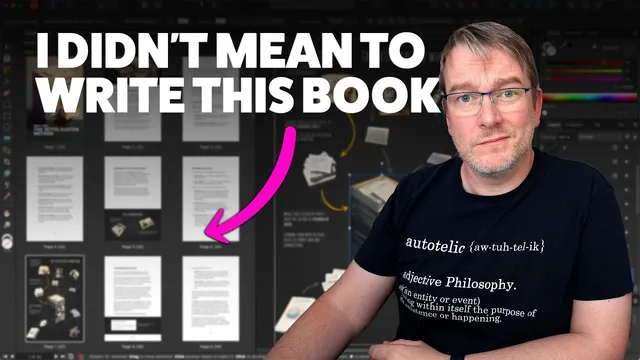
Behind the scenes, the work is being produced with careful time management: writing happens late at night, with focus support from Brain.fm. The creator uses Google Drive’s grammar assistance, generates visuals with Midjourney, and lays out the book in Affinity Publisher, aiming for a print-friendly format. The update ends without a release date, but with a clear call to join the waitlist for Part One and to share readers’ Zettelkasten journeys and questions through email and community pages.
Cornell Notes
The Atomic note-taking workbook is being built to bridge the biggest Zettelkasten gap: turning the method’s concepts into a usable workflow. After *How to Take Smart Notes* by Sönke Ahrens “clicked,” the project focuses on practical implementation—fleeting notes to permanent notes, connecting ideas through “maps of content,” and showing what the system looks like with real examples across Kindle, PDFs, and video courses. Later sections deepen the work with study techniques, system organization, team use, and an extensive Q&A for common problems like duplicate note names and when to update existing notes. The book also addresses AI’s impact on note-taking tools and provides criteria for choosing apps based on control, customization, and storage approach. It matters because it aims to make Zettelkasten actionable for everyday knowledge work, not just theoretical learning.
What problem does the workbook try to solve for readers who already “get” Zettelkasten conceptually?
How does the book plan to teach the method without relying on abstract descriptions?
What’s the role of fleeting notes versus permanent notes in the workflow?
What kinds of “real-world” questions does the workbook aim to answer in its Q&A sections?
How does the workbook handle the AI wave in note-taking apps?
What criteria does the workbook propose for choosing note-taking apps?
Review Questions
- Which parts of the workflow are presented as the “missing pieces” for readers who already understand Zettelkasten at a conceptual level?
- How does the workbook’s example strategy differ from typical note-taking guides that stay theoretical?
- What practical dilemmas are likely to be handled by the workbook’s Q&A sections, and why does that matter for long-term use?
Key Points
- 1
The Atomic note-taking workbook is designed to convert Zettelkasten concepts into a repeatable workflow, with heavy emphasis on concrete examples rather than theory alone.
- 2
Part One positions the method within the broader note-taking landscape by comparing it to approaches like the outline method and the Cornell method.
- 3
Part Two teaches the core system—fleeting notes, permanent notes, workflow components, and “maps of content”—using platform- and format-specific walkthroughs (e.g., Kindle, PDFs, video courses).
- 4
Part Three and later sections move into advanced practice: studying from books, extracting questions and insight, organizing systems, and supporting team use.
- 5
A substantial Q&A section targets real operational problems such as duplicate note names, updating existing notes, lost notes in the slip-box, and when to use hashtags.
- 6
AI is treated as a factor that changes the tool landscape; the workbook includes guidance on where AI fits and what to evaluate as new app features arrive.
- 7
The project is being produced with a focus on momentum and quality—using focus support (Brain.fm), writing/edits via Google Drive, visuals via Midjourney, and layout via Affinity Publisher—while avoiding a promised release date.