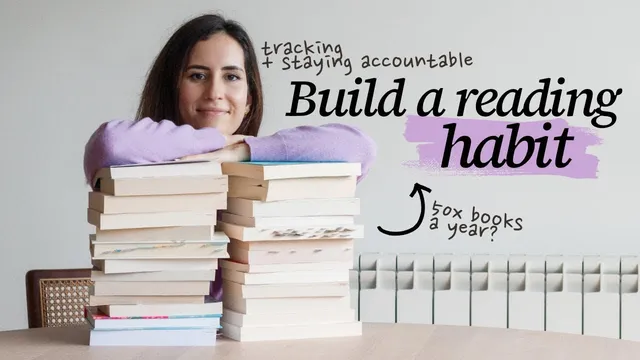
Build a Reading Habit from the Ground Up
Based on Mariana Vieira's video on YouTube. If you like this content, support the original creators by watching, liking and subscribing to their content.
Start with a small, achievable reading goal (like 5–10 minutes a day or one page daily) to avoid the brain’s resistance to change.
Briefing
Building a sustainable reading habit starts with shrinking the goal until it feels almost too easy—and then tying reading to a personal “why” and an existing routine. The core insight is that long-term consistency beats ambitious targets, because the brain resists change and punishes failure. When goals are vague (“read more”) or unrealistic (“100 books this year”), motivation fades and the habit breaks. A more reliable approach uses small starting points—like 5 or 10 minutes a day, or even one page a day—so the habit can grow gradually without triggering the all-or-nothing mindset that makes people quit after a rough week.
The habit-building framework relies on behavioral psychology: habits form through a loop of cue, routine, and reward, but distractions and overly large goals disrupt it. Instead of betting on willpower, the strategy is to set a target that can be hit even when life gets messy. If someone thinks they can manage one book per month (about 12 books a year), the recommendation is to set the goal lower—such as 10 books—so occasional setbacks don’t turn into a “you suck” narrative. Hitting the smaller goal creates a rewarding sense of success that makes it easier to raise the bar later, while failing an overly ambitious goal trains the brain to expect disappointment.
Mindfulness is the next pillar: reading should be pursued for purpose and presence, not as a scoreboard. The “why” matters—whether it’s learning, stress relief, or escaping daily chaos—because motivation tends to collapse when the habit feels pointless. The goal is not to rack up numbers on a reading challenge, but to build a routine that calms nerves, sharpens focus, and keeps people grounded.
To make reading automatic, the habit should be anchored to an existing behavior. Reading after morning coffee or right before bed works because the brain associates the activity with a specific time, place, or action—similar to how brushing teeth becomes second nature. When progress stalls, self-compassion becomes part of the system: missing days doesn’t require quitting and restarting “next year.” The instruction is to return gently—tomorrow or even today—without guilt.
Finally, accountability and community help the habit stick. Book clubs, online groups, Discord servers, and reading challenges create external motivation and turn reading into identity rather than a temporary project. The overall message is straightforward: reading isn’t about speed or volume; it’s about joy in the pages, one step at a time.
The transcript also includes a sponsor segment for Ground News, a media-bias tracking app and website that rates stories by political bias, factuality, and ownership using multiple independent monitoring organizations, with tools for comparing coverage across outlets. A discount for a subscription is offered via the creator’s link.
Cornell Notes
A sustainable reading habit is built by starting small, setting achievable targets, and making reading part of daily life rather than a high-pressure goal. Because the brain resists change and often reacts to failure with quitting, goals like “read 100 books” can backfire; smaller starts (5–10 minutes a day or one page daily) reduce friction and make success more likely. The habit should be guided by a clear “why” (learning, stress relief, escape) and practiced mindfully, not as a numbers game. Reading becomes easier when tied to an existing routine (after coffee or before bed), and self-compassion helps people return after missed days. Accountability through book clubs or online communities further strengthens consistency.
Why do ambitious reading goals often fail, even for motivated people?
How should someone choose a reading target that won’t collapse during busy months?
What does “mindfulness” mean in the context of building a reading habit?
How can tying reading to an existing routine make it easier to stick with?
What should someone do after missing a day or week of reading?
Why does accountability and community matter for long-term reading?
Review Questions
- What are two reasons the transcript gives for why large reading goals can lead to quitting?
- How does setting a “pessimistic” target (e.g., 10 books instead of 12) change the psychological outcome of the year?
- What cue-routine pairing could you use to anchor reading to your existing schedule, and why would it work?
Key Points
- 1
Start with a small, achievable reading goal (like 5–10 minutes a day or one page daily) to avoid the brain’s resistance to change.
- 2
Replace vague or oversized targets with specific, sustainable ones; “read 100 books” often triggers an all-or-nothing collapse.
- 3
Set goals using a pessimistic estimate of what’s realistic so occasional disruptions don’t turn into perceived failure.
- 4
Define a personal “why” for reading (learning, stress relief, escape) to maintain motivation on low-energy days.
- 5
Make reading automatic by tying it to an existing routine, such as after morning coffee or before bed.
- 6
Practice self-compassion when you miss days—resume immediately instead of quitting and restarting later.
- 7
Use accountability through book clubs, online groups, or reading challenges to turn reading into identity.