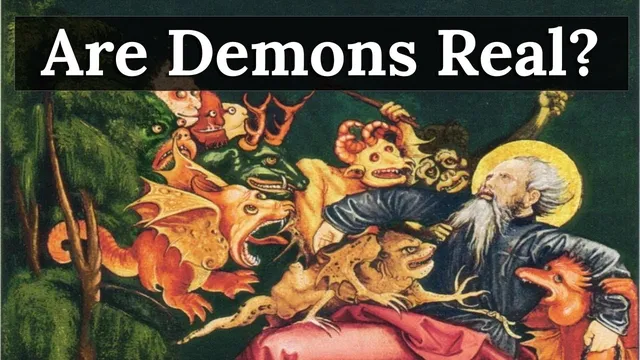
Carl Jung - Are Demons Real?
Based on Academy of Ideas's video on YouTube. If you like this content, support the original creators by watching, liking and subscribing to their content.
Jung’s “demons” are best understood as unconscious psychic forces that still drive error and wrongdoing, even when modern people reject literal possession.
Briefing
Carl Jung’s core claim is that “demons” haven’t vanished in modern life—they’ve been rebranded and internalized. What earlier cultures experienced as external possession by hostile spirits now shows up as unconscious psychic forces that can still drive people into error and wrongdoing. The practical consequence is sobering: withdrawing projections from the outside world may reduce superstition, but it can also deepen repression, making destructive impulses harder to recognize and contain.
Jung links this shift to a psychological change in how humans relate inner experience to the external world. In “participation mystique,” a concept associated with Lucien Lévy-Bruhl, early humans lacked a sharp boundary between subject (the psyche) and object (the environment). When unconscious material rose toward awareness, it was projected outward because the ego was not developed enough to integrate it. Nature then became “animated”: plants, animals, rocks, rivers, oceans, and forces like fire, wind, thunder, and lightning were experienced as intentional and agentic. In that worldview, benevolent projections supported protective gods and guiding spirits, while malevolent projections produced dark spirits, angry gods, and evil demons.
Over time, Jung argues, growing self-awareness created a “wedge” between inner and outer reality. As the boundary solidified, projections were withdrawn. People stopped treating nature as a home for spirits and demons, a process Jung describes as “desyizing” nature—removing the psychic energies that had been projected outward. Yet the demonic did not disappear; it moved. The “rabble of spooks” that once lived outside relocated into the psyche, meaning the conditions that breed demons remained active, only now hidden as unconscious forces.
Jung also warns that repression magnifies danger. When demonic forces were external, people could at least recognize them as threats and develop religious or shamanic practices to confront them. Once the demonic became internal, denial replaced vigilance. The more something is repressed, the more power it gains from the unconscious. Jung illustrates this with an image: when demons can no longer inhabit rocks and rivers, they use human beings instead—because a person does not notice when they are governed by an unconscious master, and that blindness can “heighten its power a thousandfold.”
That vulnerability becomes especially visible in political life, where authority can inflate the psyche into a “God Almighty” complex—an omnipotence belief that erodes free will and fuels delusion. Jung frames the psyche as self-regulating: one-sided conscious attitudes trigger a counterstroke from the unconscious. In the inflated case, the counterstroke can activate destructive forces and overwhelm the individual, producing what looks like demonic possession.
Finally, Jung extends the mechanism to mass behavior. When people can’t accept that destructive impulses originate within, they project them onto others—neighbors, colleagues, foreigners, immigrants, or rival political groups. Those targets become screens for unacknowledged darkness, and harm is rationalized as moral purification. The result is collective delusion, incitement to war and revolution, and destructive mass psychosis—less a cure for evil than a way of spreading it further.
Cornell Notes
Jung’s central point is that “demons” persist in modern life, not as literal spirits but as unconscious psychic forces. As humans developed sharper boundaries between inner psyche and outer nature, they withdrew projections—so nature became “desyched.” But the demonic energies didn’t disappear; they were pushed inward, where repression makes them more dangerous and harder to recognize. Jung links this to psychological inflation (a “God complex”) in powerful individuals, where one-sided consciousness invites a counterstroke from the unconscious. When people deny inner darkness, they project it onto others, fueling collective delusions and mass violence rather than reducing evil.
What does “participation mystique” explain about why earlier cultures saw demons as real?
Why doesn’t Jung think withdrawing projections eliminates the demonic?
How does repression make unconscious “demons” more dangerous?
What is “psychological inflation,” and how does it relate to demonic possession?
How does Jung connect projection to war, revolution, and mass psychosis?
Review Questions
- How does the shift from participation mystique to a stronger subject-object boundary change where “demonic” forces are experienced?
- Why does Jung claim repression increases the danger of unconscious destructive impulses?
- In Jung’s framework, what psychological mechanism turns inner darkness into collective violence?
Key Points
- 1
Jung’s “demons” are best understood as unconscious psychic forces that still drive error and wrongdoing, even when modern people reject literal possession.
- 2
Participation mystique describes a lack of clear separation between inner psyche and outer environment, enabling unconscious content to be projected onto nature as gods and demons.
- 3
As self-awareness grows, projections are withdrawn from nature, but the underlying demonic energies are internalized rather than eliminated.
- 4
Repression makes unconscious forces more dangerous because denial prevents recognition and containment.
- 5
Psychological inflation—especially in people with immense authority—can trigger a counterstroke from the unconscious that overwhelms judgment and free will.
- 6
When people can’t accept inner darkness, they project it onto others, creating collective delusions that can fuel war, revolution, and mass psychosis.