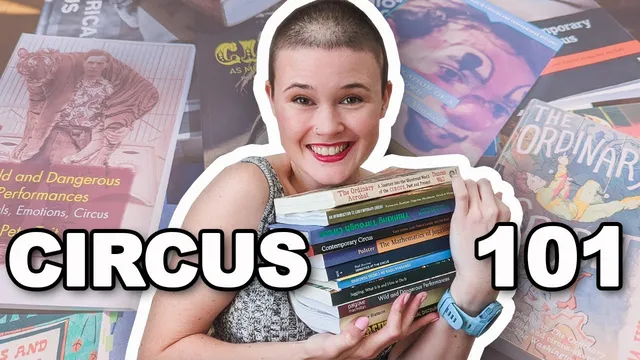
Contemporary Circus Studies: A Reading List
Based on morganeua's video on YouTube. If you like this content, support the original creators by watching, liking and subscribing to their content.
Contemporary circus is framed as contesting traditional circus values and questioning boundaries of form, including separation between circus disciplines.
Briefing
Contemporary circus is defined less by a new set of tricks than by a deliberate challenge to what “circus” traditionally meant—its values, its boundaries between disciplines, and even who gets to count as a circus body. The reading list lays out that shift in three eras: the traditional/modern circus (1768 to the 1960s) with animals and distinct acts; “new circus” from the 1960s to the 1990s, marked by the removal of animals and the blending of other art forms; and contemporary circus over roughly the past 20 years, characterized by contestation—questioning the form itself and how circus disciplines separate from one another. That framing matters because it explains why today’s circus scholarship often treats performance as theory-in-action, not just entertainment with a history behind it.
The list then guides readers from accessible entry points to specialized research. For beginners, Duncan Wall’s The Ordinary Acrobat offers a memoir-like route into circus history and practice, tracing Wall’s path from confusion about circus as a child to becoming captivated during a school trip to Paris and later studying at the National Circus School in France via a Fulbright fellowship. The book’s structure—covering circus disciplines separately, with three dedicated chapters on juggling—mirrors contemporary circus’s tendency to examine disciplines as distinct cultures, not interchangeable spectacle. Tom Wall’s Juggling: What It Is and How to Do It provides a hands-on alternative, emphasizing notation, training regimens, prop making, trick creation, and act creation, with sections by Benjamin Domas, Jay Gilligan, and Fritz Grobe; it’s positioned as the quickest way to understand circus by trying it.
Intermediate titles broaden the field’s critical lens. Contemporary Circus, edited by Katie Lavers, Louis Patrick Leroux, and John Burt, is built from interviews that foreground artists’ voices and organize chapters around what contemporary circus contests: mastery, norms, performer “prowes,” and the circus act itself. The collection pushes back against the traditional dominance of white, male, able-bodied, heteronormative performers, and it raises questions such as when an object becomes “unjugglable” and how audiences react differently to gender presentation. Cirque Global, edited by Louis Patrick Leroux with Charles R. Batson, anchors circus studies in Quebec, linking the region’s scene to global dynamics and analyzing Cirque du Soleil through multiple academic lenses, while also offering a glossary and a foundation for circus studies in Canada. An Introduction to Contemporary Circus by Tommy Perivara (with other authors) focuses on Nordic contexts and traces historical lineages toward contemporary circus, including how mid-1900s shifts in film and television shaped performing arts relationships—though it also draws critique for compressing “circus” into a single starting point.
The advanced section turns toward theory, company-specific scholarship, and practice-based thinking. Thinking Through Circus (edited by Baca Leavens, Sebastian Khan, Quinton Kettles, and Vincent Fòque) argues against separating “thinking” from “doing,” and it avoids defining circus in general to protect inclusivity and future potential. Juggling Trajectories: Gandini Juggling from 1991 to 2015 offers a deep dive into one company’s methods, especially the role of site swap notation in turning juggling into something closer to choreographic scoring. Finally, Circus Thinks Reflections 2020—created with Circus Sud in Lund, Sweden—collects personal, reflective writing from “circus thinkers,” including the short piece “Why I Juggle,” treating circus scholarship as an ongoing conversation among practitioners and researchers.
Cornell Notes
The list frames contemporary circus as a challenge to traditional circus values and to the boundaries between circus disciplines. It organizes recommendations by difficulty: beginner books for accessible entry into circus history and practice, intermediate texts for field overviews and regional/contextual scholarship, and advanced works for theory, company-specific research, and practice-based reflection. Key intermediate titles emphasize artists’ voices and critical questions about mastery, norms, and audience expectations, while also situating circus within places like Quebec and the Nordic region. Advanced readings argue that “doing” circus can function as critical thinking, and they show how notation and company languages (like site swap) can turn juggling into a structured artistic practice. The result is a roadmap for studying circus as both art and evolving academic inquiry.
How does the list distinguish traditional circus, “new circus,” and contemporary circus—and what does that distinction change for readers?
Why is Duncan Wall’s The Ordinary Acrobat recommended as a beginner entry point?
What kind of questions does Contemporary Circus (Lavers, Leroux, and Burt) use to show what contemporary circus contests?
How does Cirque Global connect a regional circus scene to global scholarship?
What makes site swap central to Juggling Trajectories: Gandini Juggling from 1991 to 2015?
Why is Thinking Through Circus (Leavens, Khan, Kettles, and Fòque) described as avoiding a single definition of circus?
Review Questions
- Which era-based definition of circus (traditional, new, contemporary) best explains the list’s emphasis on contestation and boundary-testing—and why?
- Pick one intermediate book from the list. What specific critical lens (mastery, norms, regional context, terminology, etc.) does it use to make circus studies more than performance history?
- How do site swap and other “company languages” change juggling from a set of tricks into something closer to structured artistic composition?
Key Points
- 1
Contemporary circus is framed as contesting traditional circus values and questioning boundaries of form, including separation between circus disciplines.
- 2
The list’s era breakdown (traditional/modern, new circus, contemporary circus) provides a lens for understanding why today’s scholarship treats performance as critique.
- 3
Beginner entry points pair accessible narrative or practical instruction with discipline-focused coverage, especially for juggling.
- 4
Intermediate scholarship emphasizes artists’ voices and critical questions about mastery, norms, audience perception, and innovation in training systems.
- 5
Regional studies (like Quebec and the Nordic context) are used to show how circus studies can build an academic field beyond a single cultural center.
- 6
Advanced texts increasingly treat practice as a method of critical thinking and often avoid locking circus into rigid definitions.
- 7
Company-specific research (such as Gandini Juggling) demonstrates how notation and performance pedagogy can create a “language” for juggling.