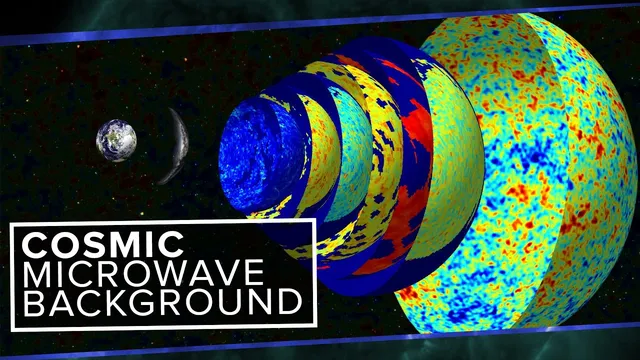
Cosmic Microwave Background Explained
Based on PBS Space Time's video on YouTube. If you like this content, support the original creators by watching, liking and subscribing to their content.
The CMB is a persistent microwave signal from every direction that matches an almost ideal blackbody (thermal) spectrum at about 2.7 Kelvin.
Briefing
Space looks black to the eye, but every direction in the sky contains a faint, persistent microwave “static” with an almost perfectly repeatable pattern. That signal—known as the cosmic microwave background (CMB)—isn’t noise from some unknown object. Its spectrum matches what a near-ideal thermal radiator would emit, and that match is a clue to the universe’s earliest moments.
The CMB’s thermal shape can be understood by comparing it to everyday heat radiation. A glowing toaster doesn’t merely reflect light; it emits electromagnetic waves across wavelengths according to a blackbody (thermal) spectrum set by its temperature. Lower the temperature enough and the peak of that spectrum shifts. In the universe, the CMB peaks in microwave wavelengths at about 2.7 Kelvin, making it one of the closest observed examples of a mathematically perfect blackbody spectrum.
The reason empty space can still show such a spectrum comes from what filled space long ago. Roughly 400,000 years after the Big Bang, the cosmos was a hot, ionized plasma where electrons and protons couldn’t form neutral atoms. That charged “fog” scattered light constantly, preventing photons from traveling far—astronomically, visibility was essentially near zero. As the plasma cooled below about 3,000 degrees, neutral atoms finally formed. With fewer free electrons to scatter radiation, the universe became transparent for the first time, letting light stream freely.
That last burst of light—emitted by the plasma just before neutral atoms formed—would have looked like an intense, orange glow throughout the universe. But the universe was also expanding. Expansion stretches the wavelength of free-streaming light through cosmological redshift, gradually shifting that orange thermal spectrum to longer wavelengths. Over millions of years it would move toward infrared and, after about 13+ billion years of expansion, end up in today’s microwave band—where it appears as the CMB.
The CMB’s thermal spectrum therefore acts as evidence that “black is the new orange”: the universe’s earliest light was thermal, and the expansion of space stretched it into microwaves while the matter later clumped into stars, galaxies, and ultimately people. Beyond its color, the CMB also carries other physics clues, but the central takeaway is that the universe’s first transparent light left a measurable fingerprint that still fills the sky.
The episode also pivots to a separate physics challenge about stabilizing a gyro-driven Star Fox barrel roll, highlighting a solution using two flywheels whose angular momentum orientations are rotated into reverse in opposite senses to cancel intermediate sideways angular momentum. It concludes with clarifications about alternative approaches and a note correcting flap direction in the demo.
Cornell Notes
The cosmic microwave background (CMB) is a faint microwave signal coming from all directions that matches an almost perfect blackbody (thermal) spectrum at about 2.7 Kelvin. That match is explained by the universe’s early “plasma era,” when space was filled with hot, ionized particles that emitted thermal radiation but kept it trapped by scattering. Around 400,000 years after the Big Bang, cooling allowed neutral atoms to form, making the universe transparent and letting photons stream freely. As space continued to expand, cosmological redshift stretched those photons from an initial orange-like thermal spectrum into the microwave band seen today. The CMB’s spectrum is thus a direct fossil record of the universe’s first transparent light.
Why does the CMB look like it has a thermal spectrum, and why is that surprising?
What prevented early light from traveling far before the CMB formed?
What changed around 400,000 years after the Big Bang?
How does an orange early universe end up as microwaves today?
What does the CMB imply about the universe’s early conditions?
How does the gyro barrel-roll challenge relate to the episode’s physics theme?
Review Questions
- What physical process makes the universe transparent around 400,000 years after the Big Bang, and how does that connect to the origin of the CMB?
- Explain how cosmological redshift transforms an early orange-like thermal spectrum into the microwave signal observed today.
- Why is the CMB’s near-perfect blackbody spectrum considered strong evidence for a thermal radiation era rather than an unknown local source?
Key Points
- 1
The CMB is a persistent microwave signal from every direction that matches an almost ideal blackbody (thermal) spectrum at about 2.7 Kelvin.
- 2
A thermal spectrum comes from radiation produced by random particle motions tied to temperature, as illustrated by toaster glow.
- 3
Before neutral atoms formed, the universe was an ionized plasma whose free electrons scattered light, keeping the cosmos effectively opaque.
- 4
When the plasma cooled below roughly 3,000 degrees, neutral atoms formed and photons began free-streaming, creating the radiation that later became the CMB.
- 5
Cosmological redshift from ongoing expansion stretched the original thermal spectrum from an orange-like peak into today’s microwave band over 13+ billion years.
- 6
The CMB’s spectral shape functions as a fossil record of the universe’s first transparent light and supports the idea that black is the new orange.
- 7
A separate physics challenge on gyro stabilization uses two flywheels rotated into reverse in opposite senses to cancel intermediate sideways angular momentum.