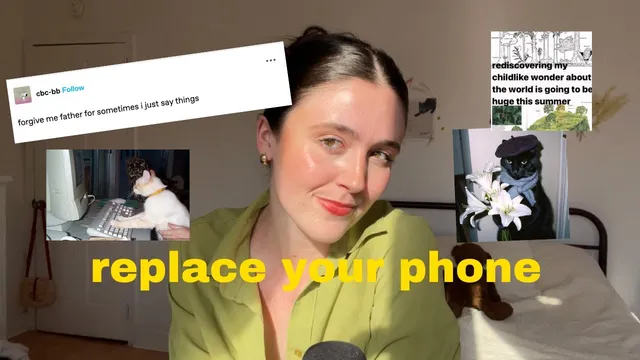
creating a digital garden to end my doomscrolling
Based on Anna Howard's video on YouTube. If you like this content, support the original creators by watching, liking and subscribing to their content.
Digital gardening treats doomscrolling as a retention problem and responds by slowing down during consumption through note-taking.
Briefing
Digital gardening is presented as a practical antidote to doomscrolling: instead of passively consuming information, people capture it as notes that later connect into a living map of their interests. The core claim is that creativity and individuality don’t come from trying to “be more interesting,” but from becoming a more intentional consumer—slowing down enough to process what’s being watched, read, or heard, and then turning those reactions into durable ideas.
The argument starts with the fatigue of constant intake. Online consumption is so fast and so shallow that it rarely sticks—names, quotes, and even the reasons behind agreement or disagreement slip away. That pattern keeps people trapped in a loop where they consume without inviting their own thinking into the conversation. The remedy is not simply “create more than you consume,” which is treated as incomplete; it’s to consume better. Taking notes while consuming is framed as the moment where attention becomes active: pausing when something resonates, writing down why something lands, and challenging understanding by forcing concepts into one’s own words.
A key concept is that notes should become interconnected rather than stored chronologically. Traditional notebooks, blogs, and journals are described as linear: they track what happened when, but they don’t reveal how ideas relate. A digital garden—often built with tools such as Obsidian, though other platforms work—functions more like a personal Wikipedia. Each note can link to related notes through tags and contextual connections, so an insight from months ago can resurface and combine with a newer one. Over time, the system visualizes a “web” of interests, making patterns visible and turning scattered consumption into raw material for essays, podcasts, substack posts, speeches, or other creative projects.
The note-taking workflow is described in two layers. “Source material notes” are captured during consumption—quotes, observations, humor, sadness, and what viewers missed the first time. “Decontextualized notes” follow afterward, translating the material into the viewer’s own interpretation of themes and meaning. Using an example from Fleabag, the notes move from what happens in a specific scene to broader reflections on desire, suppression, martyrdom, and self-honesty. Those reflections then get organized with tags such as desire, savior complex, suppression, and romantic love, which later reveal recurring interests.
The practice is also defended as a way to reclaim retention in a culture that increasingly undervalues reading and art. Rather than shaming oneself for consuming, the emphasis is on being present during consumption—leaning in, like an instructor who demands full attention. The benefits of this approach are summarized as slowing down, creating instant feedback when concepts can’t be put into one’s own words, and enabling non-linear synthesis that makes creation “inevitable.”
Finally, digital gardens are defined by an ethos: topography over timelines, continuous growth, imperfection by design, playful experimentation, intercropping and content diversity (including audio-visual media and even code snippets), and independent ownership of a private patch of the web. The result is a system that keeps evolving, preserves personal meaning, and turns doomscrolling’s fleeting impressions into a long-term foundation for learning and creation.
Cornell Notes
Digital gardening reframes doomscrolling by turning passive consumption into an active note-taking practice that later connects ideas. The method centers on capturing “source material notes” while watching or reading, then writing “decontextualized notes” afterward—your interpretations and themes—so your thinking becomes part of the record. Instead of storing notes chronologically like a blog or journal, a digital garden uses links and tags to create a web of interconnected concepts, letting older insights resurface and combine with newer ones. Over time, the system reveals patterns in what you’re drawn to and provides a foundation for essays, podcasts, or other creative work. The approach matters because it improves retention and makes creativity feel less like a talent problem and more like a process of intentional attention.
Why does the transcript treat “better consumption” as the first step toward creativity?
What makes a “digital garden” different from a notebook or a blog?
How does the two-layer note-taking workflow work?
What role do tags play in turning notes into a usable creative system?
What are the practical benefits of note-taking in this approach?
What ethos defines a digital garden beyond the mechanics?
Review Questions
- How does the transcript distinguish “source material notes” from “decontextualized notes,” and why does that separation matter?
- What specific mechanisms (links, tags, topography) allow a digital garden to produce synthesis that chronological notes can’t?
- Which benefits of note-taking are tied to retention and understanding, and how would you test them on a concept you think you already understand?
Key Points
- 1
Digital gardening treats doomscrolling as a retention problem and responds by slowing down during consumption through note-taking.
- 2
Active consumption means pausing to record why something lands, what doesn’t, and how it connects to existing understanding.
- 3
A digital garden organizes notes by contextual relationships (links and tags), not by time like a blog or journal.
- 4
Using two note layers—source material notes during viewing and decontextualized notes afterward—turns reactions into themes and personal insight.
- 5
Instant feedback comes from the difficulty of translating ideas into one’s own words; that gap signals where to dig deeper.
- 6
As tags accumulate, recurring interests become visible, guiding future creative projects such as essays, podcasts, or scripts.
- 7
Digital gardens are defined by continuous growth, imperfection, experimentation, content diversity, and independent ownership of a personal space for learning.