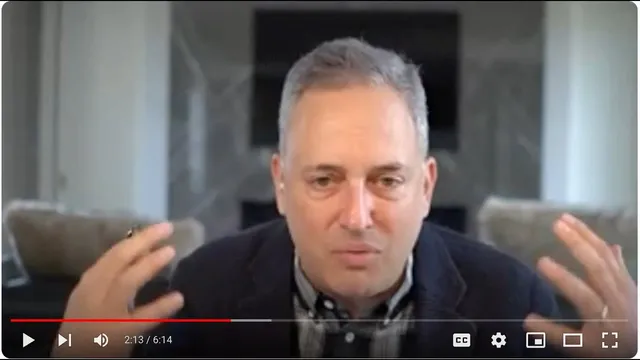
David Sacks: How did the "PayPal Mafia" come together? Exclusive content | Supermanagers Podcast
Based on Fellow - AI Meeting Assistant and Notetaker's video on YouTube. If you like this content, support the original creators by watching, liking and subscribing to their content.
PayPal’s early team formed largely through friendship networks because mainstream candidates weren’t eager to join startups during the dot-com crash.
Briefing
The “PayPal Mafia” formed less through deliberate talent-branding and more through a rare combination of friendship-based hiring, a timing window after the dot-com crash, and hard-won startup playbooks that later became reusable assets. David Sacks frames the early PayPal team as unusually entrepreneurial and tightly networked: in 1999–2000, few people wanted to join a startup at all, especially during the dot-com crash, so recruitment largely happened through personal connections rather than headhunters. Stanford and University of Illinois networks fed the company—Peter Thiel recruited friends from Stanford, Max Levchin recruited friends from U of I, and Sacks brought in people he knew—creating a group “cut from the same cloth” with contrarian, founder-like personalities.
That social fabric mattered, but the bigger catalyst came when PayPal’s ownership changed. After eBay acquired PayPal, the integration leaned toward a more corporatist culture, while PayPal’s internal identity had been more “cowboy” and startup-like. Sacks says eBay didn’t make a serious effort to retain key talent. The result was a mass exodus in late 2002–2003: many employees left to start new companies, fueled by the fact that PayPal had survived when many others failed. In Silicon Valley’s early-2000s mood, “B2B” and “C-men” were jokes about people returning to banking and consulting, as startups collapsed and talent dispersed. PayPal’s relative success gave this group confidence and credibility—plus ideas they wanted to pursue—at a moment when much of the rest of the ecosystem was retreating.
Sacks adds a third ingredient: PayPal had developed practical “playbooks” for building and scaling a startup—how to run product management, hack distribution, and engineer viral growth. In the early 2000s, those techniques weren’t widely documented; blogging and broad online learning resources weren’t yet available at the scale seen later. So the departing team carried not just experience, but specialized knowledge that few outsiders could easily replicate. With other founders and talent leaving the region, this group effectively had room to operate and apply what they’d learned.
The conversation also points to how the PayPal story is being retold. A newly released book, “The Founders,” by Jimmy Soni, is highlighted as a deeply researched account that involved comprehensive interviews across roughly 200 people involved in the PayPal narrative. Sacks contrasts that approach with “PayPal Wars,” noting it was written from Eric’s perspective and that it offers a different lens. The discussion suggests the PayPal origin story has enough narrative pull to reach film or television, with production rights optioned for a potential screen adaptation.
Taken together, the “PayPal Mafia” wasn’t assembled by a single recruiting trick like “snacks” or “pool tables.” It emerged from a friendship-driven early team, a post-acquisition talent vacuum, and a concentrated bundle of startup methods learned during a rare moment when PayPal succeeded while much of the rest of Silicon Valley was backing away.
Cornell Notes
David Sacks attributes the rise of the “PayPal Mafia” to three linked factors: the early team’s friendship-based hiring, the timing of PayPal’s success during the dot-com crash, and the practical startup playbooks the company developed. In 1999–2000, few people wanted to join PayPal, so recruitment relied heavily on personal networks—Stanford and University of Illinois connections, plus Sacks’s own contacts. After eBay acquired PayPal, the shift toward a more corporatist culture and lack of retention efforts triggered a talent exodus in late 2002–2003. Those departures coincided with a broader Silicon Valley retreat, leaving the former PayPal employees with both credibility and space to build new companies using techniques that weren’t widely documented online at the time.
Why did PayPal’s early hiring rely more on personal networks than on traditional recruiting?
How did eBay’s acquisition change the talent situation at PayPal?
What role did timing play in turning PayPal success into a broader startup wave?
What “playbooks” did PayPal develop that later helped former employees build new companies?
How do the book recommendations differ in approach to the PayPal story?
Review Questions
- What specific conditions in 1999–2000 made PayPal harder to recruit for using mainstream channels?
- How did eBay’s cultural integration contribute to talent leaving PayPal, and why did that matter for the later startup ecosystem?
- Which PayPal-developed “playbooks” does Sacks name, and how did the lack of early online resources make those playbooks more valuable?
Key Points
- 1
PayPal’s early team formed largely through friendship networks because mainstream candidates weren’t eager to join startups during the dot-com crash.
- 2
Sacks credits the early group’s shared backgrounds and contrarian, founder-like personalities for building a cohesive entrepreneurial culture.
- 3
eBay’s acquisition shifted culture toward a more corporatist style, and limited retention efforts helped trigger a talent exodus in late 2002–2003.
- 4
PayPal’s survival during the dot-com crash gave departing employees credibility and momentum to start new companies when many others were leaving Silicon Valley.
- 5
The team carried practical startup playbooks—product management, distribution hacking, and viral growth—at a time when those techniques weren’t widely documented online.
- 6
Extensive reporting for “The Founders” comes from interviewing roughly 200 people and reconstructing the story from multiple viewpoints, contrasting with more single-perspective accounts like “PayPal Wars.”