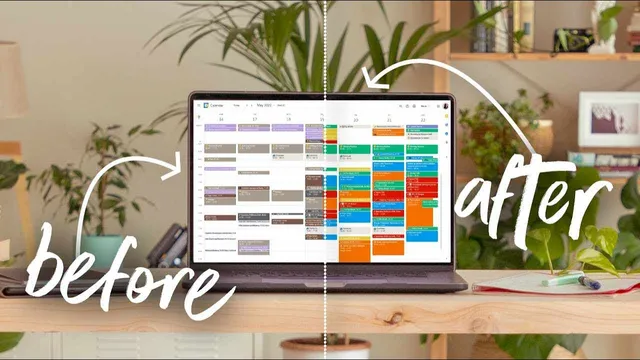
Do This and Fix Your Schedule
Based on Mariana Vieira's video on YouTube. If you like this content, support the original creators by watching, liking and subscribing to their content.
Procrastination is driven by avoidance of discomfort from unfamiliar or challenging work, not just poor discipline.
Briefing
Procrastination isn’t treated as a character flaw so much as a predictable brain response: people avoid unfamiliar, challenging work because it triggers discomfort and self-doubt, and the easiest way to “win” against those feelings is to steer clear of them. That avoidance quietly drains time—described as the only real currency available—until goals and accomplishments stall. The practical takeaway is that fixing scheduling starts with understanding why the mind prefers comfort and familiarity, then designing routines that reduce the emotional and mental friction of starting.
A personal scheduling review highlights four recurring mistakes, with the most important being the failure to recognize when a routine must change. Many people blur the line between mindfully stopping a habit that no longer fits and quitting because something feels too difficult. In the past, changes were framed as “not trying hard enough,” which turned healthy adaptation into self-criticism. The reframing offered here is direct: when a routine stops serving you, that’s not failure—it’s a signal to adjust, and the adjustment should be embraced rather than resisted.
From there, the core method for defeating procrastination is momentum. The idea is simple: tasks become easier once work has started, and the shift is felt as confidence, energy, and trust in one’s ability to complete. The transcript uses a contrast—lazy days make even basic chores feel harder, while productive days create a “roll” where crossing items off a list feels surprisingly manageable. Momentum also matters because repeating the same type of work for hours with the same tools and mindset can deepen procrastination and the sense of “no progress,” which then further erodes confidence.
Momentum can be rebuilt in several concrete ways. One is diversifying tasks: rotate the type of work, the resources needed, and the level of challenge so the brain gets novelty and the day doesn’t feel monotonous. Another is breaking tasks into smaller chunks to reduce decision fatigue and make progress visible through small wins. The transcript also recommends making the first task deliberately easy—so it can be completed quickly and checked off immediately. Even if the plan looks “ridiculous,” the point is private, practical motivation: tiny steps can pull someone out of a slump.
A final tactic is to rely on non-negotiable micro-tasks—actions that must happen even when energy is low. Taking a dog outside in the morning is given as an example that still happens during sickness or rain. With a list of five tasks, the rule is to ensure the first one is non-negotiable, guaranteeing at least one win regardless of how the day starts. That first action becomes the launchpad for everything that follows, turning the schedule into a sequence of momentum-building starts rather than a single overwhelming commitment.
Cornell Notes
Procrastination is framed as avoidance of discomfort: challenging or unfamiliar tasks trigger negative feelings and doubt, so the brain chooses comfort and delay. The most important scheduling lesson is to treat routine changes as healthy adaptation rather than quitting—many people mislabel “needing a new routine” as not trying hard enough. Momentum is presented as the universal lever: tasks feel easier after work begins, and early wins build confidence and energy. Momentum can be strengthened by diversifying task types, breaking work into smaller chunks to reduce decision fatigue, and making the first task simple and non-negotiable—even when energy is low. The result is a schedule designed to start, not just to plan.
Why does procrastination happen, and how does that change what “fixing it” should look like?
What’s the key distinction between quitting a habit and updating a routine?
How does momentum defeat procrastination in practical terms?
What tactics help someone regain momentum when progress stalls?
Why emphasize a “non-negotiable” first task?
Review Questions
- How does the transcript connect procrastination to emotional discomfort and self-doubt rather than laziness?
- What are three specific ways to build momentum, and how does each one reduce friction to starting work?
- Why does making the first task non-negotiable matter more than simply adding more tasks to a to-do list?
Key Points
- 1
Procrastination is driven by avoidance of discomfort from unfamiliar or challenging work, not just poor discipline.
- 2
Treat routine changes as healthy adaptation when a habit no longer fits, rather than as “not trying hard enough.”
- 3
Momentum makes tasks feel easier once work begins, so scheduling should prioritize starting over planning perfection.
- 4
Diversify task types, resources, and challenge levels to prevent monotony and the feeling of stalled progress.
- 5
Break tasks into smaller chunks to reduce decision fatigue and create visible small wins.
- 6
Make the first task deliberately easy and quick to complete, even if the plan looks overly simple.
- 7
Use non-negotiable micro-tasks to guarantee an early win when energy is low.