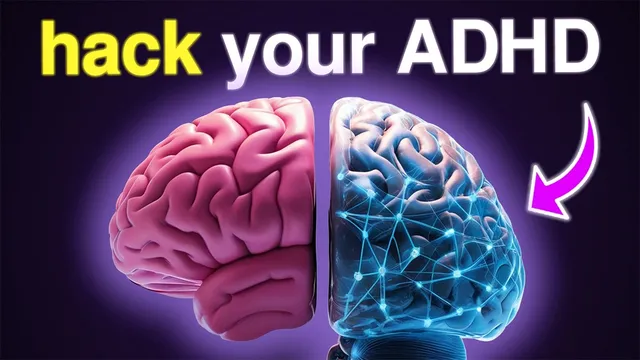
Hack Your ADHD Brain With a Second Brain
Based on John Mavrick Ch.'s video on YouTube. If you like this content, support the original creators by watching, liking and subscribing to their content.
ADHD-related distractibility is linked to lower dopamine and norepinephrine, which makes stimulation more attractive than importance when tasks feel boring or difficult.
Briefing
ADHD often turns motivation and focus into a constant fight because the brain’s chemistry and attention networks don’t work like they do for neurotypical people. The core promise behind a “second brain” approach is that cognition doesn’t have to live entirely inside the skull: external systems—especially digital ones—can supply structure, reduce distraction, and offload memory so the primary brain can spend more effort on thinking, not juggling.
The transcript frames ADHD as a mismatch between what the brain prioritizes and what daily life demands. With lower dopamine and norepinephrine, boredom and difficulty become harder to tolerate, so stimulation takes over. That makes procrastination sticky: tasks feel less rewarding than whatever grabs attention first. A second brain can help by creating an environment that’s engaging enough to pull attention back—turning productivity into something the brain wants to enter rather than something it resists.
But the same tools can backfire. Customizing a digital workspace can slide into hyperfixation, turning “helpful organization” into compulsion. The solution isn’t more tweaking; it’s designing guardrails that limit what’s visible and what actions are possible while working. The transcript uses Obsidian as the example: preset workspaces can hide settings, remove irrelevant views, and keep only what matters for a specific task (like script writing). The goal is to narrow the field of attention so distractions don’t constantly compete for dominance.
That attention strategy also ties to how focus is supposed to work in the brain. When someone can engage the task-positive network, attention locks onto a goal and resists distraction. When interest drops, the default mode network takes over, spreading attention and pulling the mind toward unrelated thoughts. Neurotypical people can “flip a switch” between these modes; people with ADHD often can’t, so the transcript argues for environmental control instead of relying on internal switching.
A second brain also addresses working memory limits. The transcript likens working memory to RAM: with less capacity and more “glitches,” ideas can vanish before they’re acted on, and returning to a task can feel like rebooting from scratch. Daily notes act as external working memory—quickly capturing ideas via hotkeys, priming what matters at the start of the day, and providing checklists so routines don’t have to be held in mind. Project notes and templates add context so future sessions don’t start cold.
Finally, the transcript connects external organization to deeper learning. Because ADHD can make it harder to engage “system 2” thinking (slow, deliberate analysis), the second brain helps by externalizing structure. Instead of linear note-taking, it recommends building a “web of knowledge” using linked notes, backlinks, and Obsidian’s local graph—so retrieval happens through navigation of relationships rather than perfect recall. Over time, these maps reveal gaps in understanding and support more analytical thinking.
The overall takeaway is practical: ADHD traits—especially the drive for stimulation—can be redirected toward meaningful work when external systems reduce distraction, offload memory, and turn knowledge into navigable structure rather than something the brain must hold and retrieve unaided.
Cornell Notes
The transcript argues that ADHD challenges—low dopamine/norepinephrine, distractibility, and limited working memory—can be managed more effectively by building an external “second brain” instead of relying only on willpower. A second brain can make focus easier by creating an engaging workspace and by using task-specific guardrails (like Obsidian workspaces that hide irrelevant elements). It also reduces cognitive load by acting as extended working memory through daily notes, hotkeys for quick capture, and project templates that preserve context for future sessions. For learning and long-term retention, linked notes and “maps of content” help support system 2 thinking by organizing ideas into a navigable web rather than forcing perfect recall.
Why does procrastination feel so hard to break for many people with ADHD?
How can a second brain reduce distraction if it’s still digital and full of temptations?
What’s the role of task-positive vs default mode networks in focus?
How does the second brain help with working memory limits?
Why does linking notes matter for learning and long-term retention?
Review Questions
- What specific ADHD-related mechanisms (chemistry, attention networks, working memory) does the transcript say a second brain can compensate for, and how?
- Describe one example of an Obsidian workspace “guardrail” and explain how it prevents distraction.
- How do backlinks and the local graph change the way information is retrieved compared with trying to remember where something is stored?
Key Points
- 1
ADHD-related distractibility is linked to lower dopamine and norepinephrine, which makes stimulation more attractive than importance when tasks feel boring or difficult.
- 2
A second brain can improve follow-through by creating an engaging, task-friendly environment that people want to enter consistently.
- 3
Digital customization can become hyperfixation; guardrails like task-specific workspaces help keep tools from turning into distractions.
- 4
Focus is framed as a battle between task-positive and default mode networks; because internal switching is unreliable for many with ADHD, environmental control matters.
- 5
Working memory limits are treated like RAM constraints; daily notes and hotkeys offload reminders and ideas so they don’t vanish.
- 6
Project templates and saved workspaces preserve context, reducing the “reboot” cost of restarting tasks later.
- 7
Linked notes and knowledge maps support deeper learning by enabling navigation through relationships rather than relying on perfect recall.