How AI Creates SOPs in Minutes (ft. Hayden Miyamoto)
Based on Tiago Forte's video on YouTube. If you like this content, support the original creators by watching, liking and subscribing to their content.
SOPs scale operations only when knowledge is converted into a structured framework with multiple levels, not a single static document.
Briefing
AI can turn a company’s “tribal knowledge” into structured SOPs fast—by using a master prompt that encodes business identity, process definitions, and output rules, then generating a full, multi-level workflow with ownership (RACI) and KPIs. The practical payoff is scalability: when key people are out sick or on vacation, documented procedures let others step in, train new hires, and keep operations consistent.
The workflow starts with defining SOPs as more than a single document. SOPs are framed in three levels: a high-level end-to-end view (even spanning months), mid-level SOPs that cover one department or segment, and tactical guides for one person that spell out the most granular steps. For Acquir—an acquisition-focused company—the example “core process” runs from sale through delivery success for its Accelerator Plus product, beginning after an invoice is sent and ending when an LOI is signed and phase two is paid.
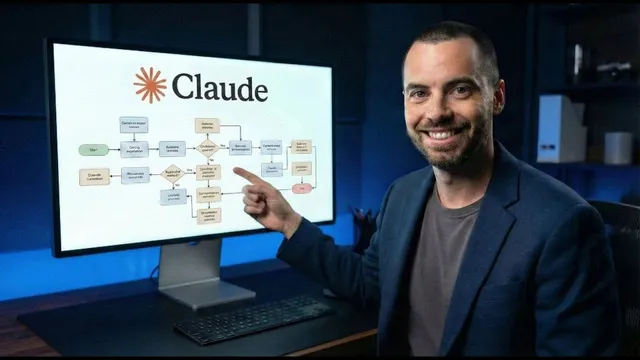
Before AI, the process was mapped manually on a whiteboard and then recreated in Excalidraw. That effort took about six months and still required ongoing improvement. The AI-driven approach begins with a multimodal “screenshot” moment: after capturing the Excalidraw diagram, the creator asks AI what it is and is surprised by how well it understands the diagram’s meaning. From there, the system shifts to prompt-driven generation.
A “master prompt” acts like a business operating system for the model. It injects style preferences (concise wording, ask clarifying questions one at a time, answer based on internal knowledge, wait for confirmation) and business identity (value proposition, brand voice, mission, core values). With the project files providing context about Accelerator Plus, AI generates a visual diagram of the core process with clear start and end points, step-by-step handoffs, activities, and success criteria. It also surfaces decision logic—such as how to prioritize when multiple deals could match multiple AEs—then asks for confirmation.
To make the SOP actionable, AI outputs RACI-style responsibility structure: Responsible (who does the work), Accountable (the single person who owns the KPI outcome), Consulted (two-way input needed), and Informed (one-way notification). The same process generation can branch into parallel tracks—for example, on-market versus off-market deal paths—then converge where the workflow meets again. The result includes key roles, key performance metrics, and an HTML artifact that packages the workflow into a usable deliverable.
From the core process map, AI can generate separate “guide” artifacts for specific functions, such as an onboarding call script or investment thesis development. The creator emphasizes a review loop: the generated SOP may be overly detailed, so a responsible party (e.g., Nathan) checks what’s missing or unnecessary. When AI produces too much, the fix is iterative—remove sections that don’t fit the company’s actual needs.
Finally, the transcript highlights how to operationalize these outputs beyond chat: using AI to generate a lightweight React app that displays SOPs via clickable pages, then exporting the code to be hosted elsewhere for non-technical team members. The broader claim is time-sensitive: setting up an AI “co-pilot” for SOP creation is work upfront, but businesses that do it early can extract significant value before the approach becomes standard.
Cornell Notes
The core idea is that SOPs become scalable only when they’re systematized—turned from “tribal knowledge” into repeatable, multi-level documentation. A master prompt can encode business identity, process definitions, and strict output rules so an LLM generates an end-to-end core process (with decision points, KPIs, and handoffs) and then produces tactical guides for specific functions like onboarding. The workflow is strengthened with RACI ownership so every task has clear Responsible, Accountable, Consulted, and Informed roles. Iteration matters: generated SOPs are reviewed by the responsible owner and trimmed or corrected to match reality. Packaging outputs into a shareable app (e.g., a React-based interface) makes SOPs usable for teams, not just readable in chat.
Why treat SOPs as a system rather than a single document?
How does the master prompt make AI-generated SOPs match a specific company?
What does RACI add to an SOP beyond step-by-step instructions?
How does AI handle branching workflows like on-market vs off-market deal paths?
What’s the practical review loop to keep AI outputs from becoming “wrong but detailed”?
Why package SOPs into an app (like a React interface) instead of leaving them in chat?
Review Questions
- How do the three SOP levels (end-to-end, department segment, and tactical guide) change what a team member should expect to find in the documentation?
- What is the difference between Responsible and Accountable in RACI, and why does the transcript insist Accountable should be only one person?
- What specific master-prompt behaviors (e.g., question timing, confirmation, confidence scoring) are intended to reduce hallucinations and overwhelm?
Key Points
- 1
SOPs scale operations only when knowledge is converted into a structured framework with multiple levels, not a single static document.
- 2
A master prompt can encode business identity (mission, values, brand voice) and process definitions so AI-generated SOPs fit the company’s reality.
- 3
Generating a core process map with clear start/end points, handoffs, success criteria, and decision logic makes downstream SOPs more consistent.
- 4
RACI ownership turns procedures into accountability systems by assigning Responsible, Accountable, Consulted, and Informed roles for each task.
- 5
AI outputs still require human review to remove unnecessary detail and close gaps between “what’s currently done” and “what should be done.”
- 6
Packaging SOPs into a shareable interface (e.g., a React-based app) improves adoption, especially for teams that aren’t comfortable reading raw chat outputs.
- 7
There’s a time advantage in setting up an AI co-pilot for SOP creation early, because the setup effort comes before the widespread shift to this workflow.