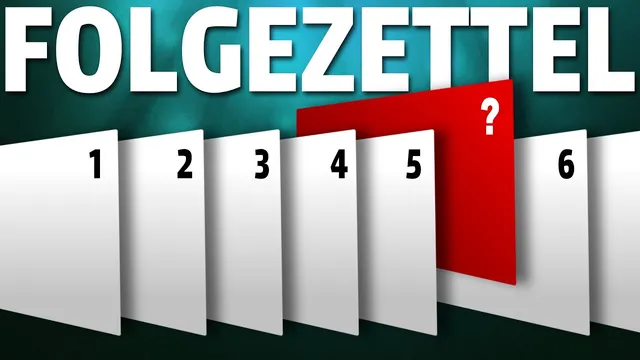
How do you number notes when you want to insert a new one?
Based on Martin Adams's video on YouTube. If you like this content, support the original creators by watching, liking and subscribing to their content.
The “full gazettel” is a numbering sequence for Zettelkasten notes that supports inserting new notes without renumbering everything.
Briefing
Zettelkasten numbering—often called the “full gazettel”—is a practical way to keep a note network ordered without forcing users to renumber everything when they insert new notes. The core idea is to treat note IDs like a sequence that can grow indefinitely, then use a flexible sub-numbering scheme to “make room” for new entries while preserving stable references to existing notes.
In the classic paper version, Nicholas Luhmann’s index cards used physical numbering so new cards could be added without rewriting the entire set. The transcript frames the digital challenge as similar: once notes already have IDs, inserting a new note “in the middle” becomes awkward if IDs must remain immutable. The proposed workaround is to use hierarchical sub-sequences. For example, a note series might start as “note A1, A2, A3.” When a new note needs to be inserted inside that range, the system can switch to alternating sub-identifiers—moving from numbers to letters—such as “A1a, A1b, A1c,” and continuing as needed. This creates effectively infinite depth: new notes can always be appended deeper into the structure, while the overall ordering remains readable.
Why bother in a digital world where software can search, tag, and link freely? The transcript argues that sequencing still matters because it preserves a natural sense of “what builds on what.” In Zettelkasten practice, fleeting notes capture raw highlights and ideas that may later be discarded or developed. Literature notes then rewrite those ideas into atomic, self-contained units that can be studied in isolation—such as memorizing formulas with spaced repetition tools like Anki. The “full gazettel” enters when literature notes become continuations of source material: sequencing them helps maintain continuity while keeping each note atomic.
Without that sequencing discipline, notes can become a messy web of links with no clear hierarchy or order, making it harder to track dependencies—what follows, what extends, and what should be read next. A tempting alternative is to merge everything into one long note, but that sacrifices Zettelkasten’s advantages: moving notes around in thinking, linking to specific parts, and preserving modularity.
The transcript’s digital design goal is to shift the burden of numbering and splitting away from the user. Software should let people write and study naturally, while automatically applying the sequencing logic—so users don’t have to manage immutable IDs or manually restructure notes. In that framing, the “full gazettel” becomes a mechanism for stability (humans remember sequences and numbers) and for flexible insertion, while still supporting projects and hierarchical organization—turning atomic notes into structured work that can be reused, linked, and repurposed.
Cornell Notes
The “full gazettel” is a Zettelkasten-style numbering sequence designed to keep notes ordered even when new notes must be inserted later. Because digital systems often treat note IDs as stable, renumbering everything is undesirable; the workaround is hierarchical sub-numbering (e.g., A1, A2, A3, then A1a, A1b, A1c) that allows infinite depth. This sequencing matters because it preserves continuity—helping readers understand what builds on what—while keeping literature notes atomic and self-contained. In practice, atomic notes can be studied in isolation (including with spaced repetition like Anki) and then sequenced as continuations of source material. The transcript argues that good software should automate the splitting/linking so users can focus on capturing ideas rather than managing the numbering system.
What problem does the “full gazettel” solve when notes are digital and IDs can’t easily change?
How does the numbering scheme create “infinite depth” for inserted notes?
Why does sequencing still matter if software can search and link notes directly?
How do fleeting notes and literature notes relate to the sequencing idea?
What trade-off does the transcript highlight between one big note versus many atomic notes?
What design requirement does the transcript place on note-taking software like Flotellic?
Review Questions
- How does hierarchical sub-numbering (numbers then letters) prevent the need to renumber existing notes when inserting a new one?
- Why does the transcript claim that sequencing helps more than tagging or searching alone?
- What is the difference between fleeting notes and literature notes, and where does the full gazettel fit in?
Key Points
- 1
The “full gazettel” is a numbering sequence for Zettelkasten notes that supports inserting new notes without renumbering everything.
- 2
A stable ordering can be maintained by using hierarchical sub-identifiers (e.g., A1, A2, A3, then A1a, A1b, A1c).
- 3
The scheme creates effectively infinite depth by allowing deeper levels of sub-numbering whenever insertions occur.
- 4
Sequencing helps preserve continuity—making it easier to see what builds on what—rather than relying only on links and search.
- 5
Atomic literature notes keep ideas modular and readable in isolation, while sequencing them preserves the broader narrative flow.
- 6
Combining everything into one long note can reduce Zettelkasten’s advantages, especially modular movement and precise linking.
- 7
Good software should automate numbering, splitting, and linking so users focus on capturing and studying ideas instead of managing IDs.