How Earth Moves
Based on Vsauce's video on YouTube. If you like this content, support the original creators by watching, liking and subscribing to their content.
Local apparent solar noon occurs when a location’s meridian points directly at the Sun, producing predictable shadow behavior tied to Earth’s polar axis.
Briefing
Earth’s motion is the hidden engine behind everyday experiences—sunrises, shadows, day length, seasons, and even the calendars humans rely on—because the planet’s rotation and orbit don’t line up neatly with the sky’s slow, steady reference points. The core insight is that “a day” and “a year” aren’t single, universal clocks in space; they’re definitions built from different motions, and the mismatches between those motions force humans to keep adjusting how time is measured.
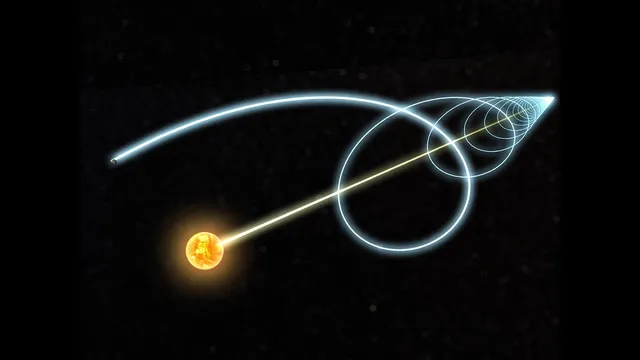
From above the North Pole, Earth spins counterclockwise while also orbiting the Sun on a path tilted 23.4° relative to its spin axis. That tilt and the planet’s rotation determine where the Sun appears in the sky at any moment. When a location’s meridian points directly at the Sun—local apparent solar noon—shadows behave in a striking way: they align toward one of Earth’s poles. At the subsolar point, the Sun sits overhead, so shadows can vanish entirely. The subsolar point sweeps across the planet twice each year; in the U.S., Hawaii is the only place where it hits land, producing “Lahaina noon,” when vertical objects cast unusually perfect circular shadows.
The next layer comes from redefining “day.” Relative to distant stars, Earth completes a rotation in about 23.9 hours, creating a siderial day—named for the stars as reference. But the modern calendar and clocks track the solar day, the rotation needed for the same meridian to face the Sun again. Because Earth moves along its orbit while rotating, the solar day is slightly longer than the siderial day, and its exact length shifts from day to day. Those variations accumulate into what’s known as the equation of time: if clocks matched local apparent solar time perfectly, the Sun’s position at “noon” would trace a simple line across the sky. Instead, over a year it looks like a looping pattern, meaning clocks run slow and fast at different times.
Earth’s orbit and tilt also reshape the year. The tilt drives seasons by concentrating solar energy on the hemisphere facing the Sun, producing summer and winter. The tropical (solar) year is defined by the cycle of those seasonal orientations, and it doesn’t contain a whole number of solar days—about 365¼. That fraction is why calendars drift unless they add an extra day. The Julian calendar introduced leap days in 46 BC, but it overcorrected because the true number of solar days per tropical year is slightly less than 365¼. By 1582, the Julian calendar lagged the seasons by 10 days, pushing Easter out of its expected timing. The Gregorian reform removed three leap days every 400 years, and in countries that adopted it, dates jumped forward by skipping October 5th–14th.
Finally, Earth’s motion extends far beyond the planet. Earth spins at roughly 1,670 km/h at the equator, orbits the Sun at about 108,000 km/h, and the solar system drifts through the Milky Way toward a region associated with the “Great attractor.” The cosmic backdrop is the cosmic microwave background radiation—ancient light released about 380,000 years after the Big Bang—whose slight temperature differences reveal how our motion through space changes what we observe. In short, timekeeping and even “where you are” in the universe are consequences of layered, interacting motions that never fully synchronize.
Cornell Notes
Earth’s everyday rhythms come from multiple overlapping motions: rotation, orbit, and axial tilt. A “day” can mean different things—about 23.9 hours relative to distant stars (siderial day) versus the longer, variable solar day tied to the Sun. The mismatch between these definitions produces the equation of time and shifts when the Sun reaches its highest point. Seasons arise from the 23.4° tilt, and the tropical year’s fractional length forces leap-day rules. Calendar reforms—from Julian to Gregorian—were attempts to keep dates aligned with the seasons as Earth’s true orbital timing slowly diverges from simple arithmetic.
Why do shadows point toward Earth’s poles at local apparent solar noon?
What’s the difference between a siderial day and a solar day, and why does it matter?
How does the equation of time arise?
Why do leap days exist, and why did the Julian calendar still drift?
What did the Gregorian calendar change to fix seasonal drift?
How do motions through space connect to what we observe in the cosmic microwave background?
Review Questions
- If someone says “a day is 24 hours,” what definition of day would that be closest to, and what reference frame would contradict it?
- How do Earth’s orbital speed changes and axial tilt combine to produce the equation of time?
- Why does the Gregorian leap-year rule remove leap days at a different rate than the Julian rule, and how does that prevent long-term drift?
Key Points
- 1
Local apparent solar noon occurs when a location’s meridian points directly at the Sun, producing predictable shadow behavior tied to Earth’s polar axis.
- 2
A siderial day (~23.9 hours) is measured against distant stars, while a solar day is measured against the Sun and varies because Earth moves along its orbit.
- 3
The equation of time reflects changing solar timing caused by Earth’s elliptical orbit and the 23.4° axial tilt shifting the subsolar point through the year.
- 4
Seasons depend on how the 23.4° tilt concentrates solar energy on one hemisphere, defining the tropical year as the cycle of seasonal orientations.
- 5
Leap days exist because the tropical year is about 365¼ days, but the Julian calendar drifted because it assumed too much time per year.
- 6
The Gregorian reform corrected that drift by skipping leap days in century years except those divisible by 400, and it realigned dates by skipping 10 days in 1582.
- 7
Earth’s motion continues beyond the planet—its movement through the Milky Way and relative to the cosmic microwave background affects what we measure in the sky.