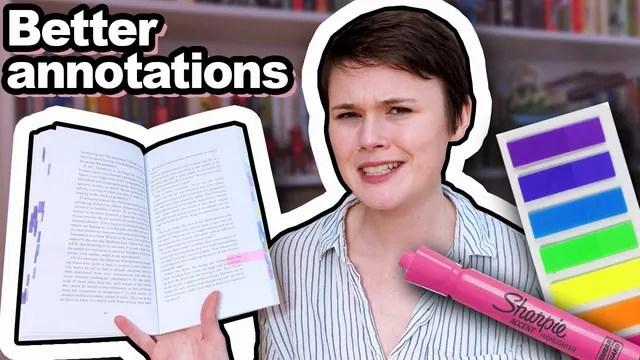
How I annotate books as a PhD student (simple and efficient)
Based on morganeua's video on YouTube. If you like this content, support the original creators by watching, liking and subscribing to their content.
Heavy margin writing can become unretrievable over time, turning annotation into a reason to reread instead of a tool for quick retrieval.
Briefing
For a PhD student moving between reading, dissertation writing, and exams, the biggest problem isn’t finding ideas—it’s retrieving them later without rereading the same books again and again. After years of scribbling in margins and using older note systems that became “unreadable” or unusable, she says her annotations stopped translating into usable quotes, page references, and dissertation-ready notes. The result was repeated rereads—one beloved book ended up being reread four times—because the notes weren’t structured enough to quickly locate what mattered.
Her fix is a new, physical-first annotation workflow designed to keep books clean while turning reading into permanent, searchable notes in a system like Obsidian. She starts with a strict separation between (1) marking up the book during reading and (2) later transferring only the most valuable material into her knowledge management system. Instead of heavy margin writing, she uses color-coded sticky tabs to flag passages, a single-color highlighter to clarify what each tab refers to, and a small set of paper sticky notes to capture personal reactions or summarize dense sections in plain language.
The tab system is built around three purposes. Purple tabs mark anything that draws attention—ideas, potential quotes, or moments worth revisiting—and she may remove and relocate a tab if she finds a better phrasing later, so the book doesn’t become cluttered. Yellow (or lime green) tabs are reserved for sources she wants to investigate, often clustered near the bibliography and notes sections when an author cites works she hasn’t read. Pink (or orange as needed) tabs indicate the highest-priority passages tied to her current dissertation interests; if time is limited, she can jump straight to these.
A single-color highlighter fills the gaps when a tab can’t be placed precisely over one sentence—especially on pages where multiple ideas compete for attention. For complex passages, she writes a short summary on a paper sticky note so she can understand the argument later without re-decoding the original text. For fleeting personal thoughts that might vanish, she places sticky notes directly over the relevant location, ensuring the reaction is captured alongside the source.
After finishing a book, she revisits each tab and decides what becomes permanent. Tabs that don’t earn a place in her Obsidian notes come out; tabs that represent useful ideas stay until she transfers them. Many tabs naturally concentrate in introductions and early chapters, where authors lay out the roadmap of their arguments; later examples can often be skimmed without tabbing every detail. The workflow also supports staggered note-taking—she can tab during reading, then transfer in batches when she has time—while keeping the physical book tidy and readable.
Overall, the method treats annotation as a temporary indexing layer: mark efficiently, summarize selectively, and convert only what matters into a durable system. That shift is what she credits for preventing future rereads and for making books stay useful rather than merely “loved but messy.”
Cornell Notes
The core insight is that marginal scribbles and unstructured highlighting can fail as a retrieval system, forcing repeated rereads to find quotes and ideas. The solution is a two-stage workflow: use color-coded sticky tabs and targeted highlights to index important passages while reading, then transfer only the best material into a permanent system like Obsidian. Purple tabs flag ideas and potential quotes, yellow/lime tabs point to sources worth checking in the bibliography, and pink/orange tabs mark dissertation-critical points. Paper sticky notes capture personal reactions or summarize dense passages so later skimming is easier. After reading, each tab is reviewed—kept for later transfer or removed to keep the book clean.
Why did earlier annotation methods lead to repeated rereading?
How does the sticky-tab system prevent clutter while still capturing lots of ideas?
What do the different tab colors mean, and how does that change what she does during reading?
What role does highlighting play if sticky tabs already mark passages?
How do paper sticky notes function differently from tabs?
What happens to tabs after the reading is done?
Review Questions
- How does the method separate “temporary indexing” in the book from “permanent retrieval” in Obsidian?
- What decision rules does she use when reviewing sticky tabs after finishing a book?
- How do the tab colors change the reading strategy when time is limited?
Key Points
- 1
Heavy margin writing can become unretrievable over time, turning annotation into a reason to reread instead of a tool for quick retrieval.
- 2
Use sticky tabs as an indexing layer during reading, not as a place to permanently store every thought.
- 3
Assign meaning to colors: purple for ideas/quotes, yellow/lime for cited sources to investigate, and pink/orange for dissertation-critical passages.
- 4
Use a single-color highlighter to remove ambiguity when a tab can’t be placed precisely over one sentence.
- 5
Write paper sticky notes for two cases: personal reactions you might forget and summaries of dense passages for later skimming.
- 6
After reading, review every tab and either transfer it into Obsidian (then remove it) or remove it if it won’t be used.
- 7
Expect tab density to concentrate in introductions and early chapters; later examples can often be skimmed without tabbing everything.