How I Plan All of My Projects 🎯
Based on Mariana Vieira's video on YouTube. If you like this content, support the original creators by watching, liking and subscribing to their content.
Start personal projects only after a real problem or opportunity is identified, and define a clear “why” tied to specific benefits.
Briefing
Project success often hinges less on motivation and more on disciplined planning—starting with a clear definition of what the project is for, then translating that into goals, scope, deliverables, and measurable success criteria. The workflow described follows the standard Project Life Cycle—initiation, planning, execution, and closing—but it puts the spotlight on initiation and planning, arguing that these early steps determine whether deadlines are realistic and whether effort stays aligned with the actual problem or opportunity.
Initiation begins only after a problem or opportunity is identified. Starting without a clear “why” is framed as a common trap: a personal project should have a specific purpose, the benefits it will deliver, and a realistic sense of how it will change work or life. From there, the planning stage turns intent into structure. The process calls for defining goals, scope, deliverables, success criteria, and resources. A house renovation example makes the logic concrete: the goal is a minimalistic home for family and work; the scope includes redecorating, changing flooring and floorboards, and revamping the kitchen; and the scope definition also requires stating what is explicitly not included to prevent costly detours during execution. Deliverables can be tangible (each renovated room) or intangible (the finished house), and a project brief is positioned as a living document that can be revisited to ensure alignment with the original scope and goals.
Once the brief is set, the plan needs three core components: a schedule, a budget, and a risk management plan. The schedule is built from milestones and tasks, including dependencies—work items that must occur before others, items that can run in parallel, and items that must follow immediately after specific steps. The “critical path” is introduced as the sequence of mandatory milestones that governs the project’s minimum completion time. Visualizing this with a network diagram helps map task order based on dependencies.
Time estimation is treated as one of the hardest parts of planning, with a key warning: estimates won’t be accurate. The solution is to add buffers—extra time added to tasks or the overall timeline—to absorb unexpected slowdowns, delays, and unpredictability, especially for complex tasks or anything dependent on people outside the immediate team. Estimation should rely primarily on past experience with similar tasks, since productivity, energy, and motivation vary widely between individuals.
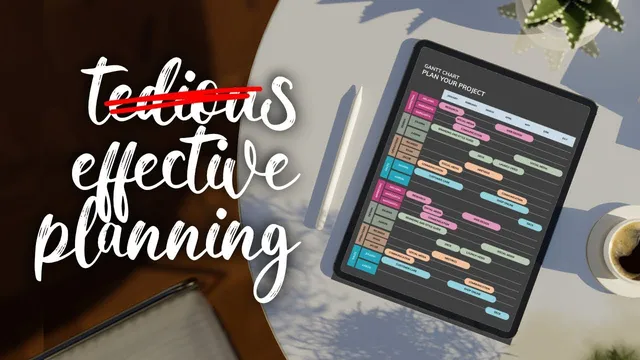
For organizing and tracking work, the transcript recommends using project management tools and visual systems. Gantt charts or timeline views provide a bird’s-eye view, while Kanban boards offer a quick, visual way to manage work details and task status—particularly useful for teams running agile workflows with multiple concurrent streams. The workflow also mentions popular work management apps such as ClickUp, Asana, and Trello, and highlights Notion as a flexible option for building these planning structures. Finally, the transcript ties project management to broader career value, including networking and business-building, and includes a sponsored promotion for Skillshare, offering a free trial via a link for learning tools like Notion and other skills.
Cornell Notes
The planning approach starts with initiation: a project should begin only after a real problem or opportunity is identified, and it must have a clear “why” tied to specific benefits and how it will change work or life. Planning then turns that purpose into a structured brief with goals, scope (including what’s excluded), deliverables, success criteria, and resources. A workable schedule is built from milestones and tasks, mapped with dependencies and summarized through the critical path, often visualized with network diagrams or Gantt charts. Because time estimates are unreliable, buffers are added—especially for complex tasks or work dependent on others. The method is supported with practical tool suggestions (Kanban, timelines, Notion, and other apps) to keep execution aligned with the plan.
Why does initiation come before planning, and what makes a project worth starting?
How do goals, scope, and deliverables work together in a personal project?
What are dependencies and the critical path, and why do they matter for deadlines?
How should time estimates be handled when they’re likely to be wrong?
When are Kanban boards a good fit compared with timelines or Gantt charts?
What’s the practical role of a project brief during execution?
Review Questions
- What specific elements must be defined during initiation and planning before execution begins?
- How would you identify the critical path in a project with both parallel and sequential tasks?
- Why are buffers necessary even when time estimates are based on past experience?
Key Points
- 1
Start personal projects only after a real problem or opportunity is identified, and define a clear “why” tied to specific benefits.
- 2
Write a project brief that includes goals, scope (including what’s excluded), deliverables, success criteria, and resources.
- 3
Build a schedule from milestones and tasks, explicitly mapping dependencies and which tasks can run in parallel.
- 4
Use the critical path—the sequence of mandatory milestones—to understand what truly controls the deadline.
- 5
Estimate time using past similar tasks, then add buffers to handle uncertainty, especially for complex or externally dependent work.
- 6
Use visualization tools like network diagrams, Gantt charts, or Kanban boards to keep the plan readable and execution aligned.
- 7
Treat project management as a transferable skill applicable across industries and career goals, not just corporate work.