How I Write and Work a Busy Job
Based on Mariana Vieira's video on YouTube. If you like this content, support the original creators by watching, liking and subscribing to their content.
Protect writing time by treating it as a top priority and scaling back competing hobbies and media when necessary.
Briefing
A sustainable writing routine for a busy life hinges on two moves: treating writing as a true priority (even if it means cutting other activities) and designing a schedule that fits the energy available on real workdays. After returning to full-time work, Mariana Vieira built a streak of daily writing—at least 1,000 words per day across drafting and revision—for roughly 248 days, finishing one book now in the querying stage and reaching the midpoint of a second draft. The core lesson is blunt: consistent output doesn’t come from waiting for long, perfect sessions. It comes from making writing the thing that gets the protected time.
The biggest friction point was accepting that short bursts weren’t enough to reach a creative flow. Vieira found that 15–20 minutes often left her still “warming up,” so she had to scale back hobbies, media consumption, and social media to free up the small pockets of leisure she actually had. That selectivity extended to what she watched, read, and how often she appeared online—because steady writing required more than a casual hobby mindset.
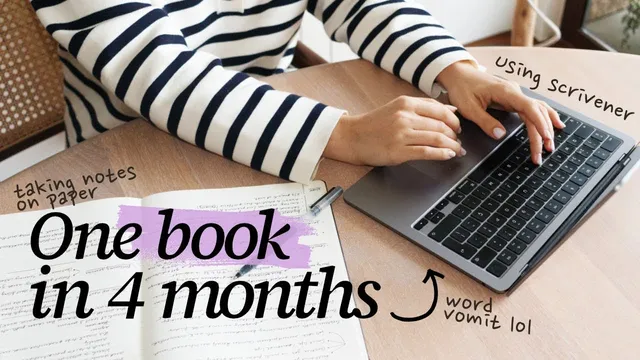
A second pillar is using a writing setup that matches how she works. Vieira prefers Scrivener because it supports multiple views—corkboard, outline view, and classic page view—making it easier to rearrange scenes and chapters without copy-and-paste gymnastics. She also credits Scrivener’s constant autosaving with preventing lost progress, even after past computer shutdowns.
From there, she built a flexible routine instead of betting on one “best” time of day. Evenings can sound ideal, but exhaustion can choke creativity. Her approach uses three daily writing blocks: a morning session before work (roughly 9:00–9:30 a.m.), a lunch break block that ranges from 10 minutes to 45 minutes depending on workload, and a post-work session of at least 30 minutes while she’s still in drafting mode. When inspiration hits, she allows an additional longer evening block—something she expects to return to as her second book ramps up.
She also recommends experimenting with schedules—full sessions versus shorter ones, mornings versus evenings, weekdays versus weekends—until a rhythm sticks. If the first plan fails, the fix isn’t quitting; it’s adjusting.
Finally, she emphasizes starting tiny and scaling up. Her habit began with writing just a sentence per session, then grew to paragraphs, pages, and eventually a target of 1,000 words per day. As drafts progress, that number can expand quickly during intense stretches. To protect consistency, she uses “word vomiting” for draft one: she writes messy, typos and inconsistencies included, focusing on generating material first and leaving polishing for later passes. Multiple editing rounds then ensure the story flows.
The practical takeaway is that consistency is learnable. Even with a full-time job and limited energy, small daily commitments—supported by the right tool, a realistic schedule, and a draft-first mindset—can compound into full-length books.
Cornell Notes
Mariana Vieira built a daily writing routine alongside full-time work by protecting writing time, scaling back competing activities, and using a tool that fits her workflow. She found that short sessions weren’t enough to reach creative flow, so she created multiple writing blocks across the day (morning, lunch, and after work) and stayed flexible about timing. She started with extremely small goals—writing a single sentence per session—then gradually increased to 1,000 words per day as the habit stabilized. For drafting, she relies on “word vomiting” in draft one, prioritizing quantity and scene development before later editing passes. The approach matters because it turns writing into a repeatable system rather than a mood-dependent activity.
Why did short writing sessions fail, and what did she change to keep momentum?
What role did Scrivener play in making daily writing workable?
How did she structure writing time around a full-time job?
What strategy helped her build consistency from scratch?
What does “word vomiting” mean in her process, and why does it support consistency?
Review Questions
- What specific changes did she make to ensure writing time wasn’t squeezed out by other activities?
- How does her multi-block daily schedule reduce the risk of exhaustion killing creativity?
- Why does starting with a one-sentence goal make it easier to reach 1,000 words per day later?
Key Points
- 1
Protect writing time by treating it as a top priority and scaling back competing hobbies and media when necessary.
- 2
Design a realistic schedule with multiple writing blocks across the day rather than relying on one ideal time.
- 3
Use a writing tool that matches your workflow; Scrivener’s views and autosaving supported her drafting and rearranging process.
- 4
Start with tiny daily goals (like one sentence) and build upward gradually until longer sessions feel natural.
- 5
Draft messy first using “word vomiting,” then rely on later editing passes to polish and fix inconsistencies.
- 6
Stay flexible: if a routine doesn’t work immediately, adjust timing and session length until a sustainable rhythm appears.