How Kahoot Scoring Works.
Based on Duddhawork's video on YouTube. If you like this content, support the original creators by watching, liking and subscribing to their content.
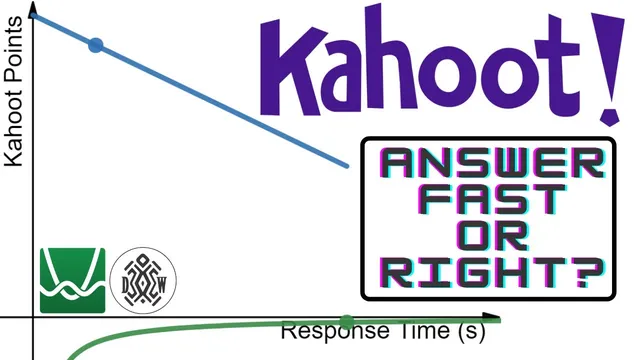
Kahoot’s correct-answer score starts at 1,000 points for immediate responses and drops to about 500 points if the full timer is used.
Briefing
Kahoot’s scoring system rewards correct answers far more than speed, because points drop at a steady, predictable rate as response time increases. With the standard setup described, a correct answer starts at 1,000 points if submitted instantly, then falls linearly to about 500 points if the player uses the full timer. That linear decline matters: it means every extra second costs roughly the same number of points, so “speeding up” doesn’t create a meaningful advantage unless it also preserves correctness.
The transcript frames the core trade-off as “go super fast to optimize a few points” versus “stay accurate.” The scoring model uses a question timer (TC) and the student’s response time (T). When T = 0, the time factor becomes 1, producing the maximum 1,000 points. When T equals the full timer (T = TC), the time factor drops to 1/2, yielding 500 points. Because the time penalty is linear, an extra second early in the countdown removes the same amount of points as an extra second near the end.
A key practical detail is the points-per-second “slope,” which depends on the length of the timer. For a 30-second timer, the penalty rate is about 17 points per second: at 1 second, the score is around 983 (a drop of 17 from 1,000). With a 10-second timer, the slope steepens to roughly 50 points per second, giving about 950 at 1 second. Short timers dramatically increase the per-second penalty: a 5-second timer implies about 100 points per second, a 4-second timer about 125 points per second, and a 3-second timer about 167 points per second. The transcript notes that timers under 5 seconds are effectively too punishing to be realistic in typical Kahoot use.
Using these rates, the transcript turns the math into a decision rule. If a player risks losing correctness to gain only a small time advantage, the expected point loss from being slower is usually smaller than the catastrophic loss from being wrong. The reasoning is straightforward: a correct answer can be worth 1,000 points, while the speed penalty over a few seconds is measured in tens of points per second for common timer lengths (around 20 seconds or more). As a result, the “best play” is to prioritize getting the answer right—especially when the timer is longer than roughly 10–20 seconds—because accuracy dominates the scoring trade-off.
Overall, the scoring system is presented as predictable and linear, making it possible to plan strategy: don’t chase micro-optimizations that increase misclicks; instead, aim for correctness and use the timer mainly as a constraint, not a target to sprint through.
Cornell Notes
Kahoot scoring combines correctness with a linear time penalty. A correct answer earns 1,000 points at T = 0 and about 500 points if the player uses the full timer TC, because the time factor decreases linearly. The per-second point loss depends on TC: with a 30-second timer it’s about 17 points per second, while shorter timers steepen the penalty (e.g., ~50 points/sec for 10 seconds; ~100 points/sec for 5 seconds). Since being correct can mean 1,000 points, the transcript argues that risking mistakes for small time gains is usually a losing trade-off when timers are around 10–20 seconds or longer.
How does Kahoot convert response time into points for a correct answer?
Why does the transcript emphasize that the points decrease linearly?
What does “points per second” depend on, and what are the example values?
At what timer lengths does the transcript suggest speed becomes less important than accuracy?
Why does the strategy change for very short timers?
Review Questions
- If a Kahoot question uses a 30-second timer, what approximate score should a correct answer earn at 1 second, and what does that imply about the per-second penalty?
- How does changing the timer length TC affect the slope of points lost per second, and why does that matter for strategy?
- Under what conditions does the transcript claim it’s better to answer correctly rather than faster, and what scoring numbers support that claim?
Key Points
- 1
Kahoot’s correct-answer score starts at 1,000 points for immediate responses and drops to about 500 points if the full timer is used.
- 2
The time penalty for correct answers is linear, so each extra second costs a constant number of points.
- 3
The points lost per second depend on the timer length: about 17 points/sec for a 30-second timer and about 50 points/sec for a 10-second timer.
- 4
Very short timers sharply increase the penalty rate (e.g., ~100 points/sec for 5 seconds), making speed more consequential.
- 5
For timer lengths roughly above 10–20 seconds, the transcript’s strategy rule is to prioritize correctness over speed because the upside of being right outweighs small time gains.
- 6
Risky rushing that increases misclicks typically costs more points than the time saved would recover.
- 7
Timers around 20 seconds or longer are described as having a fairly stable, predictable rate of change.