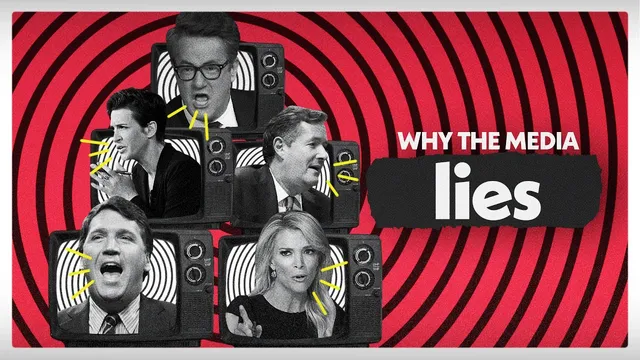
How The Media Controls The Masses
Based on Second Thought's video on YouTube. If you like this content, support the original creators by watching, liking and subscribing to their content.
Mainstream U.S. media is described as serving wealthy political and business interests through narrative control rather than neutral reporting.
Briefing
Corporate media in the United States is portrayed as a system that doesn’t just reflect bias—it helps manufacture public consent for powerful interests, often by omitting key facts, laundering official narratives, and framing atrocities in ways that reduce accountability. The central claim is that left-right disagreements between outlets are largely cosmetic; major networks ultimately serve the same underlying political and economic power structure, where wealthy donors influence legislation and media coverage to protect profit and preserve political stability.
The argument starts with a structural case: a small number of corporations own most mainstream news, creating a “quasi-monopoly” that limits the range of reality presented to the public. With roughly 3,000 news outlets in the U.S. and all of them owned by just 21 companies, the system funnels information through a narrow ownership base. That concentration, combined with political donations and deregulation, is said to translate into favorable laws and messaging—sometimes including direct support for industry-friendly policies like expanded oil drilling in protected areas.
From there, the transcript pivots to a high-stakes case study: the Israel–Palestine war and what it describes as genocide in Gaza. It argues that Western corporate coverage repeatedly echoes Israeli claims “word for word” while failing to verify allegations, even when those claims have been debunked. Examples cited include reporting on accusations such as beheadings of babies and mass sexual assault—claims presented as later proven false—without meaningful retractions. The transcript also claims that infrastructure destruction in Gaza, including hospitals and aid delivery capacity, is systematically underreported, making it harder for audiences to understand the causes of starvation and mass death.
A major portion focuses on rhetorical techniques used in headlines and framing. One example contrasts a headline like “Starvation is stalking Gaza’s children” with a more direct attribution of responsibility, arguing that the former highlights suffering while hiding the deliberate mechanisms—such as control of access routes, blocked humanitarian aid, and attacks on people retrieving supplies. Another example targets coverage of the “flower massacre,” where the transcript says outlets use euphemisms like “chaotic scene” instead of “massacre,” and avoids naming the Israeli forces responsible for killing people assembling for food aid.
The transcript also criticizes how outlets label events and actors. It points to BBC wording that calls the situation “Israel Gaza War” and references “Hamas run Health Ministry,” arguing that this language obscures that Hamas is the elected government of Palestine and that the framing functions to scare audiences with a Western “boogeyman” rather than clarify responsibility.
The most pointed credibility attack centers on a New York Times report about mass sexual violence on October 7th. The transcript claims the story relied on an IDF-linked source and, according to an Intercept investigation, lacked corroborating evidence from hospitals and crisis centers; it further alleges the paper amplified extremist or debunked claims. The transcript treats this as a watershed example of journalistic malpractice because it argues such accusations were used to galvanize Western support for Israel’s campaign.
Finally, the transcript offers motive: Israel is described as a long-term strategic ally for the U.S., and pro-Israel lobbying—especially through APAC—is said to shape policy and media tone. It also argues that entrenched political elites may genuinely believe their own narratives. The conclusion calls for audiences to rely on independent footage and reporting, amplify leaked information from insiders, and support alternative media ecosystems rather than accepting mainstream coverage as neutral truth.
Cornell Notes
The transcript argues that U.S. corporate media operates less like a neutral watchdog and more like an influence system that serves wealthy political and business interests. It claims ownership concentration limits what audiences see, while political donations and lobbying help align legislation and coverage with those interests. The Gaza coverage is used as the main case: outlets are said to repeat Israeli claims without verification, omit responsibility, and use framing that softens or obscures perpetrators. Specific examples target headline wording, event labeling, and a New York Times report on alleged mass sexual violence that the transcript says lacked corroboration and relied on questionable sourcing. The stakes, it argues, are mass death—because propaganda can reduce accountability and sustain support for atrocities.
What does the transcript claim is the real purpose of mainstream media beyond reporting events?
How does ownership concentration factor into the argument?
What rhetorical technique does the transcript say outlets use when covering Gaza starvation?
Why does the transcript treat “flower massacre” coverage as especially revealing?
What is the transcript’s critique of the New York Times sexual violence report on October 7th?
What motives does the transcript propose for why media coverage stays aligned with Israel?
Review Questions
- Which ownership and lobbying mechanisms does the transcript claim connect corporate media to political outcomes?
- Pick one headline example from the transcript and explain how the wording is said to change audience understanding of responsibility.
- What evidence-related criticisms does the transcript make about the New York Times October 7th sexual violence reporting?
Key Points
- 1
Mainstream U.S. media is described as serving wealthy political and business interests through narrative control rather than neutral reporting.
- 2
News ownership concentration is presented as a structural reason for limited viewpoints, with major outlets tied to a small number of parent companies.
- 3
Political donations and deregulation are framed as tools that translate money into favorable legislation and media messaging.
- 4
Gaza coverage is criticized for allegedly repeating Israeli claims without verification and for failing to attribute responsibility for starvation and mass death.
- 5
Headline framing is treated as a key tactic—descriptions of suffering are said to omit the deliberate actions causing it.
- 6
The transcript highlights the New York Times October 7th sexual violence report as a major credibility failure, citing claims of weak corroboration and questionable sourcing.
- 7
The transcript argues that audiences should seek independent footage and alternative media to counter mainstream narratives.