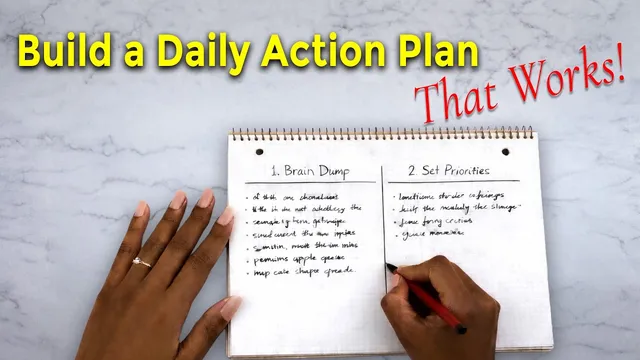
How to ACTUALLY stick to a schedule (build a daily action plan)
Based on Dr. Tiffany Shelton's video on YouTube. If you like this content, support the original creators by watching, liking and subscribing to their content.
Make time “loud” with vibrating alarms and timers at chosen checkpoints so attention can’t drift past time blocks.
Briefing
A daily schedule fails most often because it’s built for an idealized version of the day—and an idealized version of the self. The fix isn’t more willpower. It’s a three-layer system that makes plans match how the brain behaves, seals the schedule against constant leaks, and uses discipline as self-care so follow-through doesn’t collapse into burnout.
The first layer targets “time blindness” and task-switching trouble. Instead of relying on passive reminders, the plan has to become “loud” so attention can’t quietly drift. That means using vibrating phone alarms and timers at key checkpoints—ideally one for each time block. If hyperfocus is especially sticky, a physical timer placed across the room forces a real interruption: a walk to turn it off becomes a circuit breaker that pauses the loop of perseveration and impulsivity. The second move is to make plans real by planning for the worst day. A quick time audit—comparing estimated task durations against actual ones—reveals where the schedule fantasy breaks. The approach also includes buffer blocks (two 30-minute cushions) and overestimating tasks, plus built-in transition time by scheduling meetings for shorter durations (e.g., 50 minutes instead of an hour) or adding 15 minutes after each meeting.
Even a brain-friendly plan won’t survive the week unless time is protected from interruptions. The core metaphor is a bucket with holes: colleagues, urgent meetings, calls, texts that turn into conversations, and other “tiny leaks” drain the day until the original intentions are gone. The response is a set of boundary-building tactics. Delegation is first: stop rescuing and train others using standard operating procedures, document them, and coach instead of taking tasks back when quality isn’t perfect. Second comes pre-deciding “nos” so requests don’t trigger instant yeses—examples include no meetings before 9:00 a.m., no back-to-back calls without a break, and no same-day requests unless they’re true emergencies. Third is structure through the BBB method: Book non-negotiables first (workouts, creative time, weekly routines), batch similar tasks to reduce context switching, and block time using a 37 time-blocking method that includes bookending rituals. Each morning starts with a wind up routine that sets top priorities; each evening ends with a wind down routine that reviews what was done, what wasn’t, and what must carry forward. A “never skip twice” rule keeps missed batch days from turning into system collapse.
The final layer addresses follow-through as self-trust, not just task completion. Discipline without care leads to resentment and eventual abandonment—like a road trip where someone never pulls over. The antidotes are breakout blocks (small joyful breaks that buffer stress and improve self-control), acceptance (choosing what will be sacrificed on purpose rather than by accident), and a predetermined negotiation list of only the situations that justify pivoting (e.g., emergencies, hard client deadlines, family crises). When promises to oneself are kept through care, self-respect grows—and the schedule stops being aspirational and starts being real.
Cornell Notes
The schedule breaks down when it’s built for an ideal day and an ideal brain. A workable system starts by making time “loud” with vibrating alarms and timers, then making plans “real” through a time audit, buffers, and built-in transitions. To keep the week intact, time must be protected using delegation, pre-decided “nos,” and the BBB structure: Book non-negotiables, batch similar tasks, and block time with wind up/wind down routines. Finally, follow-through depends on discipline as self-care—adding breakout blocks, practicing acceptance about tradeoffs, and using a predetermined negotiation list for only true exceptions. This combination turns scheduling from wishful thinking into reliable execution, even on worst days.
Why do schedules collapse mid-morning even for high performers, and what does “work with your brain” mean in practice?
How does planning for the “worst day” prevent the usual fantasy schedule problem?
What are the biggest “holes in the bucket,” and how does the BBB method patch them?
How do pre-decided “nos” reduce decision fatigue during the day?
Why is discipline framed as self-care, and what are the three tools to make it sustainable?
Review Questions
- What specific changes would you make to your reminders and alarms if time blindness or hyperfocus is a recurring problem?
- In what ways can you “make plans real” using a time audit and buffers, and how would you adjust meeting lengths to protect transitions?
- How would you apply BBB (Book, Batch, Block) to reduce context switching in your own week, and what would your wind up/wind down routines include?
Key Points
- 1
Make time “loud” with vibrating alarms and timers at chosen checkpoints so attention can’t drift past time blocks.
- 2
Plan for the worst day by running a time audit, adding buffers (e.g., two 30-minute cushions), and overestimating task durations.
- 3
Protect transitions by shortening meetings (e.g., 50 minutes instead of an hour) or adding extra minutes after each meeting.
- 4
Patch schedule “holes” by delegating with documented standard operating procedures and coaching instead of rescuing.
- 5
Pre-decide “nos” in advance (e.g., no meetings before 9:00 a.m., no same-day requests unless truly urgent) to prevent reactive yeses.
- 6
Use BBB structure—Book non-negotiables first, Batch similar tasks, and Block time with wind up/wind down routines—to reduce context switching.
- 7
Treat discipline as self-care through breakout blocks, acceptance of tradeoffs, and a predetermined negotiation list for only true exceptions.