How to Automatically Be More Creative
Based on morganeua's video on YouTube. If you like this content, support the original creators by watching, liking and subscribing to their content.
Creativity is treated as a state of being, not a product or a one-off burst of inspiration.
Briefing
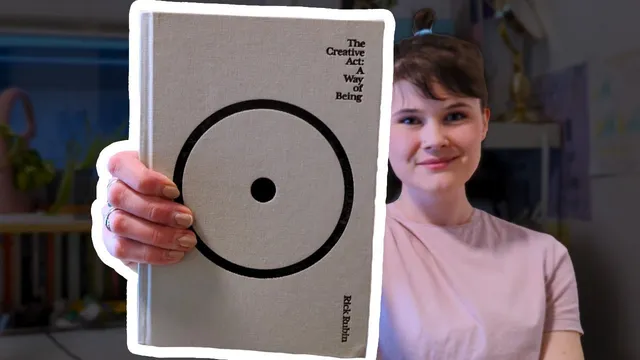
Creativity becomes “inevitable” when it’s treated as a way of being—supported by a system that constantly turns everyday noticing into connected ideas. Rick Rubin’s framing, echoed through Robert Enrí’s idea that the goal isn’t making art but entering a state that makes art unavoidable, lands on a practical question: how does someone stop waiting for inspiration and start producing creative work that flows?
The answer centers on a note-taking and knowledge-management approach built around three linked habits: noticing things in the world, making notes about them, and—most importantly—connecting those notes. Notes stored in isolation (random notebooks, napkin scribbles, scattered documents) make it harder to retrieve ideas in a way that sparks new thinking. A bidirectionally linked system keeps everything in one place so ideas can be cross-referenced instantly. That structure shifts the creative burden away from “collecting notes” and toward “finding relationships,” which is where novelty emerges.
Rubin’s broader claim is that creativity isn’t tied to a specific product or talent. Living creatively is practiced attention: refining sensitivity to what draws someone in or pushes them away. The transcript uses a conveyor-belt metaphor—small packages of experience constantly pass by. At first, there’s no perfect way to choose which packages to pick up; the instruction is to capture whatever stands out, even if it seems trivial: a line from a song, a striking detail in a conversation, a quick sketch of a dog with the same haircut as its owner. The key is that each note must be self-contained and given a unique name so it can be referenced later.
The system’s “connection” requirement is what prevents the work from becoming overwhelming. Notes are likened to puzzle pieces: dumping pieces onto a table creates chaos, but connections provide structure. When a new piece arrives, the existing connected landscape tells you where it belongs. Over time, the system trains recall and association—every new note forces the question, “What does this connect to that’s already here?” That repeated act of linking helps ideas stick and makes future connections easier.
A concrete example demonstrates how the workflow works in practice using scle (a knowledge management system with cards and boards). A new card is created for Rubin’s idea that the real work of an artist is a mode of existence, then linked to existing notes such as The creative act. Additional thematic links are added by searching for related ideas like creativity and inspiration, including a note attributed to Jenny Odell and a Steve Jobs quote. Once links accumulate, boards visualize the relationships, enabling the user to assemble an outline for a larger project—like writing a blog post about leading a creative life—without waiting for inspiration to strike.
The takeaway is less about finishing one project and more about continuously growing the system. Writing down becomes meaningful because it feeds a feedback loop of attention, retrieval, and novel association. With enough notes and connections, creative output stops feeling like a rare event and starts resembling a default outcome.
Cornell Notes
Creativity is framed as a repeatable way of being: notice what’s around you, capture it as notes, and—crucially—connect those notes so new ideas can emerge. Rubin’s view treats creativity as not tied to any specific tool or product, but as a practice of attention and sensitivity. A bidirectionally linked knowledge system supports that practice by keeping notes in one place and making relationships easy to find, so the mind constantly searches for connections rather than hoarding isolated fragments. The result is better recall and a growing network of ideas that makes creative work feel more inevitable over time. The transcript illustrates the workflow with scle using cards, links, and boards to build thematic clusters for future projects.
Why does the transcript treat “connecting notes” as the core of creativity rather than just collecting them?
How does the conveyor-belt metaphor guide what to write down when choosing “good” ideas feels impossible?
What makes a note “usable” for future creativity in this approach?
How does the puzzle-piece analogy explain why the system doesn’t collapse under the weight of many notes?
What does the scle example show about turning a single insight into a networked idea?
How does the transcript connect note-taking to avoiding “tortured artist” creativity?
Review Questions
- What specific role do bidirectional links play in making ideas easier to retrieve and recombine?
- Why does the transcript insist that notes must be self-contained and uniquely named?
- How do the conveyor-belt and puzzle-piece metaphors together justify starting with “any” note and trusting the system to organize it over time?
Key Points
- 1
Creativity is treated as a state of being, not a product or a one-off burst of inspiration.
- 2
A practical workflow has three parts: notice, capture as notes, and connect notes to each other.
- 3
Bidirectional linking prevents notes from becoming isolated fragments and makes relationships easy to find.
- 4
Each note should be self-contained and given a unique name so it can be referenced reliably as the archive grows.
- 5
The system’s creative power comes from repeatedly asking what a new idea connects to in what’s already stored.
- 6
Attention training matters: capturing what draws someone in (even seemingly small details) builds a richer pool for later association.
- 7
The aim is ongoing growth of the note network so creative projects become easier to complete over time.