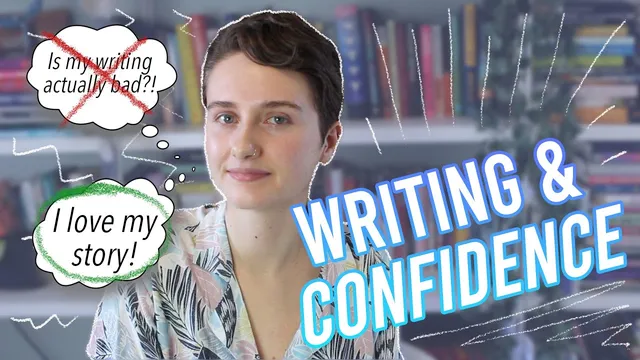
HOW TO BECOME A CONFIDENT WRITER | overcome insecurity & actually enjoy writing!
Based on ShaelinWrites's video on YouTube. If you like this content, support the original creators by watching, liking and subscribing to their content.
Treat critique as information for revision, not a ranking of the writer’s worth.
Briefing
Confidence in writing doesn’t come from avoiding critique—it comes from changing how feedback, difficulty, and self-talk are interpreted. The core shift is treating insecurity as a distraction to manage, not a verdict on talent: feedback becomes a tool for revision, struggle becomes a sign of challenge (not incompetence), and writing goals get anchored in personal values rather than other people’s reactions. That reframe matters because it restores the ability to enjoy drafting and improves output by freeing mental bandwidth for craft decisions.
A major driver of insecurity is the habit of tying self-worth to the most recent reaction. One bad comment can erase evidence of prior praise, especially when beta readers or reviewers deliver feedback in a way that feels sharper than intended. The remedy is to “divorce” feedback from skill ranking: view critique as information about the work, not a judgment of the writer. Confidence should also be sourced internally, not from external validation. In practice, that can mean delaying feedback until a more stable relationship with writing is in place, and choosing when and how critique is received.
Another misconception is equating struggle with being a bad writer. Difficulty often increases as craft improves because writers take on harder projects and learn enough to challenge themselves more intentionally. A rock-climbing analogy illustrates the point: early routes feel easy and failure is rare, but tackling trickier climbs leads to more falls. Writing works similarly—some drafts are hard because the project is genuinely challenging, not because the writer is failing.
Feedback boundaries are equally important. Feedback can accelerate growth, but only when it feels safe. The transcript contrasts toxic beta-reading cycles—especially when they become emotionally destabilizing—with workshop environments built on trust, where critique is detailed and encouraging rather than mean. The takeaway is not to chase every feedback method; instead, select critique partners, formats, and review habits that reduce emotional risk.
Confidence also depends on process design. Three tactics are highlighted: discovery writing (drafting without comparing to an idealized finished version), editing as the draft unfolds (so problems don’t pile up into overwhelm), and writing multiple projects at once (to protect motivation when one draft stalls). Alongside process, the transcript warns against writing for a hypothetical reader who supposedly dislikes everything. Chasing an ever-changing audience approval loop breeds exhaustion and insecurity.
Several additional habits reinforce the new foundation: stop trash-talking one’s own work (self-deprecation can feel cathartic but often reinforces belief), don’t let fear of confidence keep the writer small, and stop obsessing over whether one is “good” and instead write for enjoyment. Finally, “good writing” is redefined with specific personal criteria—such as engaging, honest, alive, organic, nuanced, and wise—so progress can be measured internally. Feedback is also reframed objectively: pacing issues become fixable craft notes, rejections become fit decisions, and hate comments become someone else’s taste rather than evidence of incapability. Over time, these changes shift insecurity from a constant background force into something that barely registers, making writing feel freeing again.
Cornell Notes
The transcript argues that writing confidence grows when critique and difficulty are interpreted as craft inputs, not personal verdicts. Feedback should be treated objectively—use it to revise the work—while confidence is grounded internally rather than in praise or rejection. Struggling with a draft isn’t proof of being a bad writer; it often signals that the writer is tackling harder challenges. Safe feedback boundaries matter, and process choices like discovery writing, editing during drafting, and juggling multiple projects can protect motivation. Finally, “good writing” should be defined through specific personal values, and feedback should be reframed from subjective self-judgment into actionable adjustments.
How can a writer stop one critique from determining their self-worth?
Why does the transcript say struggle can increase as writers get better?
What does “safe feedback boundaries” look like in practice?
Which process strategies are offered to make writing feel more confident?
How does the transcript suggest redefining “good writing” and using feedback more objectively?
Review Questions
- What are the transcript’s main reasons that feedback can trigger insecurity, and what specific reframes reduce that impact?
- Which writing-process choices (discovery writing, editing as you draft, multiple projects) best address overwhelm or motivation dips, and why?
- How would you rewrite three common subjective feedback interpretations (e.g., “rejection means I’m bad,” “struggling means I’m not good”) into objective, actionable notes?
Key Points
- 1
Treat critique as information for revision, not a ranking of the writer’s worth.
- 2
Build confidence from internal values rather than relying on praise, rejection, or the tone of a single beta reader.
- 3
Expect struggle to rise when you take on harder projects; difficulty often signals growth, not failure.
- 4
Set feedback boundaries by choosing critique partners and formats that feel safe and constructive.
- 5
Design a drafting process that reduces overwhelm—use discovery writing, edit during drafting, and keep multiple projects available when motivation drops.
- 6
Avoid writing primarily to satisfy a hypothetical reader; anchor the work in what the writer genuinely wants to create.
- 7
Define “good writing” with specific personal criteria and reframe feedback objectively into fixable craft actions.