How to Create a Consistent Writing Routine 🖋
Based on Mariana Vieira's video on YouTube. If you like this content, support the original creators by watching, liking and subscribing to their content.
Build a writing routine that matches our lifestyle and energy, rather than relying on inspiration or occasional long sessions.
Briefing
A sustainable writing routine beats bursts of motivation, and the most reliable way to build it is to pair a simple, repeatable schedule with measurable—but flexible—progress targets. The core approach centers on writing consistently in small daily sessions, even if the output is modest, because regular practice compounds skill and keeps momentum alive when inspiration doesn’t show up.
Tools and structure support that consistency. For a long-form project, Scrivener is used as the main writing workspace, especially for organizing research-heavy material. Its outliner, cork board, and split-screen editor help manage notes and drafts, while export options (PDF, Word, ePub, Kindle) and Dropbox syncing make it easier to access and share the work across devices. The book project itself stays intentionally low-pressure: there are no contracts, no deadlines, and no external obligations—so writing functions as self-care and a mental escape from day-to-day content creation and a legal-advisor job.
The routine is deliberately simple and tied to energy levels. Writing happens in the evening when energy is lower, after peak hours are spent on work and business. To avoid confusing writing time with other tasks, the writer separates environments: daytime work stays in a home office, while evening writing moves to a different spot in the living room with a MacBook and tea. That physical shift helps trigger the right mindset faster, turning the location into a cue for starting.
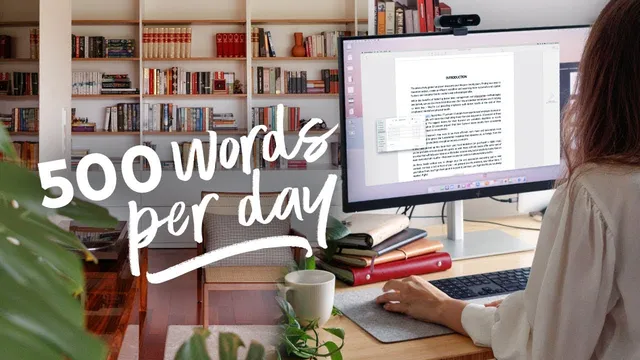
Goals are tracked in a way that prioritizes consistency over perfection. The daily target is about 500 words on workdays. If a day is missed, the missing words roll into the weekend, allowing longer sessions when time is available. The transcript also draws a line between quantity and quality: word count alone doesn’t capture the real value for many writers, since flow state and time spent immersed in the work can matter more. Still, the word goal provides a practical benchmark that keeps the habit intact.
A key lesson is to start writing before inspiration arrives. Waiting for the “perfect” sentence often leads to stalled sessions and weak openings, but those early drafts don’t determine the final quality. The workflow assumes revision: start imperfectly, then edit, cut, and improve once momentum kicks in. Consistency and repetition also enable experimentation—trying new styles becomes easier when the priority is getting words on the page rather than judging them in real time.
For world-building and long projects, World Anvil is highlighted as a tool for creating and managing a “world bible,” including plot, characters, timelines, geography, and backstory. It also offers cloud-based writing with focus mode, plus community features and collaboration options like editors or co-authors. The overall message is clear: build a routine you can keep, measure progress in a way that supports the habit, and let drafting come first—editing can follow once you’re in the flow.
Cornell Notes
A consistent writing routine is built by combining a repeatable schedule, a practical progress metric, and a mindset that drafting comes before inspiration. The routine uses Scrivener to organize research and drafts, while evening writing in a distinct environment (living room, tea, MacBook) helps trigger focus. The daily goal is roughly 500 words on workdays, with missed words carried over to weekend sessions, keeping the habit stable even when time or energy varies. The transcript stresses that word count isn’t the only measure of quality—flow state and immersion matter—but consistency still provides a workable benchmark. Starting with imperfect sentences is encouraged because revision and cutting come later once momentum is established.
Why does the transcript treat “consistency” as more important than “perfect sentences” at the start of a session?
How are writing goals tracked, and what happens when a day is missed?
What role does environment play in making writing easier to start?
Why does the transcript mention flow state alongside word count?
What is Scrivener used for in the workflow described?
How does World Anvil fit into long-form writing and world-building?
Review Questions
- What specific strategies help the writer start a session even when inspiration hasn’t arrived?
- How does the routine handle missed writing days while still maintaining a measurable goal?
- Which tools are recommended for organization and world-building, and what distinct functions do they serve?
Key Points
- 1
Build a writing routine that matches our lifestyle and energy, rather than relying on inspiration or occasional long sessions.
- 2
Use a consistent progress metric (about 500 words on workdays) and carry missed work into later sessions to protect momentum.
- 3
Separate writing time from other work by changing environment—different location and cues can speed up mindset shift.
- 4
Treat early drafts as raw material: start imperfectly, then revise, edit, and cut once flow begins.
- 5
Don’t equate word count with quality; immersion and flow state can be a better indicator of productive writing.
- 6
Choose tools that reduce friction: Scrivener for organizing research and drafts, and World Anvil for managing world-building details.
- 7
For long projects, keep external pressure low when possible—no deadlines or obligations can make writing feel like self-care rather than a burden.