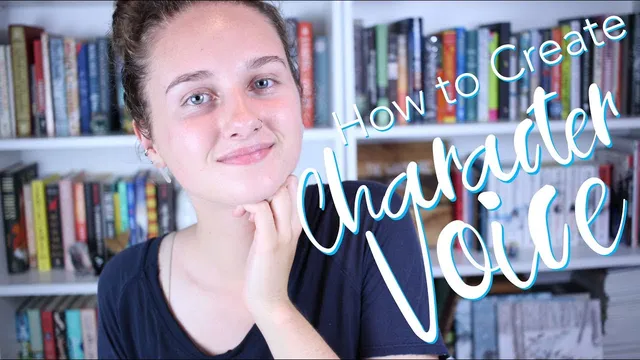
How to Create a Strong Character Voice | Writing Tips
Based on ShaelinWrites's video on YouTube. If you like this content, support the original creators by watching, liking and subscribing to their content.
Character voice is the blend of an author’s natural prose style and the character’s personality, shaped by realism and purpose.
Briefing
A strong character voice comes from the tight blend of a writer’s natural prose habits and the character’s personality—then it’s tested against realism, readability, and purpose. The central practical takeaway is that “voice” isn’t just style on the page; it’s how thought turns into words, and how much artfulness a character can plausibly carry without breaking the reader’s trust.
The guidance starts by revising an earlier claim about distraction: readers can usually tolerate (and even enjoy) a more articulate, poetic narration than a character “should” have—especially when the character isn’t a writer. Thought is more complex than written language, so some embellishment can help translate internal thinking into readable prose. But there are clear limits. When the narrator’s intelligence and maturity are meant to be low—like a five-year-old—artful language can become disingenuous. Emma Donoghue’s Room is offered as a model: the narration is shaped to match a child’s level of understanding and expression, even though the author’s craft still has to produce coherent, compelling sentences.
A second major rule targets a common shortcut: using weak writing to manufacture voice. Redundant “weasel words,” mushy phrasing, and fragile sentence structure don’t create character; they weaken the prose and make the reading experience harder. Voice should live in strong word choice and deliberate technique, not in padding. There may be rare cases where a “weak” word fits a character’s habits, but relying on filters and filler is framed as the weakest path—producing a voice that feels vague rather than lively.
From there, the method becomes concrete: voice is built through patterning, which boils down to two levers—content patterns (what the character cares about and how that shapes imagery) and linguistic patterns (how the character sounds on the sentence level). Content patterns can steer similes, metaphors, and poetic devices toward a character’s worldview: a musician might naturally reach for music analogies; a violent character might gravitate toward shocking, aggressive comparisons. The key is cohesion without monotony—if every simile is nautical in a sailor story, it becomes ridiculous. The transcript suggests staying “one step over” by mapping related terms outward (birds → types of birds → feathers/talons/nests; or birds → bats → flying → planes), which preserves theme while avoiding repetition.
Linguistic patterns cover slang, humor, sarcasm, formality, poetic device density, punctuation habits, sentence length, fragments, and even second-person address. Tone then sits on top of all this: it’s the narrator’s attitude toward events, which can diverge from the character’s emotions (serious characters under a humorous narrator, for instance). Finally, framing determines voice at a structural level: who tells the story, how close the narrator is to the character, when and where the story is told, why it’s being told, and who the audience is. Those choices shape reliability—first-person and close third-person are inherently biased and potentially unreliable—along with what the narrator withholds, confesses, or rationalizes. The result is a voice that feels intentional: tailored to personality, consistent in pattern, and grounded in the narrator’s situation.
Cornell Notes
Character voice is the interaction between an author’s natural writing style and a character’s personality, filtered through realism and purpose. Readers can often accept more articulate or poetic narration than a character “should” have, because thought is more complex than words—but that tolerance drops sharply when the narrator’s intelligence or maturity is meant to be low (as in a five-year-old in Emma Donoghue’s Room). Weak prose tactics like weasel words and redundant phrasing don’t create voice; they create mush, so voice should be built with strong word choice and deliberate technique. The most actionable tools are patterning (content patterns and linguistic patterns), plus tone and framing—who narrates, when they narrate, why they narrate, and how audience awareness affects reliability.
Why can a character sometimes sound more articulate than they “should,” and when does that stop working?
What’s the problem with using weasel words or redundant phrasing to create voice?
How does “patterning” build character voice?
How can a writer keep a theme (like birds) without making every comparison identical?
How do tone and framing change voice even when the character’s personality stays the same?
What does reliability have to do with character voice?
Review Questions
- Pick a character you’re writing. What content pattern (what they care about) and linguistic pattern (how they speak) would naturally show up in their similes, punctuation, and sentence rhythm?
- Where might your current narration be using “voice” as a substitute for weak prose (weasel words, redundancy, filters)? What would change if you replaced those with stronger word choices?
- How would changing the framing—time since the event, audience awareness, or reason for telling—alter the narrator’s tone and reliability?
Key Points
- 1
Character voice is the blend of an author’s natural prose style and the character’s personality, shaped by realism and purpose.
- 2
Some poetic or articulate narration can be believable even for non-writer characters, but it becomes disingenuous when the narrator’s maturity level is the point.
- 3
Weasel words, redundancy, and weak sentence structure don’t create voice; they weaken prose and produce a mushy reading experience.
- 4
Build voice through patterning: content patterns (what imagery and comparisons revolve around) and linguistic patterns (slang, humor, punctuation, sentence structure).
- 5
Keep thematic cohesion without repetition by shifting one step outward in related imagery (e.g., birds → types of birds → feathers/talons/nests).
- 6
Tone is the narrator’s attitude toward events and can diverge from the character’s emotions, especially with a distant or stylized narrator.
- 7
Framing—narrator identity, timing, purpose, and audience awareness—drives reliability and therefore strongly shapes voice.