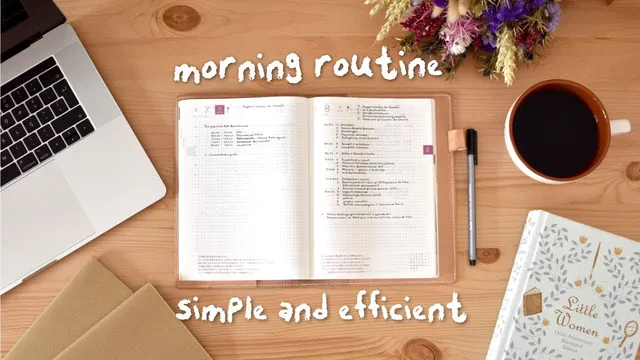
How to Customise Your Morning Routine
Based on Mariana Vieira's video on YouTube. If you like this content, support the original creators by watching, liking and subscribing to their content.
Match morning timing to personal energy and local sunrise conditions rather than chasing a universal wake-up time.
Briefing
A morning routine doesn’t need to be rigid or optimized to a specific wake-up time; it needs to match a person’s energy, priorities, and values. The central idea is to slow the start of the day, avoid cramming too many tasks into a short window, and build a routine that feels welcoming rather than micromanaged. Instead of glorifying a 5 a.m. wake-up, the guidance is to find the timing that fits individual schedules and local sunrise patterns, then follow what feels sustainable.
Rather than scheduling every minute, the routine is organized around four daily priorities or core values—broad enough to “go with the flow” when the day shifts. Over time, overly strict plans can reduce motivation, so the morning is treated as a mindful runway into a busy schedule. One key practice is choosing one meaningful activity each morning and giving it deep focus. That activity changes day to day—examples include long reading, piano practice, a work session when inspiration strikes, or playing a video game—so the person doesn’t bounce between hobbies without finishing anything.
Movement is another pillar, framed as a flexible way to keep the body engaged even when full exercise isn’t realistic. If energy is low, the routine can scale down to a walk, stretching, or a quick, intense cleaning burst. Breakfast time is also treated as a deliberate pause: preparing food thoughtfully, varying the meal, and using the breakfast table as a moment to slow down. Coffee becomes part of a social and mental reset—sharing ideas with people the person loves and letting thoughts wander rather than fixating on the day ahead.
The routine also includes practical care work: quick cleanup after breakfast, getting ready, setting up the workspace for the next eight to ten hours, and handling lunch prep when needed. Small household tasks—sewing a button, decluttering, or doing laundry—fit into this “environment ready” block. Finally, planning for the day ahead is kept intentionally light. When overwhelmed, the recommendation is to select only three main tasks: one big, one medium, and one small. The big task could be writing the first draft of a report; the medium task might involve organizing an inbox or reviewing project notes; the small task can be household chores or organizing. This mix protects motivation and ensures attention is spread across different areas of life.
The broader takeaway is that intentionality—whether it’s as small as taking a sip of coffee or as demanding as a focused work block—sets the tone for everything that follows. The routine is designed to carry that intentional productivity into the rest of the to-do list without turning mornings into another stressful checklist.
A sponsored segment adds a learning angle: the person has been building comfort with subjects like science, math, and statistics through Brilliant, an interactive platform built around visual, real-time problem solving with instant feedback. The pitch emphasizes learning by doing—breaking courses into manageable pieces—so knowledge grows steadily rather than through memorizing formulas. The call to action is to start with a course aligned to personal interests and learn at one’s own pace.
Cornell Notes
The routine centers on starting mornings slower and more intentionally, not on hitting a perfect wake-up time or cramming activities into a narrow window. Instead of strict scheduling, it’s organized around broad core values and four daily priorities, which helps maintain motivation. Each morning includes one deeply focused meaningful activity, plus flexible movement that can scale down to a walk, stretching, or quick intense cleaning. Breakfast and coffee are treated as mindful pauses for creativity and connection, while the environment is prepared for the next work block through cleanup, workspace setup, and small household tasks. Day planning stays simple with three tasks—big, medium, and small—to balance effort, protect motivation, and spread attention across life areas.
Why does the routine avoid strict wake times and minute-by-minute scheduling?
What replaces a detailed schedule when motivation is a concern?
How does the routine prevent hobby-hopping and shallow engagement?
How is movement handled when full exercise isn’t possible?
What’s the method for planning a manageable workday when overwhelmed?
How does the sponsored learning segment fit the morning theme?
Review Questions
- How does the routine balance flexibility with structure in the morning?
- What are the three-task planning categories (big/medium/small), and why does varying effort levels matter?
- Give two examples of how movement and breakfast are used as intentional “slow-down” tools in the morning.
Key Points
- 1
Match morning timing to personal energy and local sunrise conditions rather than chasing a universal wake-up time.
- 2
Use broad core values and a small set of priorities instead of micromanaging every minute.
- 3
Choose one meaningful activity each morning and focus deeply on it to avoid hobby-hopping.
- 4
Scale movement to your energy level—walks, stretching, or quick intense cleaning can count.
- 5
Treat breakfast and coffee as mindful pauses for creativity, connection, and mental reset.
- 6
Prepare the environment for the next 8–10 hours with cleanup, workspace setup, and any needed lunch or small household tasks.
- 7
When overwhelmed, plan only three daily tasks—big, medium, and small—to protect motivation and balance attention across life areas.