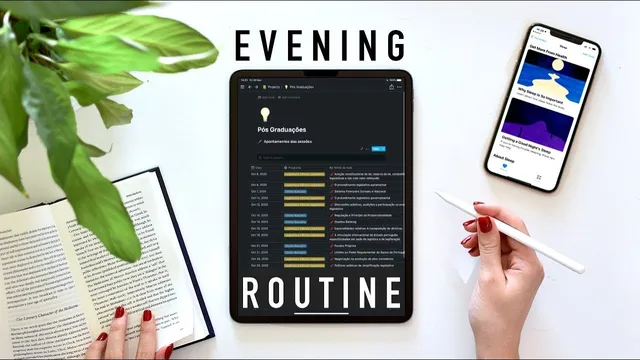
how to design your night routine effectively
Based on Mariana Vieira's video on YouTube. If you like this content, support the original creators by watching, liking and subscribing to their content.
Schedule demanding tasks before your energy declines in the evening, rather than relying on willpower later.
Briefing
A strong night routine isn’t about squeezing in more self-care after work—it’s about managing energy so tomorrow doesn’t pay the price. Energy typically declines somewhere in the evening, and the key is to schedule demanding tasks before that drop instead of assuming willpower will carry the rest of the day. When people slack too early—closing the laptop, then immediately collapsing on the couch—their remaining hours often get filled with low-value scrolling, leaving the next morning visibly messy and mentally heavy.
The routine design starts with a practical diagnosis: evening problems differ from morning problems. Morning struggles often come from decision fatigue, low motivation, or difficulty breaking “sad habits.” Evening struggles usually come from energy mismanagement—especially leaving high-effort work for when energy is at its lowest. The fix is to identify when energy abruptly declines for a given person and then front-load tasks that require real output: prepping lunch, cleaning, doing laundry, and even exercising. The goal is to “carry” energy from the productive part of the day into the tasks that matter, then dial down only after the heavy lifting is done.
A second mistake is treating the evening as a reward that should be fully indulgent. Indulgence can be part of a healthy night, but the evening isn’t an isolated block of time; it feeds into the next morning. Instead of making tomorrow suffer, the routine should split after-work time into two chunks: indulgent self-care with no guilt, and productive self-care that closes loose ends for the future. Productive self-care can be simple and concrete—fixing tomorrow’s lunch, tidying the house, taking out garbage, grooming a pet, or planning the next day—so the morning starts easier rather than harder.
Third, the night routine needs a strict wind-down window that gradually shuts down stimulation. Wind down means cutting off most inputs from the day: no technology, no complex activities, and no coffee. The transcript links this to sleep biology, citing physician Susan Nunn and the idea that blue light from devices suppresses melatonin, the hormone that rises in darkness and supports sleep timing. To make the transition easier, the routine can use a phone alarm to trigger wind down, especially with iPhone’s Health app setting. Low-stimulation alternatives—reading, journaling, folding laundry, making a warm drink, or taking a short walk—support the wind-down process without derailing sleep.
Finally, the transcript ties the routine strategy to goal tracking and organization, recommending Notion as a flexible system for planning, habit tracking, task management, and goal setting. The underlying message remains consistent: optimize mornings and evenings enough to protect time for long-term goals, while designing nights that restore energy instead of spending it on scrolling and last-minute chaos.
Cornell Notes
Night routine success hinges on energy management, not just willpower or “rewarding” yourself after work. Energy usually declines in the evening, so demanding tasks should be scheduled before that drop—laundry, cleaning, meal prep, and workouts belong earlier. After-work time should be split into two parts: indulgent self-care with no guilt, and productive self-care that prepares tomorrow (like fixing lunch and tidying). A strict wind-down window then reduces stimulation: no technology, no complex activities, and no coffee, because blue light can suppress melatonin. The result is easier mornings and better sleep consistency.
Why does the transcript treat evening routine problems differently from morning routine problems?
What is the “slack too early” problem, and what’s the proposed fix?
How should after-work time be divided to avoid making tomorrow harder?
What does a “strict wind down window” include, and why is it emphasized?
What practical tools or alternatives are suggested for the wind-down phase?
Review Questions
- How would you identify your personal “energy decline” time, and which tasks would you move before it?
- What are three examples of productive self-care that could be scheduled before indulgent relaxation?
- Why does the transcript connect device use and blue light to melatonin and sleep timing?
Key Points
- 1
Schedule demanding tasks before your energy declines in the evening, rather than relying on willpower later.
- 2
Split after-work time into indulgent self-care (no guilt) and productive self-care (prep for tomorrow).
- 3
Place productive self-care before indulgent self-care to protect the next morning.
- 4
Create a wind-down window that removes most stimulation: no technology, no complex activities, and no coffee.
- 5
Use a phone alarm (and iPhone Health app settings) to start wind down at a consistent time.
- 6
Choose low-stimulation alternatives like reading, journaling, folding laundry, warm drinks, or short walks.
- 7
Use an organization system like Notion to track goals and habits so routines support long-term progress.