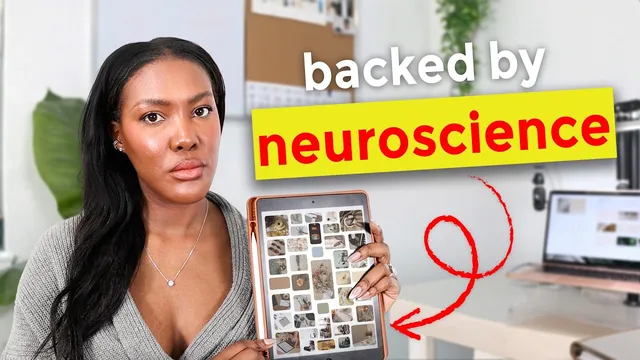
How to make a vision board that actually works (Neuropsychologist explains)
Based on Dr. Tiffany Shelton's video on YouTube. If you like this content, support the original creators by watching, liking and subscribing to their content.
Vision boards are most effective when they create a clear “open loop” question that guides selective attention toward opportunities and evidence aligned with the desired future.
Briefing
Vision boards work best when they’re built as a brain-targeted system for clarity, emotional engagement, and action—not as a daily motivation poster. The core idea is that imagining a desired future functions through selective attention, emotional conditioning, and consistent behavior. When someone holds a clear, vivid picture of what they want, the brain starts scanning for opportunities and evidence that match that goal, while an “open loop” question keeps pulling attention toward resolving the gap between current life and the desired one.
That mechanism matters because the brain’s default settings lean toward safety. A strong negativity bias and a tendency to avoid pain can keep high achievers stuck in familiar patterns—especially when past success came from grit, late nights, and pushing through. In that state, visualization can help build new neural pathways, but only if the vision board is designed to support the right kind of attention and follow-through. Research on mental practice in athletes is cited to argue that visualization can boost motivation, confidence, and even physical performance, because the brain responds as if the scenario is already happening.
The transcript also warns against common “loud but wrong” vision board habits that can blunt progress. One major mistake is using the board for daily hype: repeatedly staring at it can trigger a relaxed, already-achieved feeling (even lowering systolic blood pressure), which may reduce the psychological readiness needed to do real work. Another mistake is creating or using the board while in a bad mood, since emotions steer thoughts and behaviors. A third error is filling boards only with material outcomes—cars, houses, designer bags—while ignoring the identity shift, experiences, and internal growth required to actually live the new life.
Instead, the recommended build process centers on who the person is becoming. The board should focus on how someone wants to show up, not just what they want to have—prompting questions like who they become on the journey, what confidence looks like in the body, and how they handle hard conversations. It should also include pictures of the person themselves embodying the desired state (confident, joyful, grounded), so the brain closes the perceived gap between “now” and “next.”
Finally, aesthetics are treated as functional. A cluttered or jarring board discourages viewing, and if it isn’t revisited during planning sessions, it can’t do its job. The guidance is to choose a calming color palette, leave white space, and arrange images intentionally—described as creating a “visual system” that supports energy rather than draining it.
Overall, the transcript frames vision boards as a targeted attention tool: they clarify goals, prime the reticular activating system to notice relevant evidence, and reinforce identity-based behavior—so the desired future becomes something the person repeatedly rehearses, emotionally engages with, and acts on.
Cornell Notes
The transcript argues that vision boards work when they function as a brain-based system for selective attention and emotional conditioning, paired with consistent action. Clear visualization creates an “open loop” that keeps attention focused on resolving the gap between current life and desired identity, while the reticular activating system filters the environment for matching opportunities and evidence. Common failures come from using vision boards for daily motivation (which can create a false “already done” feeling), building them in a bad mood, or filling them only with material outcomes. The recommended approach emphasizes identity: show how the person wants to show up, include photos of themselves embodying the desired state, and design the board to feel calm and inviting so it gets revisited during planning.
Why does visualization on a vision board translate into real-world change rather than staying purely motivational?
How do negativity bias and “survival mode” interfere with high achievers’ goals?
What’s the problem with using a vision board as a daily motivation tool?
What should a vision board include if the goal is identity change, not just outcomes?
Why are photos of yourself recommended on a vision board?
How does design—color, spacing, and clutter—affect whether a vision board “works”?
Review Questions
- How does selective attention and the reticular activating system explain why a vision board can change what a person notices in daily life?
- What are the transcript’s three main “don’ts” for vision boards, and how does each one interfere with action?
- How would you redesign a vision board that focuses only on material items to better reflect identity, emotions, and behavior?
Key Points
- 1
Vision boards are most effective when they create a clear “open loop” question that guides selective attention toward opportunities and evidence aligned with the desired future.
- 2
Visualization is framed as mental practice that can increase motivation and confidence, but it must be paired with intentional action to avoid staying in a comfort state.
- 3
High achievers can get stuck when negativity bias and survival-mode habits keep them repeating familiar patterns, even as goals evolve.
- 4
Avoid using a vision board as daily hype; repeated imagining can trigger relaxation and a false sense of having already arrived, reducing readiness to act.
- 5
Don’t build or use a vision board from a bad mood; emotions can steer thoughts and behaviors in ways that undermine the intended shift.
- 6
Include identity cues—how you want to show up, what confidence feels like, and how you handle challenges—rather than only material outcomes.
- 7
Design the board to be calm and inviting (color palette, white space, intentional layout) so it gets revisited during planning sessions.