How to Plan PhD and Side Hustle Work Around My Infradian Rhythm - Plan with Me in Real Time
Based on Ciara Feely's video on YouTube. If you like this content, support the original creators by watching, liking and subscribing to their content.
Build a calendar by mapping infradian phases and assigning tasks to the phase windows when they’re most likely to feel manageable.
Briefing
The central idea is to build a month-long schedule around an infradian rhythm—using the follicular, ovulatory, luteal, and menstrual phases as “time windows” for different kinds of work, social life, and creative energy. The payoff is practical: instead of forcing the same routine every day, the plan assigns tasks to the phase when they’re most likely to feel doable, then uses that structure to support major goals for January.
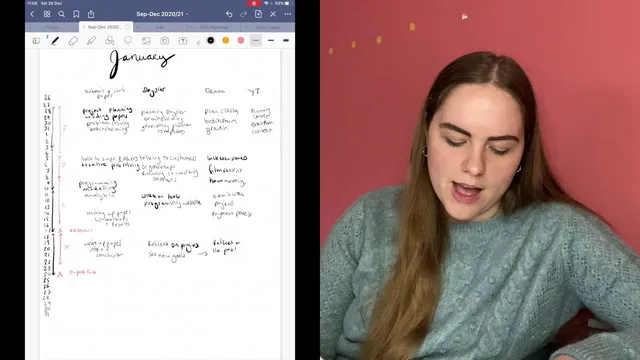
Planning starts by mapping calendar days from the 26th through the 31st, then extending into the next month’s cycle. The approach hinges on recognizing personal patterns: during the ovulatory phase, she expects to be more communicative and more willing to do social activities. Menstrual timing is treated as predictable, while follicular and luteal lengths are described as more variable—so those sections are marked more loosely, with the expectation that she’ll refine accuracy over time.
A major January objective is submitting a conference paper. The work is deliberately distributed across phases: the follicular phase is reserved for project planning and creative problem-solving—reading papers, brainstorming, and tackling early planning tasks. In the ovulatory phase, she prioritizes coordination—talking with supervisors and others involved—while continuing creative problem-solving as estrogen rises. The luteal phase shifts toward analytical output: programming, modeling, analytics, and then beginning the paper write-up near the end of that phase. The menstrual phase becomes a writing-and-reflection block, emphasizing introductory and concluding material, including methods/results earlier in the phase and more reflective framing later.
Alongside the PhD paper, she plans a side project called “daisier,” again phase-matched. Follicular time is for brainstorming and generating planner templates. Ovulatory time is for outreach—talking to customers, organizing meetups, and running co-working sessions. Luteal time is for execution-heavy work she usually struggles to start, including programming, tools, and website development. Menstrual time is for reflection on progress and setting new goals.
The same rhythm-based scheduling is applied to “drama” (school planning and operations), YouTube, and personal routines. Drama planning is placed in follicular time, customer-facing or filming-related tasks in ovulatory time, admin work like payroll and payment processing in luteal time, and reflection in menstrual time. For YouTube, she assigns planning and brainstorming to follicular, filming/vlogging and brand communication to ovulatory, editing and thumbnail creation to ovulatory/later phases, and reflective/goal-setting content to menstrual. Recreation and health habits are also organized: aerobic exercise and meal planning in follicular/ovulatory windows, social meetups in ovulatory, and quieter activities like chess, puzzles, and true crime during luteal. The month’s overarching theme is “schedule”—building a reliable system that supports her across work, relationships, recreation, and content creation, with the intention to clean up and refine the plan as she goes.
Cornell Notes
January planning is built around an infradian rhythm, dividing the month into follicular, ovulatory, luteal, and menstrual phases and assigning different tasks to each window. The plan treats ovulation as a period of higher social energy and communication, menstrual as predictable, and follicular/luteal as more variable and therefore “trial and error.” A key goal—submitting a conference paper—is scheduled so creative planning happens in follicular, supervisor coordination in ovulatory, analytical/programming work in luteal, and reflective writing in menstrual. The same phase-based logic is applied to the “daisier” side project, drama school operations, YouTube production, and personal routines, with “schedule” named as the guiding theme.
How does the plan use infradian phases to decide what to do first in January?
What is the phase-by-phase workflow for the conference paper submission?
Why does “daisier” get scheduled differently across phases?
How are social life and recreation matched to the rhythm?
What does the plan say about personal constraints and scheduling accuracy?
Review Questions
- How does the plan decide which tasks belong in follicular versus luteal time blocks?
- What specific steps are assigned to ovulatory phase for both the conference paper and the “daisier” project?
- If follicular and luteal lengths are uncertain, what part of the planning process is designed to adapt over time?
Key Points
- 1
Build a calendar by mapping infradian phases and assigning tasks to the phase windows when they’re most likely to feel manageable.
- 2
Treat ovulatory time as a coordination/social window, using it for supervisor communication, outreach, and filming or brand-facing work.
- 3
Reserve follicular time for creative planning activities like brainstorming, reading, and early project setup.
- 4
Use luteal time for analytical and execution-heavy work such as programming, modeling, analytics, and starting the paper write-up.
- 5
Use menstrual time for reflective writing and review—intro/conclusion sections, reflection on progress, and setting new goals.
- 6
Apply the same phase logic across multiple domains (PhD work, “daisier,” drama operations, YouTube, health routines, and recreation) to reduce daily decision fatigue.
- 7
Make “schedule” the overarching system goal, then refine the plan as phase timing becomes clearer through experience.