how to prepare for tests & exams effectively
Based on Mariana Vieira's video on YouTube. If you like this content, support the original creators by watching, liking and subscribing to their content.
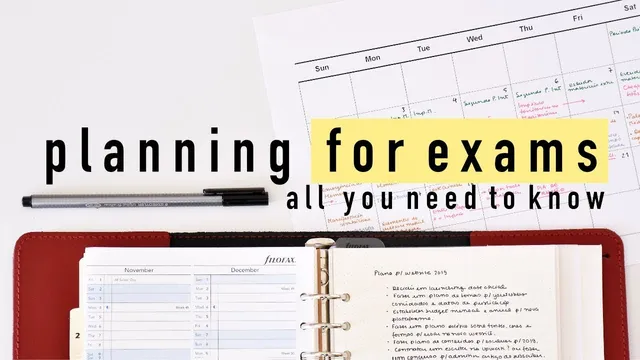
Create a paper calendar dedicated to the exam season and start scheduling as early as possible.
Briefing
Effective exam preparation starts with a realistic, visual schedule that maps every remaining day to specific reading and note-taking tasks—no fancy app required. The core move is to create a dedicated exam-season calendar on simple paper, beginning as early as possible. The method uses a monthly layout where each page covers one month, then divides the remaining days into boxes so students can see at a glance what needs to happen and when. For multiple classes or exams, color-coding turns the calendar into a quick reference: exam dates and study blocks get distinct colors, using tools like colored pens, highlighters, stickers, or Post-it notes.
Once the calendar exists, the next step is to convert course structure into daily work. Students should pull chapter lists from the textbook’s index/table of contents or, if available, the course syllabus—materials professors often provide early in the term. The goal isn’t to obsess over subchapter titles; it’s to assign each major chapter to a specific time slot. Large chapters can be split into smaller chunks, but the schedule should still reflect a clear “what to study on which day” plan. Time within each day’s box can also be divided by study sessions—such as using the top of the box for an afternoon chapter and the bottom for an evening chapter—so the plan matches how study actually happens.
Honesty about availability is treated as essential. If a day is truly unavailable (holidays, travel, or other commitments), that date should be crossed out so the calendar reflects real capacity. Over-optimistic scheduling creates gaps that later force students to cram by overlapping sessions, undermining the plan’s usefulness. Spreading readings in advance supports stronger information retention in short bursts, rather than last-minute overload.
The calendar also needs a “buffer” near the finish line: the day before the exam should be reserved for reviewing previous notes and summaries and for resting. Because different courses demand different amounts of work, the chapter-to-time allocation should be adjusted based on each exam’s expected study load.
Planning doesn’t stop at the broad calendar. For each study session, students should build a more detailed study guide derived from the same table of contents or syllabus. That guide can be as simple as dividing the syllabus into chunks, or more detailed with bullet points listing topics, subtopics, and concepts for that day. Keeping one study guide per page and bundling pages with a binder clip helps students grab the right material quickly. With both resources in hand, the daily routine becomes straightforward: consult the calendar for the assigned chapter(s), use the matching study guide while reading or taking notes, and mark subtopics as they’re completed to track progress and reduce the risk of missing even small details.
Cornell Notes
A strong exam plan is built from two layers: a color-coded calendar and matching detailed study guides. Students first create a paper schedule covering every day remaining until finals end, dividing it into boxes and assigning each chapter to a specific date using the textbook’s table of contents or the syllabus. Time inside each day can be split into multiple sessions (e.g., afternoon vs. evening), and unavailable days should be crossed out to keep the plan realistic. Spreading reading ahead improves retention, and the day before each exam should be reserved for reviewing notes and resting. Then, for each scheduled study session, students prepare a focused guide (chunked syllabus or topic-by-topic bullets) and use it to track completion as they read and take notes.
How can students build an exam-season schedule without relying on apps or complex tools?
What source should students use to decide what to study each day?
How should students handle multiple classes or multiple exams in the same calendar?
Why does the plan emphasize crossing out unavailable days and avoiding over-optimism?
What should students do near the exam date to balance review and recovery?
How do detailed study guides complement the calendar?
Review Questions
- What steps turn a syllabus or table of contents into a day-by-day study plan?
- How does color-coding help when multiple exams or classes overlap in the same schedule?
- What is the purpose of the buffer day before an exam, and how should students use it?
Key Points
- 1
Create a paper calendar dedicated to the exam season and start scheduling as early as possible.
- 2
Divide the calendar into boxed daily slots and assign each chapter to a specific date using the textbook’s table of contents or the syllabus.
- 3
Use color-coding to separate study blocks for different classes or exams, including marking exam dates in matching colors.
- 4
Split large chapters into smaller chunks and divide each day’s box into multiple sessions if that matches study habits.
- 5
Cross out days when studying is impossible so the plan stays realistic and doesn’t force overlapping sessions later.
- 6
Spread reading in advance to support better retention in short bursts, and reserve the day before each exam for review and rest.
- 7
Build a detailed study guide for each scheduled session so students can track subtopics as they read and take notes.