How to Remember Everything You Read
Based on Mariana Vieira's video on YouTube. If you like this content, support the original creators by watching, liking and subscribing to their content.
Remembering improves when new information is embedded into existing knowledge and linked to emotion or personal interpretation.
Briefing
Remembering what you read doesn’t hinge on rereading for longer—it hinges on building connections while you read. New information sticks better when it’s embedded into existing knowledge and paired with emotion or personal interpretation, making later retrieval far easier. That’s the core fix for the common experience of closing a book and losing the details within minutes.
A practical way to force that deeper embedding is to read with a structured mindset. The transcript points to Edward de Bono’s “six thinking hats” method, where each colored hat represents a different mode of thinking applied to a question or passage. The blue hat focuses on managing the thinking process—seeking summaries, setting an agenda, and pushing toward a conclusion. The green hat drives creative exploration by generating multiple solutions to the same problem. The red hat invites emotional engagement, encouraging readers to express feelings about the issue without having to justify them logically. The yellow hat emphasizes benefits and added value, while the black hat adds risk assessment and critical judgment. The white hat is for information gathering—identifying what’s already known and what’s missing, then figuring out how to obtain it.
Beyond any single technique, the transcript argues that “involvement” is the real lever: shifting from passive consumption to active construction of meaning. Because the brain links emotions to memory, readers who create an intellectual or emotional connection to the text are more likely to retrieve it later. That involvement can take many forms—class discussion, writing papers, mind mapping a book’s structure, or teaching a chapter to a friend. The point isn’t time spent on the page; it’s the work done by the reader while the page is open: creating notes, marking passages, and turning reading into critical thinking.
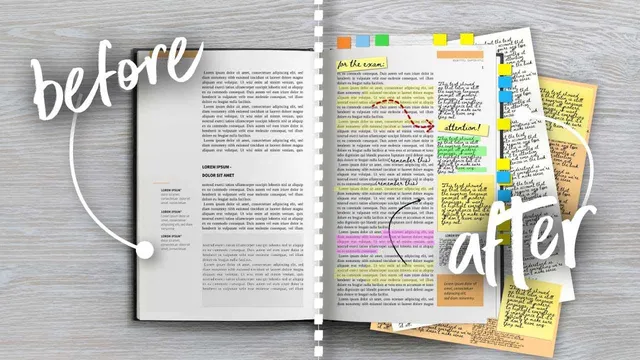
A concrete example is given through a second read of Atomic Habits. The method used wasn’t just skimming again; it involved asking better questions, highlighting only the sentences that truly stood out, marking key pages, rewriting select lines in the margins, and adding personal conclusions and questions. The transcript stresses quality over quantity: reading once with high engagement can beat skimming multiple times.
Repetition still matters, but the emphasis shifts to active repetition. The transcript recommends rereading with the same critical approach so the second pass becomes a new interpretation rather than a re-scan. With prior highlights and margin notes already in place, readers can anticipate what comes next and look for new meanings through the clues.
Finally, the transcript adds a learning shortcut for people who can’t read everything: using Shortform for detailed non-fiction summaries plus interactive exercises and cross-book connections. The pitch is framed as a way to stay updated on productivity ideas, then purchase full books for deeper analysis when a topic proves valuable.
Cornell Notes
The transcript’s central claim is that remembering what you read depends less on rereading time and more on how actively you connect new information to what you already know—especially through emotion and personal interpretation. It recommends using Edward de Bono’s six thinking hats to structure that involvement: blue for process and conclusions, green for creative options, red for feelings, yellow for benefits, black for risks, and white for information gaps. It also emphasizes “active repetition,” such as rereading with the same questioning and note-taking so the second pass adds new meaning rather than passive review. Practical tactics include highlighting selectively, writing questions and conclusions in the margins, mind mapping, discussing, and teaching parts of a book to someone else.
Why do readers often forget what they just read, and what changes that outcome?
How do the six thinking hats turn reading into active thinking?
What does “involvement” look like in practice during reading?
What was the specific approach used to make Atomic Habits stick on a second read?
How should repetition work if passive rereading doesn’t help much?
How does Shortform fit into the memory-and-learning strategy?
Review Questions
- Which of the six thinking hats would you use to identify what you don’t understand in a passage, and what would you do with that information?
- Give two examples of “active involvement” behaviors during reading that create emotional or intellectual connections.
- Why does the transcript claim that active repetition (a second engaged read) can outperform passive rereading multiple times?
Key Points
- 1
Remembering improves when new information is embedded into existing knowledge and linked to emotion or personal interpretation.
- 2
Edward de Bono’s six thinking hats provide a structured way to read actively: blue (process), green (creativity), red (emotions), yellow (benefits), black (risks), and white (information gaps).
- 3
Active involvement beats passive reading time; notes, margin questions, and selective highlighting create stronger memory traces.
- 4
Quality matters more than quantity: targeted engagement can outperform skimming multiple times.
- 5
Reread with active repetition—use prior highlights and margin notes to anticipate and reinterpret passages rather than re-scan them.
- 6
Create retrieval-friendly connections by doing things like mind mapping, discussing, writing, and teaching parts of a book to others.
- 7
For time-constrained readers, Shortform can provide detailed summaries and exercises to apply ideas, then full books can follow for deeper analysis.