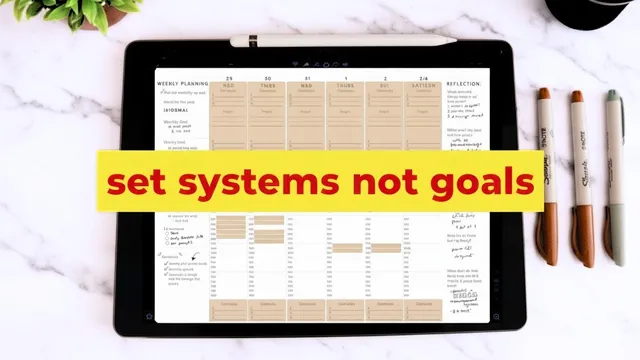
HOW TO SET SYSTEMS INSTEAD OF GOALS | a system that will change your life
Based on Dr. Tiffany Shelton's video on YouTube. If you like this content, support the original creators by watching, liking and subscribing to their content.
Treat discipline as a support system, not white-knuckle willpower, so progress continues when energy and motivation dip.
Briefing
Ambitious people often blame “lack of discipline” or “not enough motivation” when progress stalls—but the more reliable lever is building systems that keep working on bad days. The core idea is simple: goals are fragile; systems (support, accountability, routines, and tools) carry you when energy, time, or mood runs out. Using a hike with her children as a metaphor, Dr. Tiffany Shelton frames discipline as a support structure rather than white-knuckle willpower—something that helps you keep moving even after you want to quit halfway through.
Her first system is a “discipline system” built around a “bounceback box,” designed for consistency when motivation fades. The box has two sides. On the “keep it real” side, the plan starts by identifying what knocks you off track—procrastination, low motivation, or burnout—so the discipline system targets real triggers. She recommends an “overwhelm relief guide” that maps triggers for feeling overwhelmed, what to do when signs appear, and how to get back on track. In psychology terms, that’s “coping ahead”: deciding in advance what your reset looks like. She also urges planning for setbacks by baking in “reset routines,” including steps to review what went wrong and pivot without self-punishment.
On the “accountability” side, she pushes for external support plus measurement. An accountability partner (or a community with similar ambitions) increases follow-through; she cites research claiming a specific accountability appointment can raise success chances to 95%. She then describes her “Systemize Your Goals Accelerator,” which combines one-on-one mentorship, an accountability group using the weekly cadence from The 12-week Year, and a community layer for sustained motivation. The system is reinforced with tracking and adjusting: she points to weekly scorecards and an 85% target from The 12-week Year, arguing that tracking creates self-accountability and helps refine strategies based on real progress.
A third layer addresses survival mode: a “survival routine” for seasons when life is chaotic—solo parenting, illness, or just being stretched thin. The goal is not perfection but “good enough” habits that cover basic necessities while keeping momentum.
From there, she shifts to a “productive home system,” arguing that home management is a foundation for goal progress, not a distraction. She organizes it into three “C’s”: center your home around what keeps the family thriving (not Pinterest aesthetics), establish cycles (daily, weekly, and longer “revival” rhythms) to reduce stress and cortisol from clutter, and include cushion via the survival routine. She illustrates daily cycles with routines like early morning work, a morning routine for launching kids and tidying, and evening kitchen close-down and bedtime routines; weekly cycles include zone cleaning, weekly home blessing, meal planning/prep, and weekly review/planning.
Finally, she treats tools and tech as “gear” that makes the journey safer and more sustainable. Her four-part tech stack includes a second brain in Notion using the PARA method plus David Allen’s Getting Things Done concepts; a shared Google family calendar used for weekly non-negotiables; Google Drive for large files and collaboration; and a paper planner (Mod Ambition) for quarterly, monthly, weekly, and daily time blocking using her 37 time blocking method. The takeaway is that the right support, routines, and tools turn goal pursuit into a system that can survive real life—not just best days.
Cornell Notes
Progress comes faster and with less stress when people stop treating discipline as willpower and instead build systems that keep working when motivation drops. A “bounceback box” pairs “keep it real” planning (identify triggers, use coping ahead, and create reset routines) with accountability (an accountability partner/community, mentorship, weekly scorecards, and a target of 85% in The 12-week Year). For high-pressure seasons, a “survival routine” provides good-enough habits so momentum continues. She also argues that home management is part of goal achievement: center the home on what keeps the family thriving, run daily/weekly cycles to prevent chaos, and use cushion routines for hard times. Finally, tools act like “gear”—Notion as a second brain, Google Calendar for non-negotiables, Google Drive for storage, and a paper planner for time blocking.
Why does the “discipline system” matter more than motivation, and what makes it different from white-knuckle discipline?
What does “coping ahead” look like in practice inside the bounceback box?
How should setbacks be handled so they don’t derail progress?
What role does accountability play, and how is it reinforced with measurement?
How does the “productive home system” connect to goal progress?
What does the “gear” metaphor imply about tools and tech?
Review Questions
- What are the two sides of the “bounceback box,” and how does each side help someone stay consistent when motivation drops?
- How do reset routines and overwhelm relief planning reduce the need for willpower during setbacks?
- In what ways does a productive home system (center, cycles, cushion) function as a prerequisite for goal execution?
Key Points
- 1
Treat discipline as a support system, not white-knuckle willpower, so progress continues when energy and motivation dip.
- 2
Build a “bounceback box” by pairing trigger-based planning (coping ahead) with planned reset routines for normal setbacks.
- 3
Use accountability partners or communities to increase follow-through, and reinforce it with tracking like weekly scorecards and an 85% target from The 12-week Year.
- 4
Create a survival routine for high-stress seasons so “good enough” habits keep momentum without demanding perfection.
- 5
Manage the home as a productivity foundation by centering it on family values, running daily/weekly cycles, and using cushion routines during hard times.
- 6
Use tools as “gear”: Notion for a second brain, Google Calendar for weekly non-negotiables, Google Drive for storage/collaboration, and a paper planner for time blocking and planning.