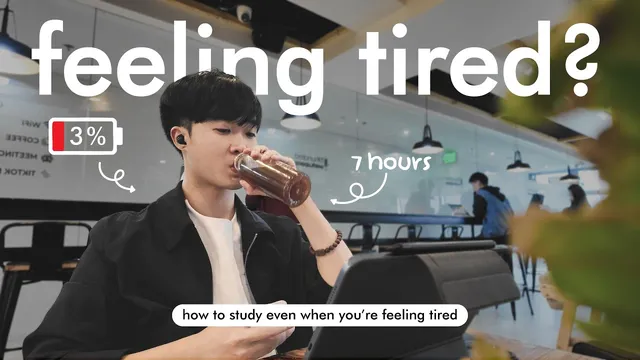
how to study EVEN when you're tired. (realistic advice)
Based on Kai Notebook's video on YouTube. If you like this content, support the original creators by watching, liking and subscribing to their content.
Audit the basics of fatigue first—sleep timing, eating, and excessive energy-draining habits—before relying on study hacks.
Briefing
The central message is that studying while exhausted works best when energy—not willpower—drives the plan. Instead of forcing long sessions after school, the advice focuses on managing expectations, scheduling tasks around natural energy dips, and using short recovery strategies (especially naps) to regain enough focus to make studying count.
A first step is to “manage expectations” and audit the basics that often cause fatigue in the first place—sleep timing, eating, screen time/gaming, and whether the day’s schedule already leaves no real recovery. The guidance then shifts to a practical scheduling method: break the day into three energy bands—high, moderate, and low—and place the hardest work where energy is highest. Brute forcing more productivity usually isn’t sustainable; performance drops as energy drops, and some people even feel more alert at night. The plan should also account for task-specific drain: not all activities cost the same energy. One example describes overloading a day after a morning run with friends, which wiped out the energy needed for everything else; the fix would have been to treat that day as lighter and return to studying later, potentially after a nap.
The second major tactic is a short nap after getting home. The recommendation is to keep naps brief—about 20–30 minutes, or sometimes 10–20 minutes—to avoid entering deep sleep, which can lead to grogginess and a longer “sleep hangover.” A loud alarm is emphasized, along with practical wake-up tricks like placing a glass of water nearby to drink when the alarm goes off. Going back to sleep is framed as the quickest path to waking up late and feeling worse.
A more controversial add-on is the “caffeine nap”: drink coffee, then nap for about 20 minutes so the caffeine begins working as the nap ends. The guidance notes that moderation matters, and it’s aimed at people who need a boost during tough stretches.
Finally, the advice targets how studying is done. Rather than sitting still copying notes or making flashcards, studying should be made more engaging—standing up, acting like a teacher explaining to imaginary students, and treating study as a dynamic activity. Environment matters too: studying outside is suggested to reduce the temptation to lie down at home.
If exhaustion persists even after these changes, the message is to accept that rest may be the real solution. The guidance argues against chasing a short-term “energy hack” that creates a new cycle of poor sleep. It also warns against comparing schedules with others—staying up until 4:00 a.m. may work for some, but it’s not automatically better. The takeaway is balance: adjust to personal energy patterns, do less when needed, and prioritize sustainable recovery so studying remains possible even on tired days.
Cornell Notes
Studying when tired becomes manageable by planning around energy rather than trying to force productivity. The guidance starts with fixing basics that cause fatigue and then scheduling tasks into high-, moderate-, and low-energy blocks, placing the hardest work where focus is strongest. After school, a short nap (about 20–30 minutes, or 10–20) can restore energy without pushing the body into deep sleep. For extra help, a “caffeine nap” pairs coffee with a ~20-minute nap so the caffeine kicks in as you wake. Studying should also be made more engaging and less stationary—standing up, teaching imaginary students, and studying outside to reduce temptation to lie down. If tiredness remains, rest and balance beat short-term hacks.
Why does “managing expectations” come before productivity tips?
How should tasks be scheduled when energy fluctuates during the day?
What makes a nap helpful instead of harmful for studying?
What is a “caffeine nap,” and how is it supposed to work?
How can studying become more effective when motivation is low?
What should someone do if they’re still exhausted after trying these strategies?
Review Questions
- What are the three energy segments, and how should the hardest tasks be placed among them?
- Why does the advice recommend naps of 20–30 minutes (or 10–20), and what happens if naps run too long?
- Describe two ways to make studying more engaging and less stationary when energy is low.
Key Points
- 1
Audit the basics of fatigue first—sleep timing, eating, and excessive energy-draining habits—before relying on study hacks.
- 2
Schedule tasks around natural energy levels by dividing the day into high-, moderate-, and low-energy blocks.
- 3
Place the most demanding work during peak energy and save lower-effort tasks for low-energy periods.
- 4
Keep naps short (20–30 minutes or 10–20) to avoid deep sleep and the grogginess that follows.
- 5
Use a caffeine nap (coffee plus a ~20-minute nap) in moderation if you need an extra boost.
- 6
Make studying active and engaging—stand up, teach imaginary students, and study in an environment that reduces the urge to lie down.
- 7
If exhaustion persists, prioritize rest and balance rather than forcing a short-term energy solution that disrupts sleep cycles.