How To Use Words Like Shakespeare
Based on Linking Your Thinking with Nick Milo's video on YouTube. If you like this content, support the original creators by watching, liking and subscribing to their content.
A richer vocabulary is framed as a practical tool for clearer thinking and more precise emotional and analytical expression.
Briefing
A digital thesaurus built for “linked-based thinking” is presented as a practical antidote to the shrinking vocabulary that makes people easier to manipulate—an idea dramatized through George Orwell’s Newspeak in *1984*. The core claim is straightforward: richer word choice doesn’t just decorate writing; it expands how clearly people can name feelings, analyze situations, and resist persuasion tactics that rely on emotional shortcuts like anger, fear, and outrage.
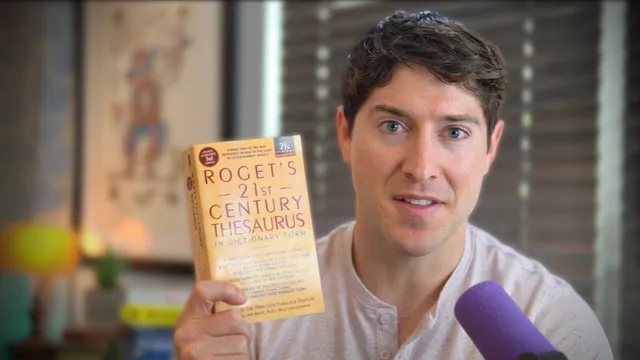
The walkthrough centers on a publicly shared, Obsidian-based version of Peter Mark Roget’s thesaurus (1852), specifically the third edition of the 21st century edition by Barbara Ann Kipfer. Dennis’s contribution is described with striking scale: 14,000 distinct notes with definitions, 44,000 words total, and roughly 420,000 distinct links connecting entries in many directions. The interface turns synonym lookup into exploration. Hovering over words reveals definitions instantly, and clicking through creates a “rabbit hole” effect—starting from a single term like “astonish” and then branching into related synonyms (e.g., amaze, astound, bewilder, overwhelm) and concept neighborhoods.
A key feature is the concept index, where words are grouped not only by direct synonym relationships but also by shared conceptual categories. “Astonish” is shown as a verb meaning “surprise,” and “surprise” sits inside a higher-order meta note labeled “actions of a cognitive nature.” From there, the thesaurus surfaces conceptually similar ideas—such as “backfire,” “bedazzle,” “bewilder,” and “confound”—and even distinguishes adjacent meanings (for example, “alarm” shares a sense of surprise but is not identical). The method encourages lateral movement (synonyms) and vertical movement (up to broader categories), so users can zoom from a word to a map of related concepts.
The guide then expands from cognitive actions into a full taxonomy of categories and subdomains. Beyond “actions of a cognitive nature,” the list includes general actions, motion, physical and abstract causes, fields of human activity (communications, education, entertainment, government, health, legal, military, and more), professions, recreation, religion, social interactions, the arts, and even down into life forms, objects, matter, senses, and geography. Examples like “tundra,” “savannah,” “quagmire,” and “ravine” illustrate how the system can sharpen description by offering specific environmental or experiential labels.
The practical takeaway is that vocabulary expansion improves thinking—analytical, creative, and connective—by helping people parse particulars, spot subtle differences, and choose words that match complex internal states. At the same time, the emphasis is not on speaking in big words all the time; it’s on having them available when precision matters. The creator also frames vocabulary as a defense against “dark arts” of persuasion, arguing that better language helps people avoid being pushed into reactive emotional states.
Finally, the resource is offered as a freely available public Obsidian Publish vault (hosted online, with a note that availability may be temporary). The recommended usage is simple: take a “word excursion” by scrolling the word list, or use the concept index by browsing categories—following the principle that wandering can lead to useful discovery rather than getting lost.
Cornell Notes
The thesaurus is presented as a tool for expanding vocabulary in a way that improves thinking and strengthens resistance to manipulative persuasion. A digital, Obsidian-based version of Peter Mark Roget’s thesaurus (3rd edition of the 21st century edition, by Barbara Ann Kipfer) links 14,000 definition notes and 44,000 words through about 420,000 connections. Users can hover to see definitions instantly, click to move laterally through synonyms, and climb upward into concept categories like “actions of a cognitive nature” to find related ideas beyond direct synonym matches. The guide argues that more precise word choice helps people name complex emotions, analyze situations, and communicate with greater clarity—without requiring constant use of “big words.”
How does the digital thesaurus turn synonym lookup into something more powerful than a standard word list?
What does it mean to move “up” from a word to a higher-order concept, and why is that useful?
How does browsing categories help users discover vocabulary they wouldn’t think to search for?
Why is vocabulary expansion framed as a defense against manipulation and “dark arts” persuasion?
What practical workflow does the guide recommend for using the thesaurus?
Review Questions
- When you find a word you like (e.g., “astonish”), what two different directions can you follow in the system, and how do they differ?
- How does the concept index help distinguish between direct synonyms and conceptually related ideas?
- Pick one category mentioned (such as geography or fields of human activity). What kinds of words would you expect to find there, and how could those words improve description or analysis?
Key Points
- 1
A richer vocabulary is framed as a practical tool for clearer thinking and more precise emotional and analytical expression.
- 2
A digital, Obsidian-based thesaurus uses hover definitions and dense linking to make exploration fast and interactive.
- 3
The concept index groups words by shared conceptual categories, enabling users to move both laterally (synonyms) and vertically (broader idea maps).
- 4
Browsing categories can surface vocabulary users wouldn’t search for, including specific descriptive terms like landscape and environmental labels.
- 5
Vocabulary expansion is presented as a defense against manipulative persuasion tactics that exploit fear, anger, and outrage.
- 6
The goal isn’t constant use of “big words,” but having them available to communicate accurately when it matters.
- 7
A freely available Obsidian Publish vault is offered for ongoing use, with a note that access may not be permanent.