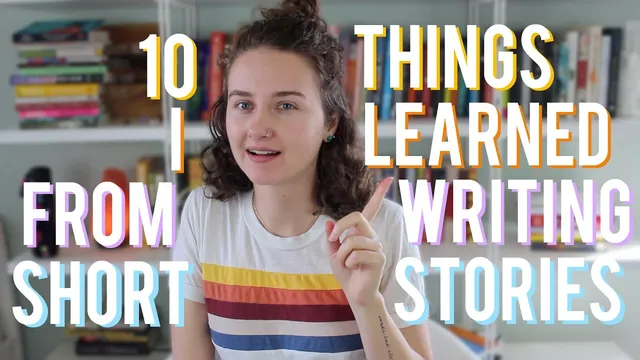
How Writing Short Stories Made Me a Better Writer
Based on ShaelinWrites's video on YouTube. If you like this content, support the original creators by watching, liking and subscribing to their content.
Short stories train concision by forcing dense, purposeful writing where every word must earn its place.
Briefing
Writing short stories doesn’t just build skills for future novels—it forces a writer to practice compression, rapid character work, and late-stage revision in a way that can permanently sharpen prose. The central takeaway is personal but broadly transferable: short fiction creates tighter constraints (fewer scenes, lower commitment, faster feedback loops), and those constraints train efficiency and intuition that carry over into longer forms.
The most immediate lesson is concision. Short stories teach how much meaning can fit into limited space, turning “underwriting” into richer, denser writing. Instead of stretching a plot across thousands of words, the writer learns to make every line do more work—so a 4,000-word short story can feel “richer” than an earlier 4,000-word novel draft because the material is more purposeful.
Character development is the next major shift. In a novel, a character can evolve over many chapters; in a short story, the “end of chapter one” is effectively the whole story. That reality pushes writers toward fast, page-by-page development. The writer describes a previously mistaken belief that character growth mainly comes from slow, long-form arcs and that personality can be conveyed without specific external techniques. Short fiction corrects that by demanding quick personality delivery through details, voice, and situation.
Theme and idea also become more concrete. Rather than treating theme as a large abstract “thing the story explores,” the writer frames it as a revelation that can snap into place—almost like a puzzle—where the story’s pieces align by the end. Symbolism can be subtle but still functional because the story has fewer moving parts.
Creativity benefits from the lower stakes. Short stories can be written in one sitting or a few days, letting writers test weird premises and unusual stakes without committing to a full-length structure. That freedom encourages experimentation with form—the packaging of narrative through point of view, structure, and intent. The writer cites an early experiment mixing play-like elements with fiction, something they wouldn’t have attempted in a novel because it felt unsustainable.
Craft practice gets more specific with line editing and scene work. Short fiction makes line-level revision feel learnable because it can be repeated across many drafts; the writer describes moving from failing to passing by treating line editing as a late-stage, iterative process. Information placement becomes easier too: with fewer scenes, the story itself signals where necessary details must land, reducing awkward info-dumps.
Structure and revisions improve through scale. Short stories involve a handful of scenes, strengthening intuition about scene construction and making structure feel less like a conscious checklist. Developmental edits also become less intimidating when handled on a smaller canvas, and the writer ultimately trusts intuition more—because the cost of being wrong is lower.
Still, the “reverse” matters. After years of short fiction, returning to novels can be hard: long ideas stop coming naturally, and the pursuit of perfection becomes frustrating because a perfect short story is more achievable than a perfect novel. The writer adds a personal example: a new short story titled “Solarium,” a runner-up in a Manila Review fiction contest judged by Heather O’Neil, about a drug addict considering relapse while out at a spa.
Cornell Notes
Short fiction sharpened the writer’s craft by forcing efficiency: every word, scene, and character beat had to land quickly. Tight constraints improved concision, enabled very fast character development, and made theme feel like a specific end-of-story revelation rather than a broad abstract idea. Repeated practice also strengthened line editing, information placement, scene-based structure, and developmental revision workflows. The writer credits low stakes for increased experimentation with creativity and form, plus greater trust in intuition. The main caution is the flip side: after focusing on short stories, long novel ideas and the tolerance for “never-perfect” novel form can become harder to manage.
How does writing short stories change a writer’s approach to concision?
Why does short fiction accelerate character development compared with novels?
What does the writer mean by learning theme as a “puzzle” rather than a big abstract idea?
How did short stories improve line editing and revision habits?
What is the “reverse” problem after writing mostly short stories?
How does short fiction affect creativity and experimentation with form?
Review Questions
- Which specific craft areas improved most through short-story constraints (concision, character, theme, line editing, scene work), and what mechanism caused each improvement?
- What does the writer identify as the hardest part of switching back to novels after years of short fiction, and why does that happen?
- How does the writer’s view of theme shift from “big idea” to “end-of-story revelation,” and what does that imply for planning a short story?
Key Points
- 1
Short stories train concision by forcing dense, purposeful writing where every word must earn its place.
- 2
Character development speeds up because the story’s ending arrives quickly, making page-by-page personality and growth essential.
- 3
Theme becomes more actionable when treated as a specific end-of-story revelation supported by character, structure, and subtle symbolism.
- 4
Lower stakes encourage experimentation—writers can test weird premises and unusual forms without committing to a full novel.
- 5
Repeated line editing on shorter drafts builds stronger prose habits that can carry into first drafts.
- 6
Scene-based structure improves intuition because short fiction limits the number of scenes, making each one more consequential.
- 7
After focusing on short fiction, novel writing can feel harder due to reduced ability to generate long ideas and frustration with the impossibility of “perfect” novel form.