How Your Brain Chooses What to Remember
Based on Artem Kirsanov's video on YouTube. If you like this content, support the original creators by watching, liking and subscribing to their content.
Sharp wave ripples in the hippocampus provide a selection mechanism by coupling excitation with fast inhibitory gating, producing narrow windows for replay.
Briefing
The brain doesn’t just store memories—it actively tags which experiences deserve later consolidation. A key mechanism centers on hippocampal “sharp wave ripples,” brief bursts of coordinated neural activity that act like internal bookmarks: during waking moments after important events, these ripples replay recent, reward-relevant trajectories in a temporally compressed form, and then during sleep the same tagged patterns are reactivated for transfer into long-term storage.
At the core of this system is the hippocampus, a seahorse-shaped structure essential for episodic memory—remembering personal experiences as ordered sequences. During waking hours, the hippocampus builds a “cognitive map” of where events occur and in what order. When sensory input drops during sleep, it shifts into an offline mode that replays selected experiences. Those replays are accompanied by sharp wave ripples: a large synchronized wave sweeps through hippocampal networks, exciting many neurons, while inhibitory interneurons rapidly clamp down on activity. The result is a high-frequency ripple riding on the sharp wave, creating narrow “windows” in which only certain neural ensembles can fire—turning replay into a competitive selection process.
The timing of these replays matters as much as the content. During sleep, hippocampal replay is compressed from behavioral timescales (seconds) into roughly 100 milliseconds. That compression aligns with a receptive state in the neocortex, helping hippocampal activity arrive in precise temporal windows that strengthen connections across brain regions. This is the consolidation step—moving selected memories from hippocampal representations toward more permanent cortical storage.
The puzzle addressed by the study is why sharp wave ripples also appear during waking, when the neocortex isn’t yet in a consolidation-ready state and when awake replay occurs less frequently than during sleep. The answer: waking ripples function as bookmarks rather than immediate consolidation. They tag specific experiences right after they matter, so the hippocampus can keep updating the cognitive map during ongoing behavior without attempting to transfer everything to cortex.
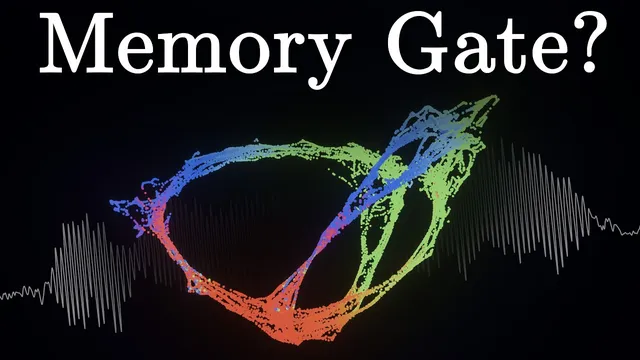
To test this, researchers used mice running a figure-eight maze with two identical arms containing reward sites. The task required alternating arms to earn rewards, and hippocampal activity was recorded across hundreds of neurons over multiple days as performance improved. Interpreting such high-dimensional neural data required dimensionality reduction, specifically UMAP (Uniform Manifold Approximation and Projection), which mapped 400-dimensional population activity into a three-dimensional “maze manifold.” Remarkably, this manifold mirrored the maze layout even though it was learned purely from neural activity during active running.
When neural activity from sharp wave ripples was projected onto this manifold, awake ripples that occurred after reward pauses decoded to the same trial and maze locations that had just led to success—evidence that waking ripples replay recent, important trajectories. Sleep ripples that landed on the manifold showed similar replay content, while early sleep ripples before learning produced different patterns. Together, the findings support a two-stage pipeline: awake sharp wave ripples tag and prioritize key events in the hippocampus, and sleep reactivates those tagged patterns repeatedly under cortical conditions that enable consolidation.
Cornell Notes
Sharp wave ripples in the hippocampus act as a two-stage memory system. During waking, ripples occur after important moments and replay recent, reward-relevant trajectories, effectively tagging them as “bookmarks” rather than consolidating them immediately. During sleep, temporally compressed replay (about 100 ms) reactivates the tagged patterns when the neocortex is in a receptive state, supporting synaptic strengthening and long-term storage. Using UMAP to map high-dimensional hippocampal activity into a “maze manifold,” researchers decoded ripple content and found awake and sleep ripples align with the same successful trial and locations after learning. The result links neural replay timing and selection to why only some experiences become durable memories.
What makes sharp wave ripples a plausible mechanism for selecting which memories survive?
Why is replay timing—compressed to ~100 milliseconds—so important for consolidation?
What was the key mystery about awake sharp wave ripples?
How did researchers decode what ripples “contained” in a high-dimensional neural dataset?
What did awake ripples reveal about recent experience?
How did sleep ripples differ from early sleep before learning?
Review Questions
- How do excitation-inhibition dynamics during sharp wave ripples create a selection mechanism for which neural ensembles can replay?
- Why would the brain benefit from tagging memories during waking rather than consolidating them immediately?
- What role does UMAP play in linking hippocampal population activity to decoded maze trajectories?
Key Points
- 1
Sharp wave ripples in the hippocampus provide a selection mechanism by coupling excitation with fast inhibitory gating, producing narrow windows for replay.
- 2
During sleep, hippocampal replay is temporally compressed (~100 ms), aligning with a neocortical receptive state to support consolidation.
- 3
Awake sharp wave ripples appear less frequently and occur when cortex is not ready for consolidation, so they function as memory bookmarks rather than immediate storage.
- 4
In a figure-eight maze task, awake ripples decoded to the same trial and maze location that just produced reward, tying ripples to recent important experiences.
- 5
Using UMAP to map high-dimensional hippocampal activity into a maze manifold enabled decoding of ripple content without direct knowledge of animal position during sleep.
- 6
Sleep replays that align with the learned manifold resemble the tagged awake events, while pre-learning sleep ripples show different patterns, supporting a two-stage wake-tag/sleep-consolidate pipeline.