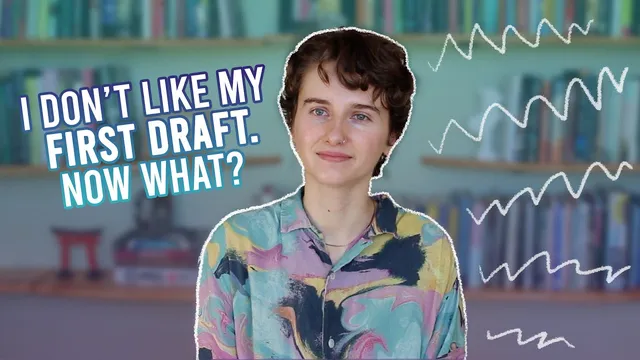
I wrote a fantasy book and I hate it...so now what? | An honest writing chat
Based on ShaelinWrites's video on YouTube. If you like this content, support the original creators by watching, liking and subscribing to their content.
The manuscript’s failure wasn’t just technical problems; it was a sustained lack of excitement during execution, even though the original vision still felt compelling.
Briefing
A fantasy manuscript finished over the summer left its author with an unusual outcome: not pride, not excitement—just relief that it was over. The core problem wasn’t that the draft contained flaws (every first draft does), but that the execution failed to deliver the spark she felt in the original vision. She describes a book she still loves in her head—its premise, intentions, characters, and the version of the story that existed before drafting—yet finds almost nothing on the page that propels her toward revision. By the end, writing felt like dragging herself to the finish line, and even the closing scenes blur from memory.
The manuscript’s history stretches back to late 2022, when the idea formed and a larger world began to take shape. Planning consumed 2023, and drafting started in March of the current year. Early momentum came from writing in large bursts while traveling—sometimes thousands of words in a single plane session—yet around the one-third mark the work began to slide and never recovered. She frames “bad” not as “other people won’t like it,” but as a mismatch between what she set out to do and what the draft actually achieved: problems in abundance, plus a deeper absence of excitement. Unlike past projects where finishing produced sentimental attachment, this ending offered no emotional payoff; she wanted to be done so she wouldn’t have to think about it anymore.
Two linked lessons drive the takeaway. First, outlining didn’t save the book—it made the process worse. She says she stopped outlining in her “mature” writing era (post-“honey vinegar”) and that her best work came from that shift, because outlining had functioned as a safety net against failure. For this fantasy plot, she felt she “couldn’t discover right” without structure and tried an outline anyway, hoping it would reduce editing later. Instead, the draft regressed from its idea: fewer interesting discoveries appeared on the page, and the writing became miserable. She concludes she isn’t a natural outliner and warns against the common fix of “just outline more” when a draft struggles.
Second, genre comfort and creative energy matter more than genre hierarchies. Friends and online reactions to her return to fantasy were largely supportive, but she also noticed a stigma around literary fiction as joyless or elitist—an attitude she rejects. Writing fantasy didn’t feel freeing; it felt constrained by unfamiliar reader expectations, while literary fiction felt natural enough that she could focus on making a good book rather than constantly checking whether she was meeting genre rules.
With her master’s program underway, she plans to put the manuscript aside during her first semester and thesis work. She outlines three options: revise after the degree (likely requiring a 30–50% rewrite), cut losses and stop pursuing the broader world projects, or fully walk away if passion never returns. Her guiding principle is not to force output without drive. Writing, she says, is an energy exchange—this book gave little back, leaving her burned out and exhausted enough to take the summer off. The manuscript may live in her head for now, and she’s choosing a neutral, sustainable relationship with the idea rather than a painful completion.
Cornell Notes
The author finished a fantasy manuscript but felt no pride—only relief. The draft failed to match the excitement of the original vision, leaving her with problems plus a lack of “fuel” for revision. A major factor was outlining: she believes outlining acted as a safety net that backfired, producing a weaker draft where fewer interesting discoveries emerged on the page. She also connects the experience to genre comfort, arguing that literary fiction feels natural and joyful for her, while fantasy felt constrained by expectations. With an MFA and thesis ahead, she plans to pause the project and decide later whether to revise, scale back, or walk away based on whether passion returns.
What does she mean by the book being “bad,” and how is that different from typical first-draft criticism?
Why did outlining become a turning point for this project?
How does she describe the emotional experience of drafting and finishing the book?
What role does genre comfort play in her creative confidence?
What decision framework does she use now that her MFA and thesis are underway?
How does she define the “energy exchange” that makes writing sustainable?
Review Questions
- What specific gap between “vision” and “execution” made her lose interest in revising the manuscript?
- How does her experience challenge the common advice to “outline more” when a draft stalls?
- What criteria will determine whether she revises the book after her MFA, and why does she treat passion as a practical requirement rather than a luxury?
Key Points
- 1
The manuscript’s failure wasn’t just technical problems; it was a sustained lack of excitement during execution, even though the original vision still felt compelling.
- 2
Outlining functioned as a failure-safety mechanism for her, and in this case it produced a weaker draft with fewer on-the-page discoveries.
- 3
She describes a clear emotional pattern: when writing generates new, interesting material, she feels energized; when writing follows a plan too tightly, that energy disappears.
- 4
Genre expectations can affect creative freedom differently—literary fiction feels natural to her, while fantasy felt more constrained because it wasn’t as instinctive.
- 5
She plans to pause the project during MFA coursework and thesis work rather than force a massive overhaul without drive.
- 6
Her decision-making centers on whether writing returns energy to her; if it doesn’t, she’s willing to cut losses or delay revision until passion returns.
- 7
Quitting a project is framed as prioritizing limited creative energy, not as laziness or pride-based avoidance of failure.