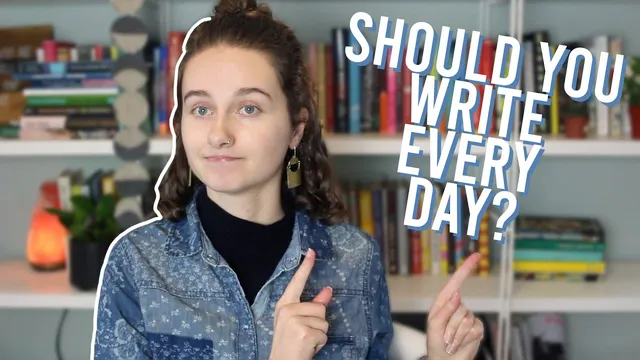
I Wrote Every Day and This is What I Learned
Based on ShaelinWrites's video on YouTube. If you like this content, support the original creators by watching, liking and subscribing to their content.
Writing every day can eliminate the mental negotiation required to start, especially when skipping is not allowed.
Briefing
Writing every day can sharply reduce the friction of starting—and it can boost immersion, mood, and momentum—but the benefits fade after roughly three weeks, making the practice useful only in focused, time-limited stretches.
Shaylyn set out to test a widely repeated writing maxim by writing at least one sentence every day for a month during November 2020, with strict “no allowances” rules (no skipping unless truly dying). She expected the challenge to feel like torture and to end with a clear “don’t do this” verdict. Instead, the first stretch of the experiment delivered exactly what daily-writing advice promises: the act stopped feeling like a negotiation. Because writing became as automatic as eating dinner, she didn’t have to psych herself up or postpone until it felt too late. That removal of decision-making lowered the “potential energy” required to begin.
The daily routine also changed how her book felt in her hands. She reported stronger immersion in the story and a renewed excitement to work on it each day—an experience she hadn’t consistently felt with the specific novel she was drafting. She linked that immersion to better mental health and a sense of visible progress, especially since her output during the month reached about 31,000 words, roughly triple her typical monthly average of around 10,000. Another practical win: she didn’t get stuck on hard scenes. Her book’s vignette-style structure meant scenes were short, but she still credited daily momentum with helping her “write through” difficult moments rather than procrastinating or overthinking them.
Still, the experiment didn’t end in a permanent conversion to daily writing. The biggest drawback was sustainability. After about three weeks, fatigue set in and the earlier benefits stopped landing. She began enjoying writing sessions less, and the sessions themselves produced fewer words—often below her usual “satisfying” threshold. Even when she wrote, she felt the work wasn’t as fulfilling, with many days turning into “weak” sessions rather than satisfying progress. She also described a kind of runaway speed: influenced by Nanowrimo’s pressure to keep moving, she wrote faster than she preferred, which threatened the slower, first-draft phase she enjoys most. She even had to adjust pacing mid-month to avoid finishing the whole book too quickly.
Finally, Nanowrimo’s structure made it harder to switch to other projects. Even though her rules allowed writing anything, her “check-in” mindset made her feel she hadn’t truly written unless she worked on the Nanowrimo novel, limiting her ability to follow other creative impulses.
Her conclusion is pragmatic rather than prescriptive: daily writing is a powerful tool, but it works best in specific windows—she now estimates about three weeks before diminishing returns. She also stresses context and individuality: her schedule was unusually consistent in 2020, and her results may differ for people with different lives, deadlines, or energy patterns. The takeaway is less “write every day forever” and more “try it, watch your brain, and take breaks when the benefits evaporate.”
Cornell Notes
Daily writing worked for Shaylyn mainly by removing the start-up friction. Writing at least one sentence every day made sessions feel automatic, increased immersion in her novel, improved mood, and helped her push through difficult scenes without getting stuck. Output rose to about 31,000 words in a month, around three times her typical monthly average. The downside was sustainability: after roughly three weeks she felt tired, enjoyed sessions less, wrote fewer words (often below her usual satisfying range), and felt less fulfilled. Nanowrimo’s momentum also pushed her to write faster than she prefers and made it harder to switch to other projects.
Why did daily writing feel easier to start, and what role did the “no allowances” rule play?
What benefits showed up early in the month, and how did they connect to her mental state?
How did daily writing affect her ability to handle difficult scenes?
What changed near the end of the month, and why did it undermine the earlier pros?
How did Nanowrimo’s structure influence her pacing and her ability to work on other projects?
What practical rule did she derive for when daily writing is most effective?
Review Questions
- What specific mechanisms made daily writing reduce the effort of starting (and how did the “no allowances” rule reinforce that)?
- Which two outcomes did Shaylyn say improved early in the month, and which two outcomes deteriorated after about three weeks?
- How did her preferred writing style (slow first drafts, editing later) conflict with the speed created by Nanowrimo pressure?
Key Points
- 1
Writing every day can eliminate the mental negotiation required to start, especially when skipping is not allowed.
- 2
Daily writing boosted immersion, excitement, and mood for Shaylyn during the first three weeks of her month-long challenge.
- 3
Her output rose to about 31,000 words in November 2020, versus an average monthly output near 10,000 words.
- 4
The practice became less effective after roughly three weeks as fatigue reduced enjoyment and satisfaction, with daily word counts often dropping below her usual “satisfying” range.
- 5
Nanowrimo’s momentum pushed her to write faster than she prefers and made it harder to switch to other projects.
- 6
Daily writing is most useful as a time-limited tool; she now recommends trying it in short windows and listening for diminishing returns.
- 7
Results depend heavily on context and individual energy—what works in one life season may not work in another.