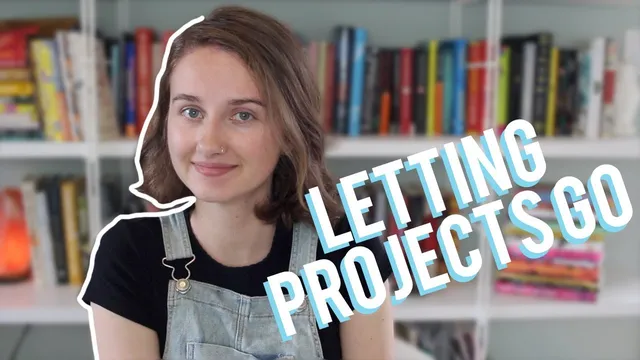
Learning to Let Projects Go | As I Write #28
Based on ShaelinWrites's video on YouTube. If you like this content, support the original creators by watching, liking and subscribing to their content.
ShaelinWrites learned to stop treating every beloved idea as something that must become a finished, publishable book to count as “complete.”
Briefing
Letting writing projects go isn’t about losing interest—it’s about changing what “completion” means. After years of juggling a massive backlog of ideas across genres, ShaelinWrites describes how she learned to stop treating every beloved concept as something that must become a finished book to count. The shift matters because it turns creative energy from endless drafting pressure into a sustainable way to keep enjoying characters, worlds, and story sparks—even when publication will never happen.
In her teenage years, she collected ideas the way other people collect genres: thrillers, fantasy, sci-fi, contemporary, and “why” (YA) all at once. By roughly 2012–2015, her queue swelled to more than 20 projects, including series and standalone novels. The backlog didn’t shrink because she lacked ambition; it shrank because she eventually found a clear footing in literary fiction and had to make hard cuts. Even then, she didn’t stop loving the abandoned ideas. What changed was her willingness to accept that some projects weren’t a good use of time—emotionally, practically, or both.
Her struggle shows up in two different kinds of “letting go.” One is moving on from a project after writing it—like her fantasy series Soulchild, where she wrote the first book (Dragon Tear) and then chose not to continue. That decision brought relief because she had closure from having actually written something. The harder case was abandoning projects she never drafted, because she couldn’t point to a completed experience. She describes this pain vividly through a dream about a character named Leah from an untitled working project she calls Blue. Leah’s story had been a recurring obsession: she restarted it multiple times, even nearly turning it into a screenplay, but never reached the point of writing the novel.
Blue became a case study in why “objective” constraints can collide with “emotional” attachment. She outlines publishing-category timing (new adult—once a promising space for stories with adult themes—had effectively died off), plus fit issues with her intended voice and audience expectations. She also tried writing Blue as a film script in a screenwriting workshop and realized the structure and narrative voice only worked as a movie, not a novel. Scheduling conflicts then blocked the next step, leaving the project stranded.
The turning point wasn’t simply accepting that Blue might not be publishable. It was reframing value. Younger her believed that if she cared about an idea, she owed it a written form; otherwise it would stay incomplete and never fully satisfy her. Over time, she concluded that a book can remain an idea and still be meaningful. The “final and optimal form” can live in her head. Songs tied to these projects still trigger nostalgia, but now that nostalgia comes with permission: she can enjoy the world without tying up plot threads, forcing endings, or treating non-publication as failure.
She extends the same logic to older drafts she may never rewrite—like a manuscript she finished at 15. Even if the finished product never arrives on paper, the internal version becomes the finished product. For her, letting projects go is ultimately learning to extract joy from brainstorming and character life without the pressure to convert every spark into a completed book.
Cornell Notes
ShaelinWrites describes how she learned to let writing projects go without treating them as unfinished failures. After building a backlog of 20+ ideas across genres, she eventually narrowed her focus and had to abandon many concepts she still loved. Blue—an untitled working project about a character named Leah—illustrates the hard version of letting go: she never wrote it, faced category and structural constraints (including realizing it fit a screenplay more than a novel), and couldn’t continue due to scheduling. Her key insight is that an idea can be valuable without becoming a published book; the “finished product” can exist in her head, where she can still enjoy characters, scenes, and even songs tied to the project.
Why did ShaelinWrites end up with so many writing projects in the first place?
What made letting go easier when she had already written something?
What specific obstacles derailed her project Blue?
How did her thinking about “completion” change over time?
How does she handle nostalgia for projects she never wrote?
What does she say about older drafts she may never rewrite?
Review Questions
- What practical and emotional reasons does she give for abandoning projects, and how do they differ between Soulchild and Blue?
- What does she mean by treating the version in her head as the “finished product,” and how does that change her relationship to unfinished plots?
- Which craft insight about Blue most strongly influenced her decision to stop pursuing it as a novel?
Key Points
- 1
ShaelinWrites learned to stop treating every beloved idea as something that must become a finished, publishable book to count as “complete.”
- 2
A large backlog of genre-spanning concepts can be unsustainable; narrowing focus often requires cutting projects even when they remain emotionally meaningful.
- 3
Closure feels different when a project has been written (as with Soulchild/Dragon Tear) versus when it was never drafted (as with Blue).
- 4
Blue illustrates how market timing (new adult’s decline) and structural fit (screenplay vs. novel) can make a project hard to realize.
- 5
She reframed value: an idea can remain valuable as an internal “finished product,” letting joy come from characters and scenes rather than plot resolution.
- 6
Music and nostalgia can coexist with letting go when the goal shifts from publication to ongoing enjoyment of the story-world.
- 7
Even early drafts she may never rewrite can be treated as complete in their own right if they continue to make her happy.