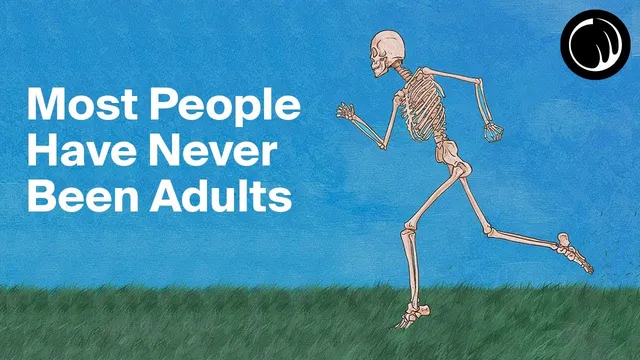
Most People Have Never Been Adults
Based on Pursuit of Wonder's video on YouTube. If you like this content, support the original creators by watching, liking and subscribing to their content.
Most humans historically died young, largely because infant and child mortality was extremely high, making adulthood rare.
Briefing
A majority of humanity has never reached adulthood—not because people didn’t want to, but because early death was the default. With modern global life expectancy around 73 years, today’s 20-year-olds can expect decades more of life. That contrast matters because it helps explain why population history looks so strange: more than half of all humans who have ever lived—about 60 billion people—lived before 100 CE, even though the world’s population was far smaller in those eras.
The key driver was mortality, especially in infancy and childhood. Life expectancy is calculated from age-specific death rates, and those rates were dramatically higher in premodern societies. In agricultural communities, children often grew up in disease-ridden settlements, relied on cereal-heavy diets instead of breast milk, and competed with many siblings for limited food. The result was widespread child mortality: in many agricultural societies, at least one in three children died before age 20. In 1750 Bavaria, about half of children died before 15; around 1 CE in Roman Egypt, nearly 60% died before 15. Even with high birth rates—often five times higher than today—populations struggled to grow because so many children never survived long enough to become adults.
As medical care, sanitation, and technology improved, the survival curve shifted. Today, global child mortality for ages 15 and under is around 4%, and most newborns reach adulthood. That means the typical person alive now is living a life stage that was historically rare: roughly 50 to 60 additional years compared with what most humans experienced across most of history. The video frames this as a kind of statistical miracle—most people who have ever existed never had access to clocks, eyeglasses, electricity, cars, planes, rockets, or even widespread literacy, and many never experienced adulthood at all.
From there, the argument pivots from demographics to meaning. Living longer and having access to information changes what humans can do with their time. The modern world—credit cards, health insurance, mass media, internet tools—makes everyday life feel like a technological leap compared with earlier centuries. Yet the message isn’t just awe; it’s a call to use that advantage wisely. After reducing death from starvation, disease, and violence, humanity’s next targets are framed as overcoming old age and even death, then pursuing happiness and something like “divinity.”
The transcript also includes a sponsored segment about Opera, positioning it as a faster, safer, and more organized browser for handling the modern reality of tabs, workspaces, and online research. The broader through-line remains consistent: survival used to be the main challenge; now the challenge is what to build, how to live, and how to avoid squandering the unprecedented access to life and information that adulthood now makes possible for so many people.
Cornell Notes
The transcript argues that most humans never reached adulthood because infant and child mortality was extremely high for most of history. Even when birth rates were high, populations often failed to grow because large shares of children died before reaching adulthood—about half dying before age 15 in 1750 Bavaria and nearly 60% before 15 around 1 CE in Roman Egypt. Modern health improvements have reduced child mortality to roughly 4% for ages 15 and under, raising life expectancy to about 73 years and making adulthood far more common. That demographic shift helps explain why over half of all humans who have ever lived lived before 100 CE. The implication is that living into adulthood now is historically unusual, and it changes what humans can aim for next—beyond survival toward longer, better lives.
Why does the transcript claim that more than half of all humans who have ever lived lived before 100 CE?
How do high child mortality and high birth rates interact to limit population growth?
What does “life expectancy” mean in this context, and why does it matter?
What changed to make adulthood far more common today?
How does the transcript connect demographic survival to future human goals?
What is the sponsored Opera segment doing thematically?
Review Questions
- What specific mortality patterns does the transcript use to explain why so many humans lived before 100 CE?
- How do the transcript’s examples from Bavaria and Roman Egypt illustrate the relationship between birth rates and population growth?
- What does the transcript suggest humanity should prioritize after reducing deaths from starvation, disease, and violence?
Key Points
- 1
Most humans historically died young, largely because infant and child mortality was extremely high, making adulthood rare.
- 2
High birth rates in premodern societies often did not produce population growth because many children died before reaching adulthood.
- 3
Life expectancy is shaped by age-specific mortality rates; when deaths cluster in infancy and childhood, average lifespan drops sharply.
- 4
Modern health improvements reduced child mortality to about 4% for ages 15 and under globally, raising life expectancy to around 73 years.
- 5
The transcript frames living into adulthood today as historically unusual—statistically and culturally—given what earlier generations lacked.
- 6
With survival and information access improved, the transcript argues humanity’s next ambitions may shift toward longer life, happiness, and transcending old age and death.
- 7
A sponsored segment promotes Opera as a tool for organizing browsing and speeding research through features like tab grouping and an AI assistant.