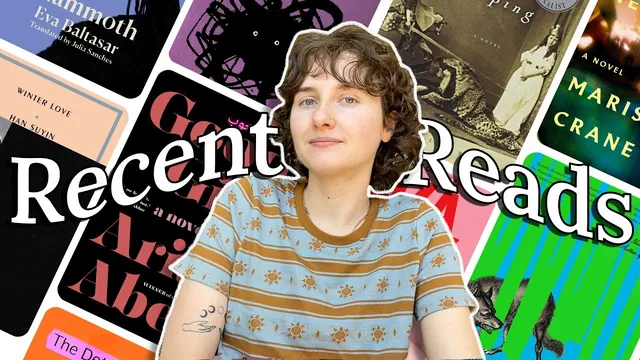
my new favourite bildungsroman + gothic vignette novel | Recent Reads #62
Based on ShaelinWrites's video on YouTube. If you like this content, support the original creators by watching, liking and subscribing to their content.
The Bewitching is praised for research and prose but criticized for familiar witch-trial beats, confusing POV switches, and character work that feels distant—especially given the potential of a tighter focus on Alice.
Briefing
A run of recent reads leans hard into literary strangeness—witch trials, dream-fairy tales, cult paranoia, grief monsters—yet the strongest through-line is how form and perspective shape emotional impact. Across the picks, the most consistent praise goes to books that make their worlds feel precise (even when they’re uncanny), while the most common complaint is that scope, clarity, or endings sometimes blunt the psychological payoff.
Jill Dawson’s historical witch-trial novel The Bewitching is grounded in a real 16th-century case in War Boys, England, where one woman’s accusation spirals into wider charges. The prose is described as well researched and “yummy,” but the reading experience turns familiar: the narrative beats track what witch trials typically look like. That predictability exposes a weakness—character work feels distant and flat. The book’s broader scope also dilutes what could have been a sharper psychological study of Alice, the first woman accused.
Sarah Shann Leon Binham’s Meline is Sleeping goes in the opposite direction: instead of historical inevitability, it delivers experimental fairy-tale logic. Told through vignettes that blur dream and reality, it follows Meline as she falls into a deep sleep while her surroundings and her dreams bleed into each other. The writing is praised for impeccable control of prose and for building intricate meaning through compact, vivid segments—rich imagery paired with deliberate sparseness. Clarity can get fuzzy at the level of the overall narrative, but that confusion is framed as part of the point: the book asks readers to tolerate ambiguity because dream and waking life become indistinguishable.
Eliza Clark’s She's Always Hungry, a short-story collection, lands as unsettling and intriguing overall, with a recurring motif of hunger as perversion. Still, many stories follow familiar short-fiction arcs, leaving the reviewer wanting more subversive development—not just stranger concepts, but stranger trajectories. Ia Ginberg’s The Details (translated by Kira Joffson) is quieter: a nolla structured around pivotal relationships, where each chapter is self-contained and detail-rich but largely non-narrative. The appeal is methodical, lived-in specificity; the drawback is a wish for more urgency.
Arya Abber’s Good Girl centers Nila, an 18-year-old in Berlin whose parents are Afghan refugees and whose mother has died. The plot is described as partly plotless, but the book’s power comes from tactile, psychologically sharp prose and a theme captured by a line about getting into places even when you can’t get out. Nila lies about her heritage, and that shame drives her choices until the end, when everything clicks into focus. Marissa Crane’s A Sharp Endless Need also focuses on an intense bond—Mac and Liv, two basketball players whose chemistry turns increasingly intimate after a father’s death. The relationship is praised as visceral and compelling, but the reviewer feels the book’s high-school stakes and off-page growth make it read more like YA than adult fiction.
Nicole Cuffy’s cult novel Oh Sinners stands out for worldbuilding: multiple formats—reporting, documentary transcripts, Instagram posts, and Odo’s backstory—create a believable, intricate Nameless cult and a layered question of what counts as truth. Yet the ending is criticized as underwhelming, ending with fog rather than revelation. Ava Baltazar’s Mammoth is the least favorite of its trilogy: despite a distinct voice and unexpected turns, it includes extremely uncomfortable scenes and feels disconnected. Gerardo Sano Cordova’s Monstrilio, by contrast, is praised for humane, focused grief horror: a monster grown from a literal piece of a dead son’s lung becomes a symbol for family mourning.
Finally, Han Su Yang’s Winter Love returns to quiet emotional precision. Set in WWII-era London, it traces a doomed affair between Red and Mara through retrospective narration, making regret and fragility feel built-in from the first page. The writing is described as wise and unflinching—tender yet brutal—rendering the relationship’s emotional complexity both cerebral and deeply felt. The overall takeaway: these books succeed when their structure sharpens feeling, and stumble when scope or endings leave the emotional work unfinished.
Cornell Notes
The strongest theme across these recent reads is how structure—vignettes, retrospective narration, mixed documentary formats—determines what readers feel about truth, grief, and desire. The Bewitching is praised for research and prose but criticized for familiar witch-trial beats and distant character work, suggesting a scope problem. Meline is Sleeping wins major admiration for vignette craftsmanship that blurs dream and reality, even when the overall narrative can feel fuzzy. Oh Sinners impresses with cult worldbuilding and multiple perspectives, but the ending is judged arbitrary for lacking a satisfying revelation. Winter Love lands as quietly devastating: retrospective storytelling makes a doomed affair feel fragile and inevitable while the prose stays wise and unflinching.
Why does The Bewitching feel predictable even though it’s well researched?
What makes Meline is Sleeping’s vignette form work so well?
How does She's Always Hungry manage to be unsettling yet still feel structurally familiar?
What is the core appeal of The Details, and what’s the main limitation?
Why does A Sharp Endless Need feel like YA to an adult reader, despite adult packaging?
What makes Monstrilio’s grief metaphor feel fresh rather than generic?
Review Questions
- Which books in this set rely on ambiguity (dream logic, cult truth, non-narrative structure) as a feature rather than a flaw—and how does that change what readers expect from the ending?
- Pick one praised for craft (vignettes, worldbuilding, retrospective narration). What specific structural choice creates that effect?
- Where do the criticisms cluster—scope, character depth, or endings—and what does that suggest about what the reviewer values most?
Key Points
- 1
The Bewitching is praised for research and prose but criticized for familiar witch-trial beats, confusing POV switches, and character work that feels distant—especially given the potential of a tighter focus on Alice.
- 2
Meline is Sleeping earns strong approval for vignette craftsmanship and for blurring dream and reality, making reader confusion part of the intended emotional experience.
- 3
She's Always Hungry is unsettling and genre-playful, yet many stories follow recognizable short-fiction arcs, leaving room for more subversive development.
- 4
The Details is a quiet, detail-driven nolla of relationship recollections with minimal plot; its subtlety is a strength, but the reviewer wanted more urgency.
- 5
Good Girl’s central engine is Nila’s ability to get into places while being unable to get out—tied to shame, heritage lies, and a prose style that feels tactile and psychologically exact.
- 6
A Sharp Endless Need is compelling for its intense friendship/romance, but the reviewer feels the stakes and off-page growth make it read more like YA than adult fiction.
- 7
Oh Sinners builds an intricate cult world through multiple formats, but the ending is judged arbitrary for lacking a satisfying revelation about truth or motives.