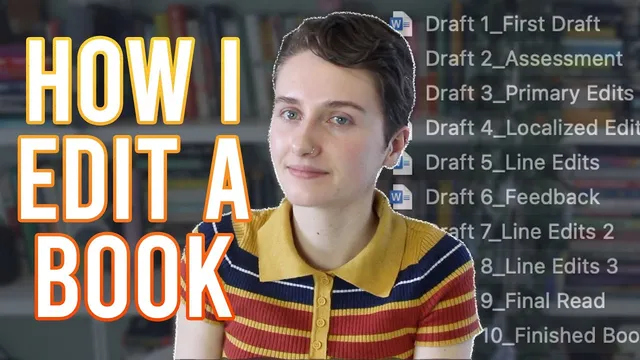
MY REVISION PROCESS | first draft to ready for publication
Based on ShaelinWrites's video on YouTube. If you like this content, support the original creators by watching, liking and subscribing to their content.
Revision works best when it’s problem-driven: identify the specific failure point in the draft, then tailor the revision steps to that issue.
Briefing
Revision works best when it’s treated as a flexible system built around the specific problems in a draft—not a fixed sequence of “X drafts” or a one-size-fits-all big-to-small workflow. Shaylin’s core mantra is to identify what’s actually going wrong in the manuscript (and what that likely signals about the story’s most ambitious elements), then tailor the revision steps to those needs. Confusion in plot causality, unclear character psychology, or a backstory that arrives in the wrong order each triggers a different kind of structural work.
A key insight is that the hardest-to-fix issues often point to the most exciting parts of the book. In Honey Vinegar, the central revision challenge was causality: two concurrent timelines—physical events unfolding in reality and a fairy-tale “myth” being written in the town—had to cause each other in a precise chain. That ambition made the draft’s causal links easy to blur, so revision focused on mapping how each scene’s truth or falsity drove the next. In Holding a Ghost, the major problem shifted to character psychology: subtle, nuanced motivations required more careful developmental revision than straightforward plot tightening.
For the next project, the problem is structural order. The backstory is “completely out of order,” and the manuscript contains multiple threads that don’t consistently braid together. The proposed solution is to give each arc of the main story its own distinct flashback arc—history with a best friend, romantic history, and a relationship with a brother—so the reader receives each thread in a purposeful sequence.
Her process begins before formal revision: sometimes editing happens while drafting, especially when workshop feedback is shaping early chapters. When she finishes a draft, she takes a break—often at least a month—because she writes detailed first drafts and needs distance to avoid burnout. After the break, she does a light read-through with preliminary line edits (fleshing underwritten scenes, trimming overwritten ones) and records notes to understand the story’s overall scope.
Next comes assessment and organization. She translates problems into solutions, then builds a revision map—an outline that lists every planned change by scene or chapter. A crucial detail: she emphasizes solutions, not just complaints. For causality-heavy work, she even creates tools like a scene-by-scene causality list to track what causes what.
Her main developmental pass is chronological rather than big-to-small. Starting at chapter one, she makes big, medium, and small changes together, writing new scenes on the spot when needed. She then follows with local edits for lingering issues, using a “least overwhelming first” strategy: fix small, fact-checking or single-line tasks before tackling chapters that require rewriting from scratch. Dedicated line-edit passes come later, repeated as needed, followed by feedback only after she’s done as much self-revision as possible—because late-stage feedback is more useful when the draft is closer to streamlined and the remaining problems are the ones she can’t locate herself.
The final step is a compressed “reader-like” read over a few days to catch what still feels off, with the expectation that publication-stage edits will continue. The overall takeaway is practical: revision becomes manageable when it’s problem-driven, solution-mapped, and sequenced to protect energy while steadily tightening both plot and character.
Cornell Notes
Revision becomes manageable when it’s built around the draft’s specific failure points rather than a fixed number of passes. Shaylin’s method starts with identifying problems (causality, character psychology, or out-of-order backstory), then translating each problem into a concrete solution and recording those solutions in a revision map by scene/chapter. After drafting, she takes a break, does a light read-through with preliminary line edits, and then runs a chronological developmental pass where big, medium, and small fixes happen together. Local edits follow for lingering issues, then dedicated line-edit passes are repeated until the manuscript feels clean. Feedback is saved for later—after self-editing—so critique partners can spot what the writer can’t find and so the feedback isn’t wasted on problems already planned to be fixed.
Why does Shaylin treat revision problems as clues about the story’s most ambitious elements?
What does Shaylin mean by “tailor the process based on what the book needs”?
How does her workflow handle the transition from drafting to revision?
What is the purpose of her revision map, and why does she emphasize solutions over complaints?
How does her editing pass differ from the common big-to-small approach?
When does she bring in feedback, and what’s her philosophy about it?
Review Questions
- Which types of manuscript problems (causality, character psychology, backstory order) lead to different revision strategies in Shaylin’s process, and what does she do for each?
- How does a chronological developmental pass change the way you plan and execute revision compared with big-to-small editing?
- Why does Shaylin delay feedback, and what conditions make critique partners’ input more effective?
Key Points
- 1
Revision works best when it’s problem-driven: identify the specific failure point in the draft, then tailor the revision steps to that issue.
- 2
The hardest problems often correspond to the book’s most ambitious storytelling elements, so treat them as signals—not proof the idea is bad.
- 3
After drafting, distance matters: she takes a break (often at least a month) to avoid burnout and to return with clearer judgment.
- 4
She builds a revision map that lists solutions by scene/chapter, not just what feels wrong—this reduces guesswork during the actual editing pass.
- 5
Her main developmental edit runs chronologically, making big, medium, and small changes together from chapter one onward.
- 6
Local edits come next, using a “least overwhelming first” approach (small fixes before rewriting chapters from scratch).
- 7
Feedback is most valuable late in the process, after self-editing has addressed what the writer already knows and planned to fix.