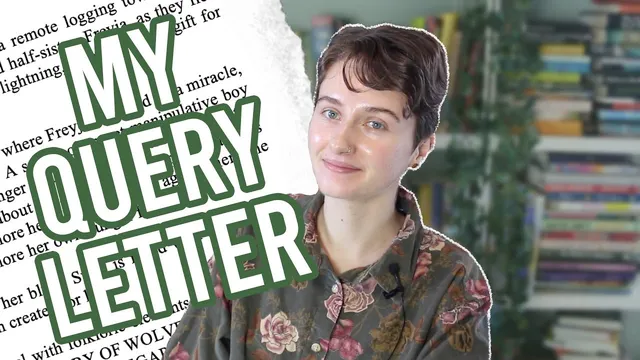
My SUCCESSFUL Query Letter (example + tips)
Based on ShaelinWrites's video on YouTube. If you like this content, support the original creators by watching, liking and subscribing to their content.
Lead with a personalized, story-specific pitch that establishes atmosphere and an inciting incident before listing logistics.
Briefing
A query letter that leads with a vivid, story-specific pitch—and then backs it up with clean market and credential details—can land representation, even when the writer doesn’t have a long track record of querying metrics. ShaelinWrites credits her successful literary agent outcome to a letter built from material she had already refined for years: a strong opening pitch for her literary coming-of-age novel Honey vinegar, plus a tightly structured plot paragraph designed to show escalating conflict, stakes, and craft.
The letter opens with personalization rather than a generic “manuscript attached” approach. She addresses agent Rachel Letovsky by name and immediately drops the reader into atmosphere and inciting action: a 1955 logging town, 13-year-old Sybil reunited with her estranged mother and half-sister Freya, and Freya’s lightning strike. She treats the opening as a “microscopic version” of the novel—using setting and mood to create the same pull the book aims to deliver—while also ensuring the plot engine starts early and clearly.
From there, the middle paragraphs expand the story without giving away the “plot meat.” The plot pitch centers on Sybil’s family becoming the focus of an evolving legend after Freya survives a miracle. Freya’s survival triggers jealousy and fear; Sybil’s herbalism and anger collide with a manipulative figure, Whisper, whose influence turns strange events into myth. As Sybil tries to protect herself and cling to the truth, Whisper villainizes her, rallies the town against her, and forces Sybil toward a hunger for power she can’t fully ignore. Structurally, she uses repetition and escalating phrasing (“the more… the more…”) to mirror rising tension—an attempt to demonstrate pacing and sentence-level craft, not just premise.
A final short paragraph closes the pitch with thematic stakes: the line between Sybil and the myth blurs, and her “ultimate choice” will determine whether she becomes part of the legend or defies it. The goal is to signal that the novel has a cohesive point—change, revelation, and payoff—rather than functioning as a collection of vibes.
Only after the pitch does she add the factual block: Honey vinegar is described as a literary coming-of-age novel with folkloric elements, complete at 95,000 words, and positioned for readers of Emily Fridland’s History of Wolves, Chelsea B. Beaker’s Godshot, and Otessa Moshfev’s Eileen. She also flags “own voices for asexuality,” then selects comps carefully, rejecting options she considers overused, too niche, too experimental, or too similar in premise (including one she later learned her agent independently compared to). Her bio supports credibility—BA in writing, work in publishing, short fiction publications, and a longlisting for the 2021 CBC short story prize for a query letter—while she includes her writing-focused YouTube channel despite concerns about skepticism.
She adds that her process was unusually fast: two weeks from submission to agent response, and she emphasizes that this is not typical. She also notes that she submitted a writing sample by pasting the first chapter into an online form and trimming to fit the cutoff, ensuring the excerpt ended on a strong paragraph. The takeaway is practical: lead with a compelling, atmospheric pitch; show craft through structure and escalation; then support the letter with genre, word count, comps, and relevant credentials—while keeping expectations realistic about timelines and rejection.
Cornell Notes
ShaelinWrites’ successful query letter for Honey vinegar relies on a pitch-first structure. Instead of starting with submission logistics, the letter opens with personalized address to agent Rachel Letovsky and immediately establishes atmosphere and an inciting incident: Sybil’s reunion with Freya and Freya’s lightning strike. The middle paragraphs pitch the plot through escalating, repeated sentence patterns that demonstrate rising tension and active conflict, while avoiding major spoilers. A short closing paragraph frames the thematic stakes—Sybil’s choice to become or defy the legend. Only then does the letter add the factual block: genre, 95,000-word count, audience comps (History of Wolves, Godshot, Eileen), own-voices positioning, and a bio with publishing credentials and short-fiction credits.
Why does the letter start with story and atmosphere instead of submission details?
How does the plot pitch show craft rather than just summarizing events?
What role does the final short paragraph play?
Why are comps selected carefully, and what criteria does she use?
What credibility details go into the bio, and why include the YouTube channel?
How does she handle the writing sample submission?
Review Questions
- If you had to reorder the elements of a query letter, what would you place first and why—pitch, genre/word count, or bio? Use the Honey vinegar example to justify your choice.
- What techniques can a query’s plot paragraph use to demonstrate pacing and stakes without giving away major spoilers?
- How should comps be evaluated to avoid overused, too-niche, or too-similar matches? List at least two reasons she rejects certain comps.
Key Points
- 1
Lead with a personalized, story-specific pitch that establishes atmosphere and an inciting incident before listing logistics.
- 2
Use the pitch’s structure—especially sentence rhythm and repetition—to signal escalating tension and pacing.
- 3
Keep plot summary spoiler-light while showing active character decisions and internal conflict.
- 4
Close the pitch with thematic stakes and a clear sense of meaningful payoff (choice, transformation, or revelation).
- 5
Add the factual block after the pitch: genre, word count, audience comps, and relevant positioning (e.g., own-voices).
- 6
Choose comps for specific overlaps (tone, structure, narrator voice, market recency) and avoid comps that are overused or too similar in premise.
- 7
Expect rejection and longer timelines; even a fast success story (two-week response) is not the norm.