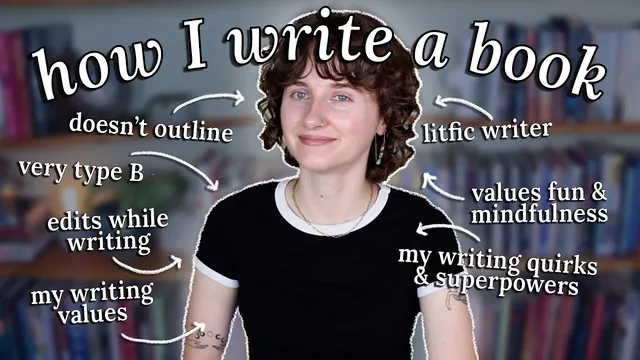
My Writing Process ✍️ from idea to completed book (intuitive, mindful, & creative!)
Based on ShaelinWrites's video on YouTube. If you like this content, support the original creators by watching, liking and subscribing to their content.
She treats writing as a values-driven practice: personal fulfillment and immersion come before speed, quotas, or rigid schedules.
Briefing
A writing process built around pleasure, flexibility, and intuition—rather than speed, strict schedules, or productivity pressure—can still produce publishable novels, as shown by ShaelinWrites’ end-to-end workflow from first sparks to finished manuscripts. The central throughline is that ideas arrive as mood, images, and feeling; drafting then “clears the fog” until the story’s true shape becomes visible. After that, revision becomes less about fixing “bad writing” and more about aligning the manuscript more accurately with its underlying truth.
Before getting into the mechanics, the creator frames writing as non-one-size-fits-all and maps personal “eras” that explain how the current method formed. A teenage phase relied on unstructured intuition—no notes, no interrogation of process—followed by a short “productivity” era influenced by online writing culture. That period emphasized heavy outlining and daily word-count targets (a thousand words a day aimed at finishing in three months), which led to burnout and strained relationships with the work. University years shifted toward short fiction, and the adult era that follows centers on discovering what actually fits her values and strengths.
In the adult phase, she identifies literary fiction as her core genre and credits short fiction as the training ground for craft. She also treats “discovery writing” as the engine, but with a foundation built from education and time spent processing what she learned into her own framework. Her writing values are explicit: personal fulfillment (immersion and enjoyment), flexibility (tools used as needed, constant micro-adjustments), intuition (letting ideas evolve without always being able to justify decisions), and building a process around strengths instead of punishing weaknesses. She rejects speed and rigid goals, even writing more slowly at times, because forcing output tends to reduce enjoyment and therefore output.
The process begins with idea capture: early notes are often fragments—images with attached feeling but no context. Days or weeks later, context solidifies, triggering a three-day brainstorming rush. Character naming is a key catalyst; without a name, she can’t fully conceptualize a character as a person. She also describes a “buy this concept, get three scenes free” phenomenon: initial bursts yield several scene ideas that may not connect yet. She often locks in atmosphere and aesthetic first, then form (for example, choosing vignettes and first-person retrospective for a novella) and sometimes early voice passages.
Planning is intentionally light. She doesn’t use character profiles beyond a few bullet-point “vibe/conflict” notes from the idea’s first day, and she often lets most story development happen during drafting. Her mental workflow runs in waves: she writes in the afternoon or evening, uses project-specific music to enter a zone, avoids word sprints and daily word targets, and takes breaks when natural breakpoints arrive—sometimes aligning with a six-arc structure, sometimes not. She may draft one book while another sits in editing.
Drafting is described as tactile, fog-clearing work. She writes full-detail scenes (not zero-drafting) and expects nonlinearity: while moving through early chapters, later chapters’ ideas can appear. She usually doesn’t know the ending at the start; it tends to become clearer between one-third and two-thirds through the first draft. She outlines as she writes using an evolving outline, adding beats after scenes or chapters and recording new future ideas when they surface. By the last third, the chain of events is usually clear.
A newer editing chart color-codes chapters by completeness (green, blue, yellow, orange) and supports editing while drafting. Revision shifts mindset from “living through the story” to “articulating its truth.” She prefers to read first to orient herself, then builds a detailed scene-by-scene revision plan. Her major developmental edit happens in one integrated pass—plot, character, and line work together—because she treats line as part of developmental meaning. She follows with lingering-issue passes, then line edits, and finally feedback from trusted critique partners. Feedback quantity varies by project, but she emphasizes that revision isn’t punishment; it’s exploratory work that deepens the story over time, often across several years with months off between drafts. When the manuscript reaches a point of inner peace—when she feels she has excavated what she wanted to say—she considers the book done.
Cornell Notes
ShaelinWrites’ writing process prioritizes personal fulfillment, flexibility, and intuition over speed and rigid productivity. Ideas often arrive as images and feelings without context; once context clicks, a short brainstorming burst follows, with character naming acting as a major trigger for character development. Planning stays light: she uses an evolving outline and adds beats as scenes are drafted, expecting most story discovery to happen during the first draft. Drafting is “fog-clearing”—the story’s true shape and ending typically become clearer between one-third and two-thirds through. Revision then aims to better articulate the manuscript’s “truth,” using integrated developmental edits plus line-level work, supported by a color-coded editing chart and selective critique feedback.
How does she generate ideas before any real plot exists?
What makes her drafting approach “discovery writing” in practice?
Why does she avoid speed, daily word counts, and strict scheduling?
What does she mean by “clearing the fog” during drafting?
How does her revision philosophy differ from “fixing bad writing”?
How does feedback fit into her workflow?
Review Questions
- What role does character naming play in her idea-to-draft pipeline, and why does it matter for character development?
- How does her evolving outline function differently in the first third versus the last third of a draft?
- What does she do differently in revision when she hasn’t edited much while drafting, and how does that affect her revision plan?
Key Points
- 1
She treats writing as a values-driven practice: personal fulfillment and immersion come before speed, quotas, or rigid schedules.
- 2
Idea generation often begins with mood and feeling attached to fragments; context and plot emerge later, triggering short bursts of brainstorming.
- 3
Character naming is a practical trigger for character development; without a name, she can’t fully conceptualize a character as a person.
- 4
Most planning stays light: she discovery-drafts with an evolving outline that updates after scenes and captures new future beats as they appear.
- 5
Her drafting process is non-linear and “fog-clearing,” with the ending often becoming clearer between one-third and two-thirds through the first draft.
- 6
Revision aims to articulate the manuscript’s “truth,” using integrated developmental edits plus line-level work rather than separating plot and prose fixes.
- 7
She revises in cycles over years, using breaks to let drafts mature, and she views revision as exploratory growth rather than punishment.