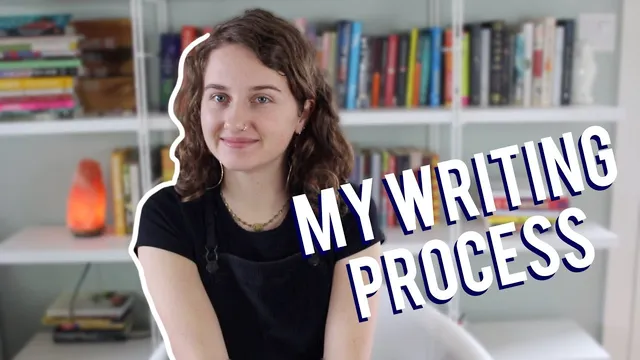
My Writing Process | intuitive discovery writing
Based on ShaelinWrites's video on YouTube. If you like this content, support the original creators by watching, liking and subscribing to their content.
ShaelinWrites treats writing as highly individual: no consistent timeline fits every book, and each project gets its own evolving set of decisions.
Briefing
A flexible, intuition-led workflow—built around “idea clicking,” drafting while staying in the zone, and editing in responsive passes—has become the core of ShaelinWrites’ writing process. Rather than following a fixed schedule or a rigid outline, she treats each project as its own problem to solve in real time, adjusting decisions as new needs emerge. The payoff is creative momentum: she says her best material comes when she’s genuinely enjoying the work, not when she’s chasing external targets.
Timing and planning play a secondary role. She doesn’t track consistent timelines for drafting, revising, or moving between books, and she insists that no two of her roughly ten books have used the same process. Her approach is “go with the flow” but still guided by three principles: make project-specific decisions as they arise, rely on intuition instead of forcing ideas, and write more when she’s having fun because enjoyment directly boosts motivation and perceived quality.
Ideas, for her, rarely arrive as fully formed plots. They often begin as a feeling or a core image, then sharpen into something usable through a phase she calls “idea clicking” or clarifying. When that click happens, she typically gets about three days of rapid brainstorming—an intense, almost uncontrollable burst where characters, settings, and story type start to surface. During this window she creates a notes document with a working title (even if it later proves silly), records everything she can, and lets the draft develop from the accumulating material rather than from a predetermined plan. She also emphasizes form—point of view, narrative frame, and overall structure—early on, even if she doesn’t complete formal character profiles.
Drafting is where her process becomes deliberately practical. She writes in Microsoft Word using Focus Mode, keeps a thesaurus and research tab open, and relies on project-specific music playlists as a concentration cue. She prefers writing earlier evening or afternoon (roughly 5–8 p.m.), often after a walk that helps generate ideas. Word-count targets are intentionally avoided because she says specific goals can make writing feel like schoolwork and reduce quality; instead, she writes until energy runs out, typically landing around 600–1,200 words on a light day and 1,500–2,000 on a strong one.
Editing blends with drafting rather than waiting until the end. She edits “as she goes” to prevent the plot from becoming unmanageable and to protect confidence while problems are still fixable. When she does deeper revision, she builds an edit outline by chapter: lists of problems, a reordered scene plan, and notes for continuity fixes or new scenes. She then applies changes linearly, writes any missing scenes, smooths the result with a read-through pass, and repeats self-edits as needed. Workshops provide the developmental lift—she synthesizes workshop notes into actionable key points, then applies another revision cycle. Line editing happens in limited rounds; she aims for minimal-change passes and ultimately treats the moment when no further meaningful edits remain as the finish line.
Across the workflow, the throughline is responsiveness: she keeps plans loose, lets intuition lead early, drafts with attention and enjoyment, and revises in structured but flexible passes until the story is done.
Cornell Notes
ShaelinWrites’ writing process is built on intuition and project-specific decisions rather than fixed timelines or rigid outlines. Ideas often start as a mood or image, then “click” into something workable, triggering a few days of fast brainstorming where characters, settings, and story type begin to form. Drafting happens in focused sessions with research tools and project playlists, and she avoids daily word-count goals because targets can make writing feel like work. Editing is iterative: she revises while drafting to keep the plot from getting messy, then performs deeper chapter-by-chapter reordering and continuity fixes, often using workshop feedback to identify larger developmental problems. The process ends when further line edits stop adding value.
What does “idea clicking” mean in this process, and what happens right after it?
Why does she avoid outlines, and how does she still maintain structure during drafting?
How does she draft in practice—what tools and routines support focus?
What role do word-count goals play, and what does she do instead?
How does her editing workflow work from workshop feedback to final revision?
What does she consider “done,” and how does line editing fit in?
Review Questions
- How does the process distinguish between “idea clicking” and earlier idea stages, and why does that distinction matter for what she does next?
- What trade-offs does she describe between outlines and intuition during drafting, and how does editing compensate for the lack of a strict plan?
- In what ways do workshops change her editing priorities compared with self-editing alone?
Key Points
- 1
ShaelinWrites treats writing as highly individual: no consistent timeline fits every book, and each project gets its own evolving set of decisions.
- 2
Ideas typically begin as feelings or core images; “idea clicking” marks when that amorphous material becomes usable and triggers a short burst of brainstorming.
- 3
She avoids rigid outlines because they can reduce attention and creativity; instead she keeps flexible scene lists and lets drafting fill gaps.
- 4
Drafting is supported by focused tools and cues: Microsoft Word Focus Mode, research tabs, thesaurus support, and project-specific music playlists.
- 5
She writes in energy-based sessions (often 5–8 p.m.) and avoids daily word-count goals because targets can make writing feel like schoolwork.
- 6
Editing is iterative: she revises while drafting to prevent plot confusion, then performs chapter-by-chapter developmental reordering and continuity fixes.
- 7
Workshop feedback functions as a developmental diagnostic, with her turning workshop notes into synthesized, actionable edit priorities before revising again.