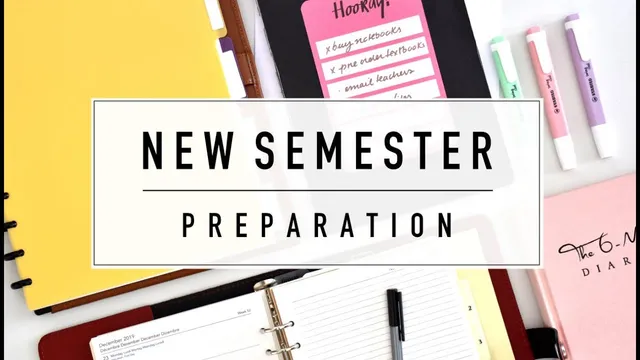
organising and preparing for a new semester
Based on Mariana Vieira's video on YouTube. If you like this content, support the original creators by watching, liking and subscribing to their content.
Download and read every course syllabus early to identify exam formats, goals, and the full topic roadmap for the semester.
Briefing
Preparing for a new semester starts long before the first lecture, and the core move is to front-load organization: download the syllabi, map out what’s coming, and set up systems so studying can begin quickly once classes start. The process begins with getting each course syllabus from professors. These documents lay out the semester’s exam and test formats, recommended readings, course goals, and the topics that will be covered. With that information in hand, the next step is to identify the reading list early—especially the “bibliography” section—and pre-order or purchase the required books so background reading can start before the semester begins.
A key practical step follows: reaching out to teachers before classes start. The approach is to email instructors with questions about what to expect from the reading list and which book to begin with right away. The rationale is that early contact can reduce uncertainty and give students a clearer lens for attending lectures later, while also building confidence in communicating with faculty.
Notebook preparation then turns course plans into a usable workflow. For a semester with multiple subjects—Roman culture, history of ancient classical and pre-classical cultures, introduction to geography, and peasant societies—the notebook is divided into five sections using dividers and hole-punched blank paper. Notes are written using a system previously discussed, with a specific emphasis on The Arc System: past notes can be archived and the same notebook repurposed for a new semester, requiring only additional paper rather than a whole new notebook. The transcript notes that non–Arc-branded hole-punched paper works as well, as long as it fits the system.
On the digital side, the process focuses on reducing friction at the start of term. New computer folders are created for each class so PDFs and teacher-provided documents can be downloaded and filed immediately when they arrive. A Mac OS Calendar event is set up for the semester schedule, and the schedule is recreated weekly with classroom details included in event descriptions; the calendar syncs with an iPad and iPhone to keep timing and locations visible. A Google Drive backup folder is also created in advance so files have a designated place from day one.
The plan also includes administrative and planning tasks that many students overlook. Because the narrator is renewing a working-student statute tied to full-time employment, they must gather financial proof and social security documents to qualify for certain course access rules—such as skipping classes and attending only exams for some courses. In parallel, a bullet journal/planner hybrid gets a dedicated collection for class-related tasks: not full lecture notes, but to-do lists for projects, papers, and exam topics, plus teacher contact information. Finally, an Excel spreadsheet tracks last semester’s grades to estimate what average is needed next term.
Studying itself is intentionally delayed until about a week before the semester starts, but the organizational groundwork is laid early so the transition into learning is smoother and faster once classes begin.
Cornell Notes
The semester-prep workflow is built around front-loading organization: read each course syllabus, pre-order the required books, and contact professors early for guidance on what to start with. Physical and digital systems are set up before classes begin—dividing notebooks by course, using The Arc System to repurpose notebooks with new hole-punched paper, creating folders for PDFs, and building a synced Mac OS Calendar schedule with classroom locations. Administrative requirements for a working-student statute are handled in parallel, including collecting employment and social security proof that supports course access rules. The plan is completed with a bullet journal section for assignments and a grade-tracking Excel sheet to forecast the average needed next semester.
Why start with syllabi instead of waiting for the first week of classes?
How does early communication with teachers fit into the prep plan?
What does notebook setup look like for multiple classes?
What digital organization steps reduce stress at the start of term?
How does the working-student statute change the semester strategy?
How is performance planning handled before studying ramps up?
Review Questions
- What information in a syllabus is most useful for planning reading and preparation before classes start?
- How do the notebook and digital folder systems work together to make the first week easier?
- What additional administrative tasks appear in this prep routine, and how do they affect attendance expectations?
Key Points
- 1
Download and read every course syllabus early to identify exam formats, goals, and the full topic roadmap for the semester.
- 2
Pre-order or purchase the recommended books from the syllabus so reading can begin before the first lecture.
- 3
Email professors before classes start to ask what to prioritize in the bibliography and what to begin reading right away.
- 4
Set up physical notebooks by course using dividers and hole-punched paper, with The Arc System used to repurpose notebooks across semesters.
- 5
Create digital infrastructure before term: new class folders, a synced Mac OS Calendar schedule with classroom locations, and a Google Drive backup folder.
- 6
Handle administrative requirements early for any working-student statute renewal, including employment and social security proof.
- 7
Use a bullet journal/planner collection for assignments and a grade-tracking Excel sheet to forecast the average needed next semester.