PhD Student Goal Setting and Planning in Uncertain Times | 12 week plan
Based on Ciara Feely's video on YouTube. If you like this content, support the original creators by watching, liking and subscribing to their content.
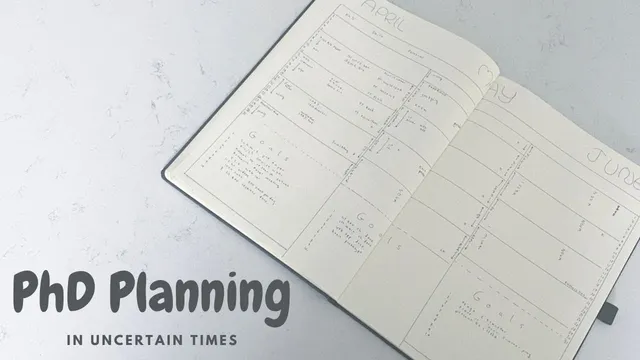
Use a weekly bullet-journal layout with clear week boundaries to make a 12-week plan easier to execute and review.
Briefing
A PhD student lays out a structured 12-week plan for staying productive during uncertain conditions—while keeping health and mental well-being as the top priority. The schedule runs from April 6 through June 28 and is designed to be flexible enough for remote work, family safety, and shifting research demands, yet concrete enough to maintain momentum on papers, thesis progress, and professional development.
The planning system is built around a customizable bullet journal spread (with weekly lines for every week in the 12-week window) and a recurring 28-day cycle drawn from a productivity book, “In the Flow,” which links planning phases to women’s hormonal rhythms. Each 28-day block is divided into four-week phases: a “planning” week for mapping out what needs to happen, a “communication” week for supervisor check-ins and starting work, a “doing” week for executing research and writing, and a “reflecting” week for consolidating sections like discussion and conclusions. Over the full 12 weeks, the student targets three cycles of plan–communicate–reflect, aligning research tasks with the rhythm of paper development.
The core academic goal for the early part of the plan is preparing and advancing a short paper that expands on a previous publication. The “planning” phase is used to decide what research is still required and which algorithms will be used; the “communication” phase is reserved for talking with a supervisor and beginning the project; the “doing” phase focuses on implementing the research decisions and drafting; and the “reflecting” phase is aimed at finishing synthesis work such as discussion and conclusion sections.
Beyond research, the plan tracks progress across three categories: PhD-specific work, transferable skills, and personal items. Transferable skills are monitored in a detailed list that includes research skills, personal organization, teamwork and leadership, career management, entrepreneurship and innovation, writing and publishing, public speaking, media and scientific communication, and more. The student’s near-term targets are to raise several of these areas—especially teamwork/leadership through an entrepreneurship project with a PhD peer, career management via LinkedIn and CV work, and writing/publishing through completing coursework and producing additional academic writing.
Professional visibility is also treated as a measurable objective. The student plans to deliver a live webinar in the Doctorate Studies User Group on Facebook (noting the group’s large membership), present research to a PhD cohort and/or at an online conference, and continue building a YouTube channel with a goal of reaching 1,000 subscribers. Content plans include longer “study with me” style videos focused on reading papers and taking notes, plus a separate video on academic writing.
The schedule also accounts for fixed obligations: coursework deadlines, demonstration hours (teaching hours), grading, an exam, an entrepreneurship bootcamp, a summer school-style cohort event, and a stage two transfer date on June 15. The student intends to use the weeks before and during these commitments to complete major thesis components—such as a literature review and at least one substantial thesis chapter—while also developing an online app prototype to collect data for future project stages. The overall message is pragmatic: productivity is pursued, but not at the expense of health, and progress is reviewed weekly so priorities can shift as reality changes.
Cornell Notes
The plan sets a 12-week productivity structure for a PhD student working from home during uncertain times, running from April 6 to June 28. Health and mental well-being come first, with work goals treated as important but not absolute. The schedule uses a bullet journal and a 28-day cycle from “In the Flow,” breaking each cycle into planning, communication, doing, and reflecting weeks to match how paper work progresses. Academic priorities include expanding a short paper from a previous result, advancing thesis work (literature review and a main chapter), and building a data-collection app prototype. Professional goals run in parallel: supervisor check-ins, cohort presentations, a Facebook Doctorate Studies webinar, and YouTube growth with longer study/research videos.
How does the plan keep productivity realistic during uncertain conditions?
What is the planning cycle used to structure the 12 weeks, and how does it map to paper work?
What are the main academic deliverables during the April–June window?
How are transferable skills tracked, and which ones are prioritized in this plan?
What professional visibility goals are tied to specific activities?
How does the plan handle fixed deadlines like stage transfer and coursework?
Review Questions
- If you had to adapt this plan, which phase (planning, communication, doing, reflecting) would you assign to your next paper milestone—and why?
- What transferable skills in the plan are most directly supported by scheduled activities (webinar, entrepreneurship project, LinkedIn/CV, presentations), and how would you measure progress?
- How does the plan balance fixed academic deadlines with flexible weekly review, and what would you change if your research timeline shifted?
Key Points
- 1
Use a weekly bullet-journal layout with clear week boundaries to make a 12-week plan easier to execute and review.
- 2
Treat health and mental well-being as the primary constraint; productivity goals should be adjustable rather than mandatory.
- 3
Structure paper development around a repeating cycle: plan what’s needed, communicate with a supervisor, do the research and drafting, then reflect to finalize discussion and conclusions.
- 4
Track progress across three categories—PhD work, transferable skills, and personal items—to prevent research from crowding out career and communication goals.
- 5
Align transferable-skill targets with concrete activities such as entrepreneurship projects, LinkedIn/CV work, webinars, and presentations.
- 6
Plan around fixed deadlines (coursework, exams, bootcamps, stage transfer) by front-loading thesis and literature review work into the available windows.
- 7
Build professional visibility as part of the schedule: YouTube subscriber goals, longer study/research videos, and academic writing content.