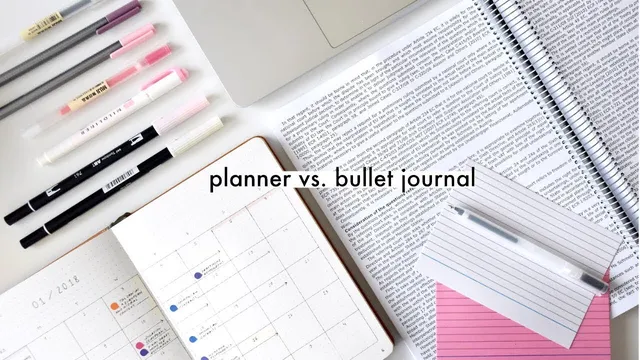
Planner vs. Bullet Journal
Based on Mariana Vieira's video on YouTube. If you like this content, support the original creators by watching, liking and subscribing to their content.
Traditional planners often cost more than bullet journals, especially premium brands like Erin Condren and Filofax.
Briefing
Choosing between a paper planner and a bullet journal comes down to a tradeoff between convenience and customization—and the decision matters because each system pushes people toward different planning habits.
Price is often the first dividing line. Traditional paper planners typically cost more, especially popular brands in the planner community such as Erin Condren and Filofax, which can run about $50 to $100. Bullet journals, by contrast, can be built using any inexpensive notebook, making them a lower-cost entry point for people who want the flexibility without paying premium prices.
Aesthetics also shape the experience. Planner culture tends to emphasize outer design: customizable covers, interchangeable components, and color schemes. Many planners use spiral-bound or ring-bound formats, which allow swapping pages, dashboards, and inserts. Some companies—Erin Condren, Plum Paper planners, and personalplanner.com—offer additional customization so users can assemble a planner aligned with their needs. Bullet journals usually take a different visual approach: a minimal look built from a blank notebook rather than pre-made sections.
Where the biggest practical difference shows up is layout control. Planners come with predefined structures—vertical, horizontal, or timed layouts—plus monthly, yearly, and weekly overviews. Users are essentially locked into what the company provides. Bullet journals are designed for reconfiguration. Because the notebook starts empty, people can create lists, reviews, project planners, trackers, and other custom systems. If the standard planner layouts don’t match a person’s workflow, switching to a bullet journal can be the more direct path.
Time and dedication are the next constraints. A classic planner provides the spreads needed to plan days simply by filling in details. A bullet journal requires upfront work: users must design their own spreads and layouts when setting up the notebook. That makes bullet journaling a poor fit for people who are constantly on the move or who don’t have time to prepare.
The choice also depends on how someone relates to planning. Consistent, daily planners may prefer the structure of a classic planner, which can support regular workloads. But for irregular schedules, a classic planner can lead to skipped pages—then a scramble to fill everything during busier weeks. Bullet journals can adapt to changing needs without creating pressure to write just because a page exists.
Finally, tolerance for mistakes matters. Ring-bound planners like Filofax and Erin Condren can let users rip out or add pages when a spread goes wrong. Bullet journals don’t offer that same flexibility; mistakes may require covering up or living with the result until the notebook ends. For perfectionists who dislike imperfect layouts, that rigidity can drive frequent journal changes.
In short: planners trade customization for ready-made structure and convenience; bullet journals trade convenience for a system that can be built around the user’s exact workflow, budget, and tolerance for imperfection.
Cornell Notes
The core difference is structure versus flexibility. Classic planners provide predefined layouts (monthly, weekly, yearly, and common orientations) and are easier to use because planning is mostly filling in details. Bullet journals start with a blank notebook, so users must design their own spreads and can build custom systems like trackers, project planners, and reviews. That flexibility can help with irregular workloads, but it demands time to set up and can be unforgiving when mistakes happen. The best fit depends on budget, how much time someone can spend preparing pages, and whether they prefer a consistent routine or an adaptable system.
How do price and entry cost typically differ between planners and bullet journals?
Why does layout flexibility matter for day-to-day planning?
What time commitment separates the two systems?
How does workload regularity affect which system fits better?
How do mistakes and perfectionism influence the choice?
Review Questions
- If someone’s main problem is that standard planner layouts don’t match their workflow, what system offers the most direct solution and why?
- What kinds of people are most likely to struggle with bullet journaling based on the setup time requirement?
- How might a ring-bound planner reduce the impact of mistakes compared with a bullet journal?
Key Points
- 1
Traditional planners often cost more than bullet journals, especially premium brands like Erin Condren and Filofax.
- 2
Planner aesthetics usually emphasize customizable covers and interchangeable inserts, while bullet journals typically rely on a minimal blank notebook.
- 3
Planners lock users into company-provided layouts (monthly/weekly/yearly and common orientations), whereas bullet journals let users design custom spreads and trackers.
- 4
Bullet journals require upfront time to create spreads and designs, making them less suitable for people with little planning setup time.
- 5
Classic planners can fit consistent daily routines, but they may lead to skipped pages when workloads are irregular.
- 6
Bullet journals can adapt to changing productivity needs without pressure to fill every page.
- 7
Mistake tolerance matters: ring-bound planners can swap pages, while bullet journals may require covering mistakes or continuing with them until the notebook ends.